
Deir el-Bahari’s terraced temples above the cliffs of Luxor
Published on 09/08/2026 at 07:11 | Editorial responsibility: Rafael Müller, Editor-in-Chief AD HOC NEWS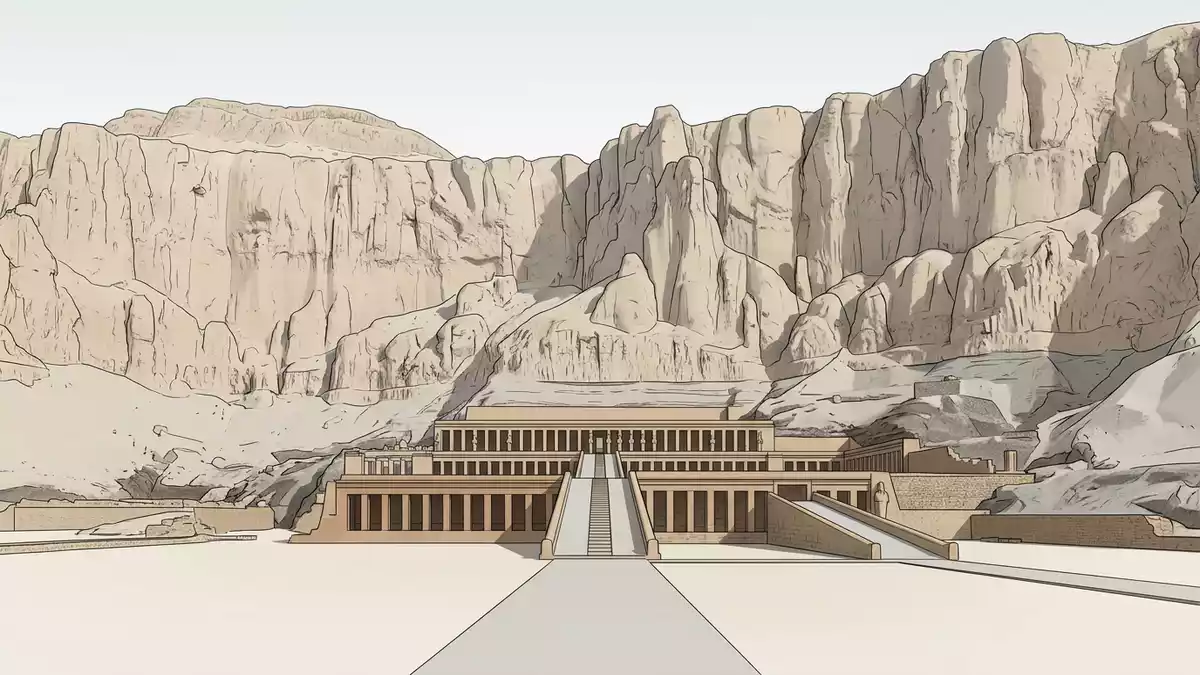
Deir el-Bahari on the west bank of the Nile opposite Luxor is a complex of ancient mortuary temples and tombs set in a natural bay in the desert cliffs. It forms part of the wider Theban Necropolis, the great burial landscape of pharaonic Egypt, and brings together Middle Kingdom and New Kingdom monuments in one confined amphitheatre of rock.
Terraces rising towards the cliffs
The dominant structure at Deir el-Bahari is the mortuary temple of Hatshepsut, known in ancient Egyptian as Djeser-Djeseru, “Holy of Holies”. This temple stands against the vertical cliff face, with man-made terraces stepping upwards towards the rock and long ramps linking each level.the temple of Hatshepsut Built in the fifteenth century BC during the reign of the Eighteenth Dynasty pharaoh Hatshepsut, its colonnaded frontages and axial layout have become one of the best-known images of royal funerary architecture in Egypt.mortuary temple of Hatshepsut
The terraces rest on a broad platform that reaches out towards the cultivated land along the Nile. Rows of columns line the retaining walls of each level, giving the temple a strong horizontal emphasis against the sheer rock behind. A long causeway once linked this elevated complex to structures closer to the river, underlining the deliberate alignment between the desert necropolis and the life of the valley.
Three mortuary temples in one bay
Deir el-Bahari is unusual in bringing together three major mortuary temples from different periods within the same rocky recess. The earliest is the temple of Mentuhotep II from the Eleventh Dynasty, a Middle Kingdom ruler whose funerary monument occupies the southern side of the bay.funerary temple of Mentuhotep II Later, Hatshepsut’s expansive terraces took the central position, and a temple dedicated to Amun by Thutmose III added an additional layer of New Kingdom building within the same setting.mortuary temples of Mentuhotep II and Thutmose III
From the valley floor, the three complexes share the same backdrop of pale cliffs but differ in plan and scale. Mentuhotep II’s monument belongs to an earlier tradition, while Hatshepsut’s temple extends across broad terraces with long processional ramps and colonnades. The Thutmose III temple sits nearby, adding further chapels and courts to the bay. Together they give Deir el-Bahari a layered character, with successive kings and queens building funerary monuments within the same natural recess yet leaving each distinct in arrangement and detail.
Deir el-Bahari in the Theban landscape
Deir el-Bahari forms part of the Theban Necropolis, the extensive funerary zone on the west bank of the Nile opposite the temple complexes of Karnak and Luxor. The site lies below the peak of el-Qurn, the pointed summit that rises above the western cliffs and separates Deir el-Bahari from the nearby Valley of the Kings.separated from the Valley of the Kings by el-Qurn Rock-cut tombs and smaller funerary structures around the main temples reflect the wider role of the bay as a burial and ritual focus over many centuries.complex of mortuary temples and tombs
The Arabic name Dayr al-Bahri, meaning “northern monastery”, recalls the later presence of a Christian monastery on the site, long after the pharaonic period had ended.name Dayr al-Bahri The ancient designation Djeser-Djeseru survives in modern writing for Hatshepsut’s temple, linking contemporary visitors to the original concept of a “Holy of Holies” set between desert and cultivated land. The combination of monumental stonework, cliff scenery and long historical use gives Deir el-Bahari a distinctive place within the Luxor region.
Visiting Deir el-Bahari: what travellers from Western Europe should know
- Deir el-Bahari lies on the west bank of the Nile opposite Luxor, within the Luxor Governorate of Egypt, reached via the bridges and roads that connect the city with the Theban Necropolis.
- The main temples rise directly from the foot of the cliffs, and access within the bay involves walking on uneven stone surfaces and ascending ramps and steps between the different levels.
- Rock-cut tombs and other necropolis sites lie nearby in the surrounding desert hills, and the wider area forms part of the Theban burial landscape west of the river.
- The official language is Arabic and the currency is the Egyptian pound.
- Entry requirements depend on your nationality; UK travellers can check the FCDO travel advice at gov.uk/foreign-travel-advice, Irish travellers the Department of Foreign Affairs at ireland.ie.
Searching for Deir el-Bahari on social platforms
These links open searches for Deir el-Bahari on each platform.Frequently asked questions about Deir el-Bahari
Where is Deir el-Bahari in relation to Luxor?
Deir el-Bahari lies on the west bank of the Nile opposite Luxor, within the Luxor Governorate of Upper Egypt, as part of the Theban Necropolis.
What should visitors expect on a visit to Deir el-Bahari?
Visitors encounter large stone terraces, ramps and colonnades set directly against the cliffs, with walking on uneven surfaces and exposure to the open desert environment.
What makes Deir el-Bahari distinctive among Egyptian sites?
Deir el-Bahari is distinctive for combining the terraced mortuary temple of Hatshepsut with the earlier temple of Mentuhotep II and the temple of Thutmose III within one cliff bay.


