
Death Valley National Park campground partly reopens on 17 September
Published on 09/27/2026 at 10:26 | Editorial responsibility: Rafael Müller, Editor-in-Chief AD HOC NEWS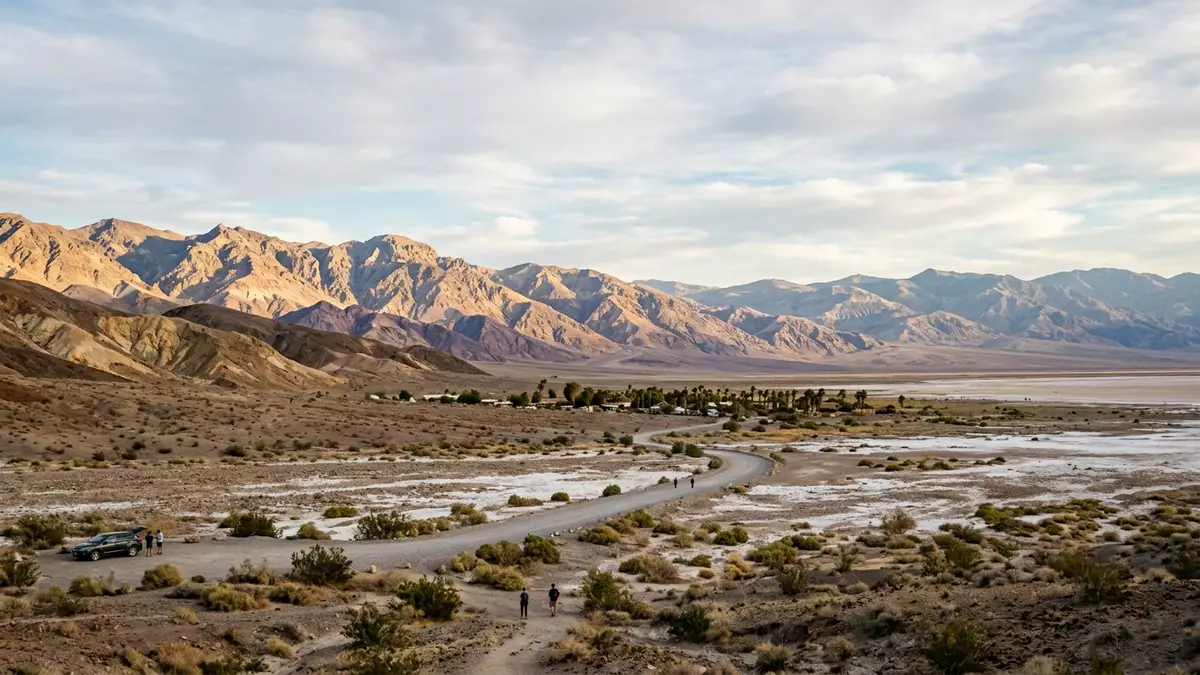
Death Valley National Park has partly reopened Saline Valley Warm Springs Campground after a fire, with the change announced on 18 September 2026. The campground is in the park's remote western backcountry, while Furnace Creek remains the main reference point for many visitors.
Partial reopening follows the 17 September decision
The National Park Service said a portion of Saline Valley Warm Springs Campground reopened on 17 September 2026. The announcement on 18 September 2026 identified the burned area at Lower Springs as still closed to public entry by order of the park superintendent.
The fire began on 15 September 2026 and led to a temporary closure of the campground. The reopening therefore applies only to part of the site, not to every facility or area around the warm springs. The National Park Service release names both the campground and the park in its account of the change.
The decision gives the partial reopening a direct effect on visitors planning a backcountry stay. Lower Springs remains unavailable, so an itinerary centred on that area still needs to be changed. A separate report also records that the reopened portion remained distinct from the burned section on 17 September 2026.
Saline Valley places the change deep inside the park
Saline Valley Warm Springs Campground is a primitive camping area in the western part of Death Valley National Park. The park spans California and Nevada and combines a below-sea-level desert basin with mountain ranges, salt flats, dunes and isolated oases.
That geography matters to the partial reopening: the affected campground is not the same visitor setting as Furnace Creek, Badwater Basin or the main scenic roads. The reopening report describes the Lower Springs area as remaining closed, making the boundary between accessible and inaccessible parts central to any visit.
The park's extreme desert environment also means that conditions can differ sharply between developed areas and remote backcountry sites. Travellers should treat the reopening as a local access update rather than evidence that every road, campground or attraction has the same status.
Visiting Death Valley National Park: what travellers from Western Europe should know
- Saline Valley Warm Springs Campground partly reopened on 17 September 2026, after the National Park Service announced the change on 18 September 2026.
- The Lower Springs area remains closed to public entry. The partial reopening does not restore access to the burned section.
- The campground is in the remote western backcountry, whereas Furnace Creek is a principal reference point for planning visits to the park. Conditions should be checked before setting out.
- The setting is a primitive desert campground rather than a developed town attraction. Travellers should plan for remote terrain, limited services and changing road conditions.
- Entry requirements depend on your nationality; UK travellers can check the FCDO travel advice at gov.uk/foreign-travel-advice, Irish travellers the Department of Foreign Affairs at ireland.ie.
Searching for Death Valley National Park on social platforms
These links open searches for Death Valley National Park on each platform.
Frequently asked questions about Death Valley National Park
When did the partial reopening take place at Death Valley National Park?
A portion of Saline Valley Warm Springs Campground reopened on 17 September 2026. The National Park Service announced the change on 18 September 2026.
What remains closed after the partial reopening?
The burned Lower Springs area remains closed to public entry. The reopening applies only to a portion of Saline Valley Warm Springs Campground.
Where is Death Valley National Park and how do you get there?
The park spans parts of California and Nevada, with Furnace Creek serving as a key visitor reference point. Saline Valley Warm Springs Campground is in the remote western backcountry, so current conditions should be checked before travel.


