

Death Valley National Park and the desert hub of Furnace Creek
Published on 08/31/2026 at 18:33 | Editorial responsibility: Rafael Müller, Editor-in-Chief AD HOC NEWS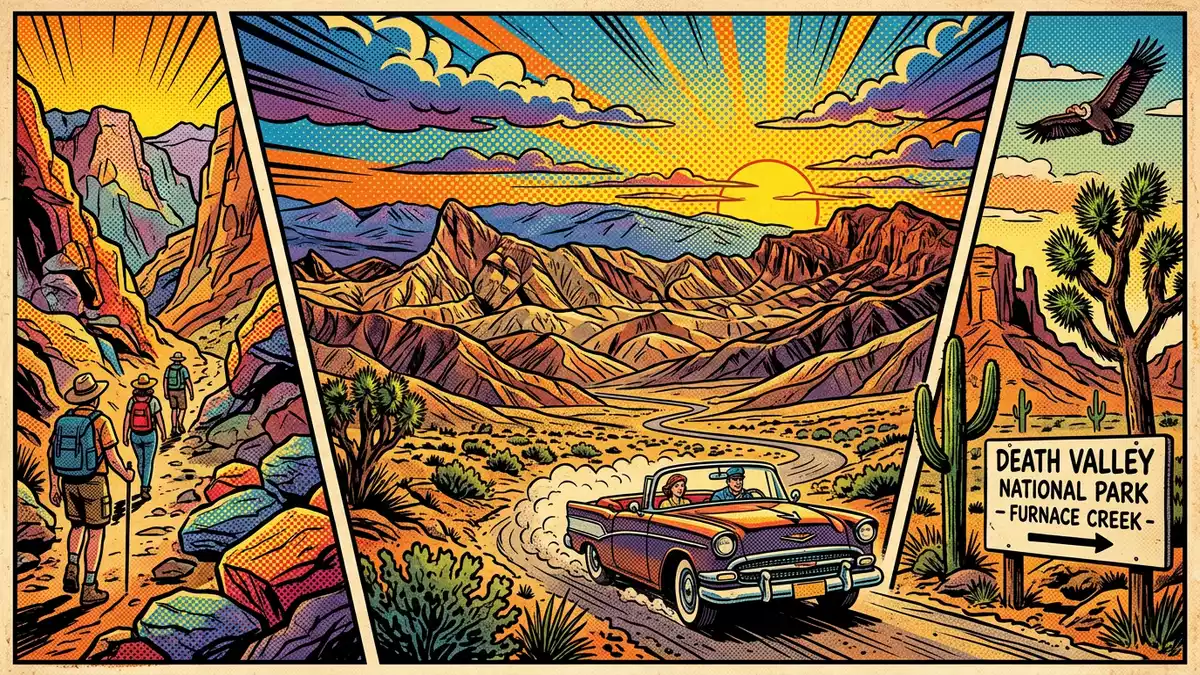
Death Valley National Park spans a vast desert basin around Furnace Creek in eastern California, where extreme heat, stark geology and a deep below?sea?level floor define one of the most striking landscapes in the United States.
A national park built around an extreme landscape
Death Valley National Park lies in Inyo County, California, covering a large portion of the Death Valley basin and surrounding mountains on the border of the Mojave and Great Basin deserts.Death Valley National Park The park includes the settlement of Furnace Creek, which sits below sea level on the valley floor and serves as a central point for visitors.Furnace Creek, California The wider Death Valley region is famous for its extreme climate, and the valley combines very low elevations with high surrounding peaks in a single sweep of desert.
Death Valley itself is a long, narrow basin bordered by steep mountain ranges, with its lowest point at Badwater Basin and its high points in the Panamint Mountains to the west.lowest point in Death Valley The elevation difference between the valley floor and peaks such as Telescope Peak reaches thousands of metres, giving the park a remarkable vertical range in a single protected area.Telescope Peak in the Panamint Mountains This combination of high and low terrain underpins both the climate and the views that travellers encounter.
Furnace Creek: settlement, visitor centre and oasis
Furnace Creek is a census?designated place in Inyo County whose elevation lies around 58 m (190 ft) below sea level, making it one of the lowest permanent settlements in North America.elevation of the village The community developed around a spring?fed water source and became the focus for ranching and tourism in Death Valley during the twentieth century, with resort facilities and services clustered near the greenery created by the water.Furnace Creek Resort in Death Valley National Park Against the bare desert around it, the irrigated palms and lawns of Furnace Creek stand out as an oasis landscape in the middle of the park.
The visitor centre of Death Valley National Park is located at Furnace Creek and houses a museum, information desk and administrative headquarters.visitor center and headquarters Nearby, a developed area known as The Oasis at Death Valley brings together accommodation, food, fuel and other services on land originally shaped by the Pacific Coast Borax Company in the 1920s and 1930s.historic Inn at Furnace Creek Between the resort facilities, campgrounds and park offices, Furnace Creek functions as the human centre of an otherwise wide open desert.
Heat, depth and desert geology
Death Valley holds a place in climate records as one of the hottest locations measured on the Earth’s surface, with a temperature of 56.7 °C (134 °F) recorded at what was then Greenland Ranch, the site of the present?day Furnace Creek.temperature of 134 °F at Furnace Creek The valley’s subtropical hot desert climate combines extremely hot summers with short, warm winters and very low annual rainfall.subtropical, hot desert climate In this setting, Furnace Creek sits within a basin famous both for its heat and for its dryness.
Much of the park’s climate and hydrology can be traced to its elevation range, from land well below sea level on the valley floor to mountain summits rising above 3,000 m (9,800 ft).extreme range from –86 m to 3,368 m Weather patterns over Death Valley are shaped by rain?shadow effects from multiple surrounding ranges, which intercept moisture before it reaches the basin.hottest place on earth and driest place in North America For visitors, this combination of scorching temperatures, open desert and stark rock formations is a defining part of the experience.
Visiting Death Valley National Park: what travellers from Western Europe should know
- Death Valley National Park lies in eastern California near the Nevada state line, with Furnace Creek reached by road along California State Route 190 from Death Valley Junction.
- The terrain around Furnace Creek includes substantial stretches of open desert at elevations below sea level, where exposure to sun and heat is continuous and shade on longer walks is limited.
- The wider park ranges from salt flats and alluvial fans on the valley floor to high mountain terrain, so excursions can involve significant altitude changes over relatively short horizontal distances.
- English is the official language and the currency is the United States dollar.
- Entry requirements depend on your nationality; UK travellers can check the FCDO travel advice at gov.uk/foreign-travel-advice, Irish travellers the Department of Foreign Affairs at ireland.ie.
Searching for Death Valley National Park on social platforms
These links open searches for Death Valley National Park on each platform.
Frequently asked questions about Death Valley National Park
Where is Death Valley National Park and Furnace Creek located?
Death Valley National Park sits in eastern California near the Nevada border, with Furnace Creek on the valley floor in Inyo County at a below?sea?level elevation.
What should visitors expect on a trip to Furnace Creek in Death Valley?
Visitors encounter intense desert heat, very dry conditions and wide views across a deep basin framed by high mountains, with services and the visitor centre concentrated at Furnace Creek.
What makes Death Valley National Park distinctive among desert parks?
The combination of exceptional heat records, elevations from far below sea level to high summits and the desert oasis setting of Furnace Creek gives the park a distinctive character.


