
Dazu Shike: sandstone scriptures in the hills of Chongqing
Published on 09/05/2026 at 07:23 | Editorial responsibility: Rafael Müller, Editor-in-Chief AD HOC NEWS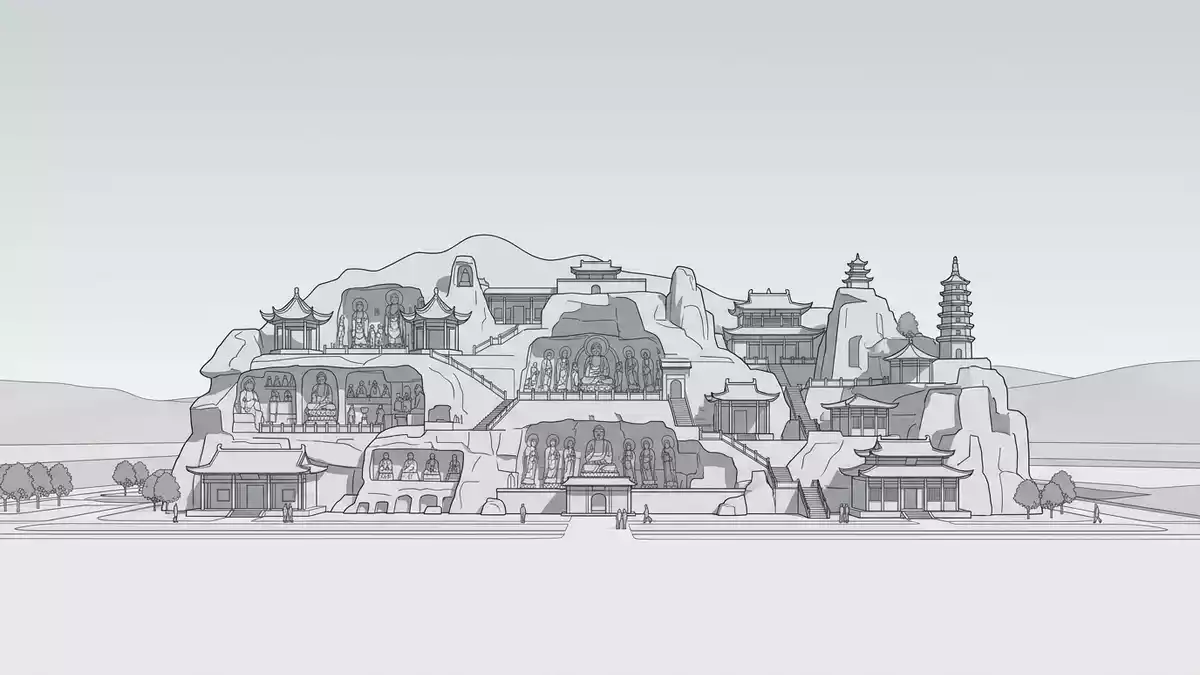
Dazu Shike is the local name for the Dazu Rock Carvings, a series of cliffside sculptures in Dazu District west of central Chongqing in south-western China. Carved into sandstone between the ninth and thirteenth centuries, these religious images and inscriptions form one of China’s best-preserved ensembles of Buddhist, Daoist and Confucian rock art.
Sandstone cliffs turned into carved worlds
The core identity of Dazu Shike lies in the way entire hillsides have been cut into reliefs, caves and sculpted terraces rather than freestanding temples. The carvings occupy steep slopes and ravines across the district, where soft sandstone could be worked into fine detail and expansive scenes at a scale unusual for religious sculpture.steep hillsides in the Dazu area The site groups multiple clusters of carvings, each developed as a complete visual programme with its own sequence of images and inscriptions.
Modern protection concentrates on five main locations in Dazu District: Beishan, Baodingshan, Nanshan, Shizhuanshan and Shimenshan. Together these protected areas contain tens of thousands of sculpted figures and a large body of carved text, all cut directly into the rock faces rather than set on separate plinths.five locations in Dazu District The carvings range from shallow reliefs along continuous panels to more deeply modelled figures that stand forward from the cliff, creating a layered surface where architecture, landscape and sculpture merge.
Religious sculpture across Tang and Song dynasties
Dazu Shike took shape over several centuries, beginning in the era of the Tang dynasty and continuing through the Song period. Inscriptions and stylistic features place much of the work between the ninth and thirteenth centuries, an era when religious life in China brought Buddhist, Daoist and Confucian traditions into close contact in towns and rural communities.dating from the 9th to 13th centuries The carvings trace that long development in stone, with differences in facial expression, drapery and spatial composition marking changes in style between dynasties.
Among the most studied sectors is Baodingshan, completed in 1179 under the guidance of the Buddhist monk Zhao Zhifeng.completion of the Baodingshan Grottoes in 1179 Here long cliff galleries carry sequences of scenes that combine doctrinal images with episodes of everyday life, linking cosmological ideas to recognisable domestic and agricultural settings. Across the district the carvings include figures of bodhisattvas and Buddhas, Daoist deities, Confucian officials and donors, reflecting the mixed religious environment of late imperial China.coexistence of Tantric Buddhism, Taoism and Confucianism
UNESCO recognition and the scale of the carvings
Dazu Shike gained international recognition when the Dazu Rock Carvings were inscribed on the UNESCO World Heritage List in 1999 as site number 912.World Heritage inscription in 1999 The nomination dossier records 75 protected sites within the wider area, containing an estimated 50,000 sculpted figures and over 100,000 carved Chinese characters in inscriptions and epigraphs.75 protected sites containing some 50,000 statues This numerical scale is matched by the thematic breadth of the iconography, which ranges from devotional images to depictions of work, family relations and moral parables.
The sandstone surfaces retain much original detail and, in some sectors, traces of polychrome painting. Panels where figures, animals and architectural motifs crowd together convey a densely populated spiritual landscape, while other parts of the cliffs carry single large compositions framed by natural rock. Visitors encounter carved processions, narrative tableaux and instructional scenes that together turn the district’s hills into a continuous visual archive of religious art across several centuries.
Visiting Dazu Shike: what travellers from Western Europe should know
- Dazu Shike lies in Dazu District to the west of central Chongqing in south-western China. The carvings are reached by road links from Chongqing and local transport within the district.
- The main clusters of carvings occupy steep sandstone slopes and cut terraces, with approaches that include stairways and paths along the rock faces.
- The wider Dazu District contains other hill landscapes and rural settlements, so visiting the carvings brings views over valleys beyond the sculpted cliffs.
- The official language is Chinese and the currency is the renminbi (yuan).
- Entry requirements depend on your nationality; UK travellers can check the FCDO travel advice at gov.uk/foreign-travel-advice, Irish travellers the Department of Foreign Affairs at ireland.ie.
Searching for Dazu Shike on social platforms
These links open searches for Dazu Shike on each platform.
Frequently asked questions about Dazu Shike
Where is Dazu Shike located?
Dazu Shike refers to the Dazu Rock Carvings in Dazu District, west of central Chongqing in south-western China.
What does a visit to Dazu Shike involve?
A visit centres on walking through sculpted sandstone cliffs where religious scenes and inscriptions are carved directly into the rock across several hill sites.
What makes Dazu Shike distinctive among Chinese heritage sites?
Dazu Shike combines large-scale sandstone carving, extensive inscriptions and images from Buddhist, Daoist and Confucian traditions, all preserved across multiple cliffside locations.


