
Dazu Shike and the cliffside sculptures of Chongqing
Published on 09/08/2026 at 21:55 | Editorial responsibility: Rafael Müller, Editor-in-Chief AD HOC NEWS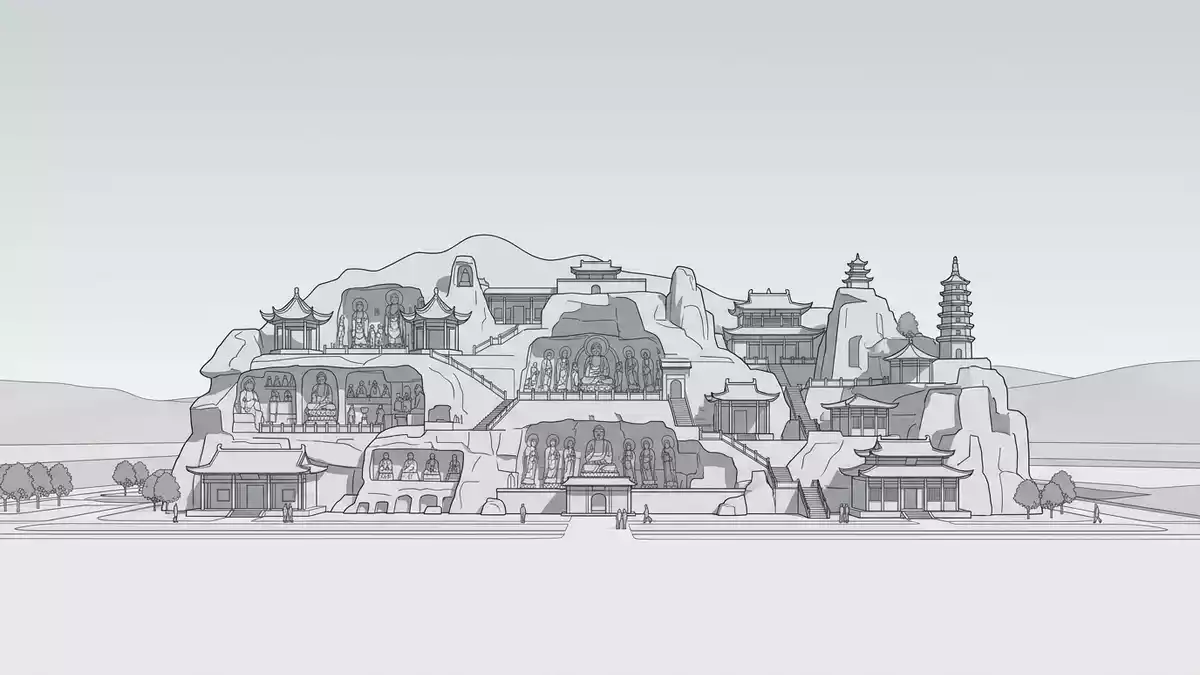
Dazu Shike brings together thousands of religious figures carved directly into sandstone cliffs in Dazu District, west of central Chongqing in south-west China. Between the ninth and thirteenth centuries, craftsmen cut entire cliff faces into images that span Buddhism, Daoism and Confucianism, creating one of China’s most extensive ensembles of cave temple art recognised on the UNESCO World Heritage List since 1999.
Sandstone hills turned into a carved landscape
The steep hillsides around the town of Dazu carry long bands of sculpture, where stone surfaces have been turned into continuous panels of carved figures and scenes. The core area highlighted in the UNESCO inscription is formed by five principal groups of carvings distributed across hillsides in Dazu District, each taking advantage of natural sandstone outcrops along the slopes.five clusters of rock carvings Within these hills, the carvings occupy cliffs and recessed walls, so that visitors move along paths at the base of the slopes while looking up at tiers of sculpted stone.
The World Heritage documentation refers to 75 protected cliff sites across the district, containing a very large body of sculpture and carved text. Together these sites hold an estimated 50,000 statues accompanied by more than 100,000 Chinese characters in inscriptions and epigraphs, making the rock art of Dazu among the most extensive carved ensembles in China.75 protected sites with tens of thousands of statues The carvings stand in sandstone, so the figures and reliefs share the warm tones of the local rock even where traces of polychrome survive.
From the Tang to the Song dynasties
The history of Dazu Shike spans several imperial periods, with carving activity beginning in the Tang dynasty and continuing into the Song dynasty. The earliest work is linked to the reign of Emperor Yonghui in the seventh century, and major phases of carving are dated between the ninth and thirteenth centuries, giving the ensemble a long chronological depth.representing cave temple art between the ninth and thirteenth centuries These centuries were a period in which religious sculpture and cave temple art across China took on complex programmes, and the Dazu carvings form a late and particularly rich chapter in that story.
UNESCO added the Dazu Rock Carvings to the World Heritage List in December 1999 as cultural property number 912, recognising their outstanding artistic quality and diversity of subject matter.inscription on the World Heritage List in 1999 The listing emphasises not only the religious significance of the carvings but also the insight they provide into everyday life in medieval China, preserved in scenes that show domestic activity, processions and figures drawn from different strands of Chinese thought.
Religious imagery carved across the cliffs
Dazu Shike is noted for combining Buddhist, Daoist and Confucian imagery across its sculpted surfaces. Figures of Buddhas, bodhisattvas and guardians stand beside deities and personifications associated with Daoism, while scenes reflecting Confucian values are woven into the panels. The ensemble has been described as a harmonious coexistence of these three traditions within one carved landscape, rather than separate sites for each.coexistence of Tantric Buddhism, Taoism and Confucianism This mixture gives the cliffs a narrative rhythm in which different teachings share the same stone.
Among the principal locations, Beishan and Baodingshan are frequently singled out for their scale and density of carving. At Beishan, panels of sculpture run along a cliff face that extends for a considerable length, while Baodingshan contains some of the most complex groupings of figures in Dazu District.Beishan and Baodingshan among the five locations In both places, visitors encounter closely spaced figures, reliefs and narrative scenes carved into the sandstone, with traces of colour and fine detail still visible in many areas where the surface has remained protected.
Visiting Dazu Shike: what travellers from Western Europe should know
- Dazu Shike is located in Dazu District to the west of central Chongqing in south-west China, with the main carved cliffs lying near the town of Dazu.
- The terrain around the carvings consists of sandstone hillsides and cliff paths, and a visit involves walking along uneven stone surfaces and stairways beneath the sculpted walls.
- The official language is Chinese and the currency is the renminbi (yuan).
- Entry requirements depend on your nationality; UK travellers can check the FCDO travel advice at gov.uk/foreign-travel-advice, Irish travellers the Department of Foreign Affairs at ireland.ie.
Searching for Dazu Shike on social platforms
These links open searches for Dazu Shike on each platform.
Frequently asked questions about Dazu Shike
Where is Dazu Shike?
Dazu Shike refers to the rock carvings in Dazu District, west of central Chongqing in south-west China, carved into sandstone cliffs near the town of Dazu.
What can visitors expect on a visit?
Visitors walk along paths at the base of carved cliffs, viewing long panels of religious sculpture cut into sandstone hillsides at several principal sites such as Beishan and Baodingshan.
What makes Dazu Shike distinctive?
Dazu Shike stands out for the scale of its cliffside carvings, the mix of Buddhist, Daoist and Confucian imagery, and its inscription as a UNESCO World Heritage Site in 1999.


