
Daibutsu in Kamakura: a bronze Buddha under the open sky
Published on 09/04/2026 at 18:09 | Editorial responsibility: Rafael Müller, Editor-in-Chief AD HOC NEWS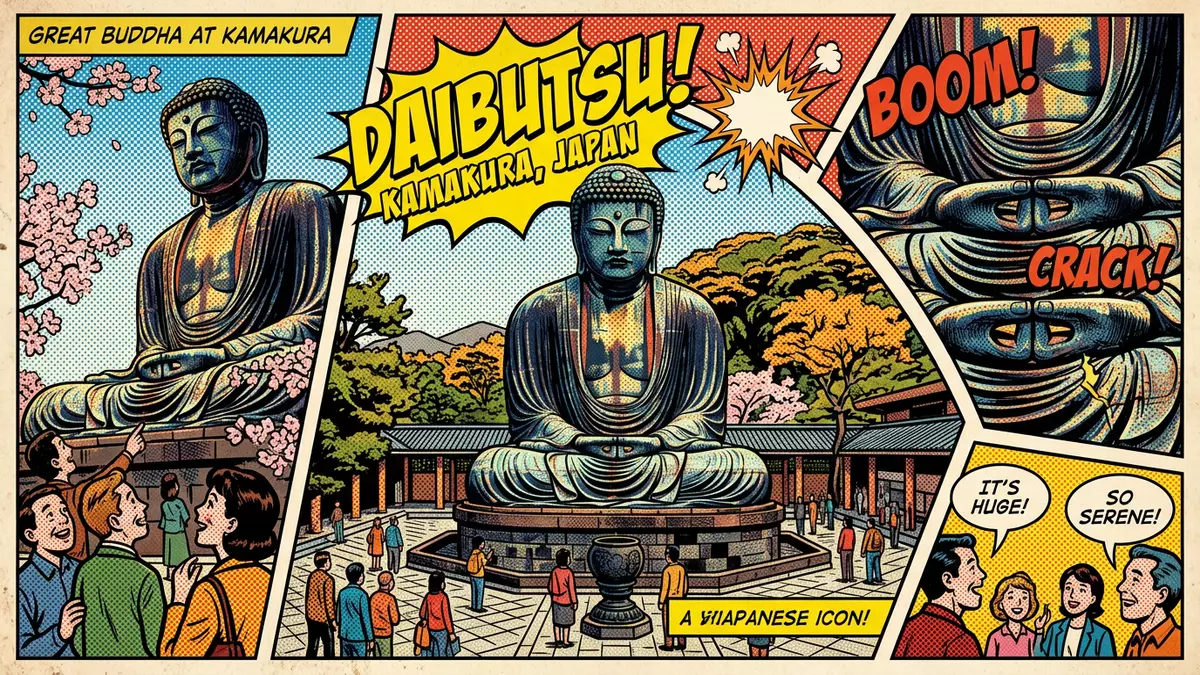
Daibutsu in Kamakura, known in English as the Great Buddha of Kamakura, is a monumental bronze statue of Amida Buddha seated under the open sky at Kotoku-in temple in Japan. Cast in the thirteenth century and left outdoors after its hall was destroyed, this great figure combines heavy bronze and coastal light in a way that defines the character of the temple grounds.
A seated Buddha of bronze and coastal light
Daibutsu stands on the grounds of Kotoku-in, a temple of the Jodo sect in the coastal city of Kamakura in Kanagawa Prefecture, south of Tokyo. The statue represents Amida Buddha, also known as Amitabha, a celestial Buddha central to Pure Land Buddhism and a focus of devotion at Kotoku-in.Amida-butsu as the principal image The figure is cast in bronze and sits cross-legged on a lotus pedestal, with its hands resting in a meditative gesture and its face inclined slightly downward.
The bronze statue of Daibutsu reaches a height of about 11.3 m (37 ft) for the figure itself, and around 13.35 m (43.8 ft) when the stone base is included.height including the base Its mass is given in official information as approximately 121 tonnes, reflecting the substantial volume of bronze used in its construction.statue height and weight Despite this weight, the posture is calm and composed, with the folds of the robe flowing down towards the pedestal and the ushnisha, the cranial protuberance symbolic of the Buddha’s wisdom, rising above the head.
Thirteenth-century origins and a temple without a roof
The history of Daibutsu at Kotoku-in reaches back to the Kamakura period, when Kamakura served as the seat of the shogunate and a centre of samurai rule. Construction of the bronze statue is recorded in the Azuma Kagami chronicle as having begun in 1252, during the Kencho era.construction beginning in 1252 A wooden statue dedicated to Amida Buddha stood on the site before this, and the bronze version followed as a more durable image in an age of religious and political change.origins in the Kamakura period
When Daibutsu was first cast, it was housed inside a large hall known as Daibutsu-den, which enclosed the statue and created an interior space around it. Historical records report that this hall suffered damage in major storms in the fourteenth century and was ultimately destroyed by a powerful earthquake and tsunami in 1498.loss of the Daibutsu-den hall Since the late fifteenth century the Great Buddha has stood in the open air, with sky and weather visible above the statue rather than a roof or ceiling. The absence of a hall means that the bronze surfaces catch daylight directly, with shadows forming around the robe and pedestal and the surrounding trees framing the view.
A national treasure in a coastal temple setting
Daibutsu is formally designated a National Treasure of Japan, a status that marks the statue as a work of outstanding cultural importance.designation as a National Treasure Among the numerous Buddha images in Kamakura, it is the only seated bronze statue of Amida at Kotoku-in to carry this designation, and it has become a visual symbol of the former shogunate city.national treasure statue at Kotoku-in The iconography follows Pure Land tradition, with the Buddha seated in quiet contemplation, eyes half closed and lips set in a slight, composed line.
The temple grounds place the statue in a broad courtyard, reached along a path lined with trees and stone lanterns. From the approach, Daibutsu appears framed by the surrounding greenery, with the coastal hills behind and the open sky above the bronze head. The combination of large-scale metalwork, religious imagery and outdoor setting makes the encounter with the statue markedly different from viewing a Buddha inside a dim hall, as the changing daylight highlights different aspects of the casting and the proportions of the figure against the landscape.
Visiting Daibutsu: what travellers from Western Europe should know
- Daibutsu stands at Kotoku-in in the Hase district of Kamakura, in Kanagawa Prefecture, south of Tokyo; the site is reached by local rail and bus services from Kamakura and Hase stations.
- The temple grounds are largely level, with an approach on foot from the entrance and a series of stone surfaces and steps around the statue and courtyard.
- The coastal setting means that summers are warm and humid, while winters are comparatively cool; the statue remains outdoors in all seasons.
- The official language is Japanese and the currency is the yen.
Searching for Daibutsu on social platforms
These links open searches for Daibutsu on each platform.
Frequently asked questions about Daibutsu
Where is Daibutsu located?
Daibutsu stands at Kotoku-in, a Jodo sect temple in the Hase district of Kamakura in Kanagawa Prefecture, on the Pacific coast south of Tokyo.
What can visitors expect when they reach the statue?
Visitors find a large bronze Buddha seated on a stone base in an open courtyard, with trees, hills and sky forming the backdrop rather than an enclosed temple hall.
What makes Daibutsu distinctive among Buddha statues in Japan?
The combination of its thirteenth-century bronze casting, its status as a National Treasure and its long-standing position outdoors at Kotoku-in gives Daibutsu a distinctive presence within Japan’s Buddhist heritage.


