

Daibutsu in Kamakura: a bronze Buddha under the open sky
Published on 08/23/2026 at 11:35 | Editorial responsibility: Rafael Müller, Editor-in-Chief AD HOC NEWS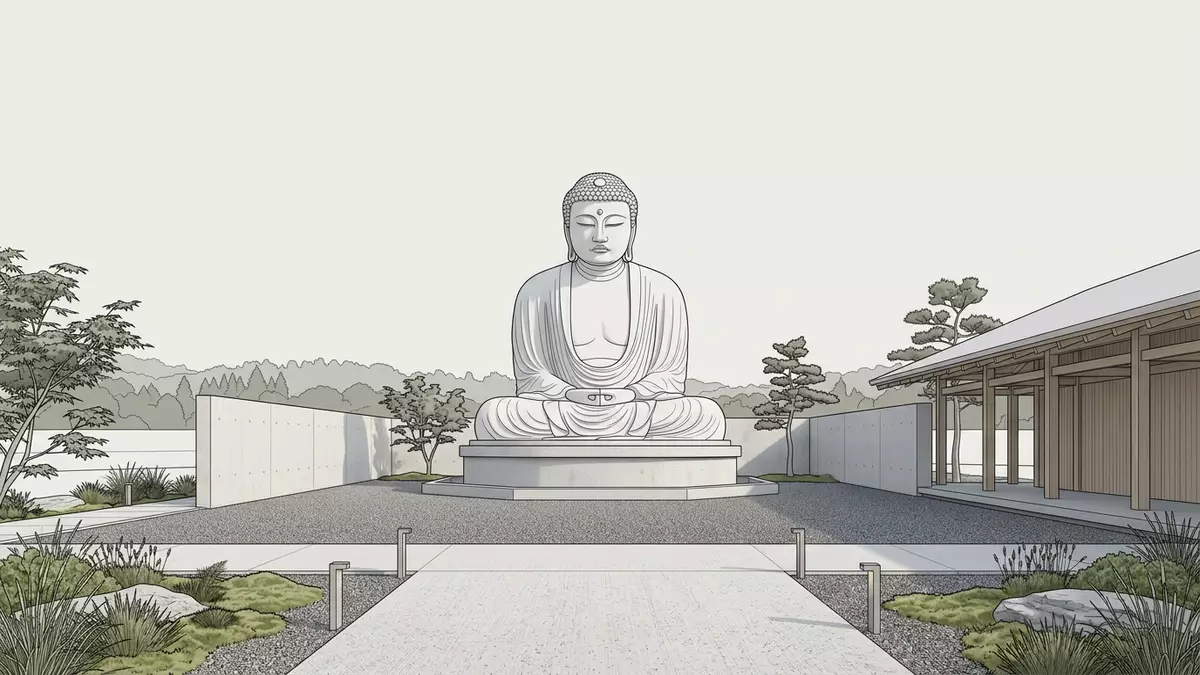
Daibutsu in Kamakura, known in English as the Great Buddha of Kamakura, is a monumental bronze statue of Amida Buddha seated in the open air at Kotoku-in temple in Japan. Cast in the thirteenth century and now standing beneath the sky rather than inside a hall, it brings together sculpture, landscape and light in a way that defines many visits to Kamakura.
A thirteenth-century Buddha facing the elements
The Great Buddha of Kamakura stands on the grounds of K?toku-in, a J?do-sh?, or Pure Land, Buddhist temple in the Hase district of Kamakura in Kanagawa Prefecture. The statue represents Amida Buddha and has been a principal image of worship at this seaside temple since the Kamakura period, a time when Kamakura served as the seat of the shogunate.Principal image of Kotoku-in
Bronze casting of the statue began in 1252, during the thirteenth century, placing Daibutsu firmly within the age of samurai rule and the flourishing of Buddhist art under the Kamakura shogunate.Construction began in 1252 The figure is seated in meditation, hands resting in its lap in a Pure Land mudra, with elongated earlobes and tightly patterned curls characteristic of traditional Buddha iconography.
Scale, material and open-air presence
Daibutsu is a large bronze figure that reaches about 11.3 m (37 ft) in height for the statue alone, and around 13.35 m (43.8 ft) including its stone base, with a weight in the region of 121 tonnes.Height and weight of the statueColossal copper image of Amida Buddha The statue sits cross-legged on a lotus pedestal, its heavy bronze surfaces catching daylight and sea air, and its calm facial expression visible from the temple approach.
The Buddha was originally enclosed within a temple hall, but after that structure was destroyed multiple times by storms and a tsunami in 1498, the statue has remained outdoors and now stands permanently in the open.Standing in the open air since 1498 On a visit, what stands out is the direct meeting between bronze and weather: clouds pass behind the Buddha’s head, rain darkens the metal, and clear days bring a sharp contrast between the greenish patina and the blue of the sky.
K?toku-in, Kamakura and the setting by the sea
K?toku-in lies in the Hase neighbourhood of Kamakura, a coastal city south of Tokyo that faces Sagami Bay. The temple belongs to the J?do sect of Buddhism and is known primarily for Daibutsu, which is designated as a National Treasure of Japan.National Treasure bronze statue Within the grounds, the Buddha dominates an open courtyard backed by low wooded hills, with smaller structures and stone lanterns arranged around it.
Remnants of the foundations of the former great hall that once sheltered the statue are still visible on the grounds, marking out the footprint of the earlier building.Remains of the former hall foundations A quiet residential district stretches away from the temple, and the sea lies within walking distance, so a visit to Daibutsu often links temple architecture, urban streets and the shoreline in a single outing.
Visiting Daibutsu: what travellers from Western Europe should know
- Daibutsu stands within K?toku-in in the Hase district of Kamakura, south of central Tokyo, and is reached on foot from Hase Station on the Enoshima Electric Railway.
- The temple approach includes level paths and some steps, and the area immediately around the statue is paved, with additional steps leading up onto the base of the Buddha.
- Kamakura is a coastal city on Sagami Bay, and the combination of sea air and wooded hills around K?toku-in gives the temple grounds an outdoor character that contrasts with inner-city shrines.
- The official language is Japanese and the currency is the Japanese yen.
- Entry requirements depend on your nationality; UK travellers can check the FCDO travel advice at gov.uk/foreign-travel-advice, Irish travellers the Department of Foreign Affairs at ireland.ie.
Searching for Daibutsu on social platforms
These links open searches for Daibutsu on each platform.
Frequently asked questions about Daibutsu
Where is Daibutsu in Kamakura located?
Daibutsu stands within K?toku-in, a J?do-sh? Buddhist temple in the Hase district of Kamakura in Kanagawa Prefecture, a coastal city south of Tokyo.
What should visitors expect when seeing Daibutsu?
Visitors encounter a large bronze Buddha seated outdoors in a temple courtyard, with paved approaches, surrounding trees and views of the statue from various angles.
What makes the Great Buddha of Kamakura distinctive?
The combination of its thirteenth-century origins, substantial bronze scale and permanent open-air setting at K?toku-in gives Daibutsu a presence that ties sculpture directly to sky and weather.


