

Daibutsu in Kamakura, a bronze Buddha under open sky
Published on 08/22/2026 at 13:06 | Editorial responsibility: Rafael Müller, Editor-in-Chief AD HOC NEWS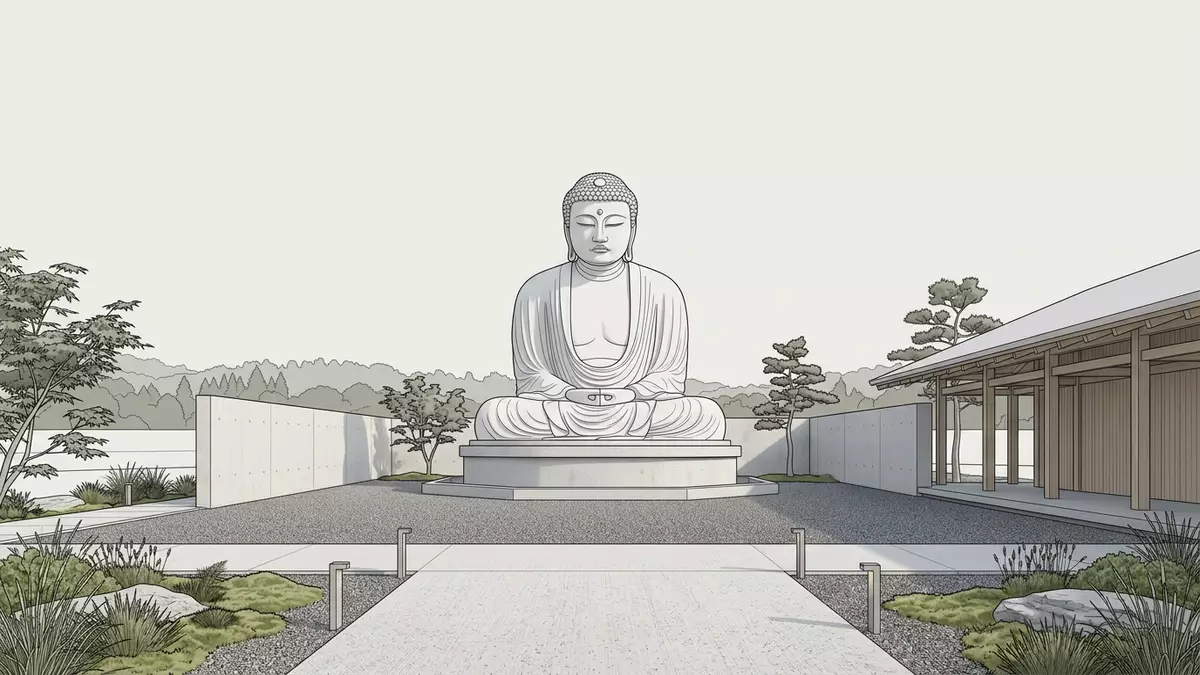
Daibutsu in Kamakura is a monumental bronze statue of Amida Buddha seated in the open air at Kotoku-in temple in the coastal city of Kamakura in Japan. Cast during the Kamakura period in the thirteenth century, this outdoor figure has become a shorthand image for Kamakura itself and for Buddhist sculpture in Japan.
A bronze Buddha shaped by the Kamakura period
The statue known as Daibutsu stands on the grounds of Kotoku-in, a temple of the Jodo, or Pure Land, school of Buddhism in Kamakura’s Hase district. The figure represents Amida Buddha and is cast in bronze, a material that gives the surfaces a distinctive patina under changing light.Kotoku-in describes the statue as the principal image of the temple.
Temple records and later documentation attribute the casting of the statue to the year 1252, in the Kamakura period when Kamakura functioned as the seat of the shogunate.The Great Buddha of Kamakura at Kotokuin Temple describes Daibutsu as a bronze seated Amida associated with that era, with formal ties to Pure Land Buddhism. Over the centuries the statue has remained in place while other structures around it have changed.
Scale in bronze: height, weight and posture
What many visitors notice first is the sheer scale of Daibutsu, balanced by the calm pose of the seated figure. Measurements given by temple and government sources describe a statue that stands a little over 11 m tall from base to head, with a total height including the stone base of 13.35 m (43.8 ft) and a weight in the region of 121 tonnes (133 tons).Descriptions of Kamakura’s Great Buddha and visitor guides agree on this broad range of figures.
The seated Amida rests upon a lotus-style base, with legs folded and hands joined in front. The head carries tightly ordered hair curls and a ushnisha, while the drapery runs in broad folds across the chest and knees. The statue is hollow, formed from bronze sections joined together, and an interior space inside the figure shows the structural ribs and reinforcements that support the shell.Accounts of the bronze colossus describe this combination of sculptural surface and internal structure as part of its character.
An outdoor Buddha amid temple grounds and seaside hills
Daibutsu is unusual among large Japanese Buddha statues in that it stands outdoors, exposed to rain and sun rather than enclosed in a great hall. The bronze surface carries traces of gilding and has weathered to green and brown tones, contrasted by the pale stone of the base and the simple gravel of the courtyard. Around the statue, low buildings of Kotoku-in and planted areas frame the figure without obscuring its outline.Guides to the Great Buddha of Kamakura emphasise its open-air setting as a defining feature.
The temple lies in Hase, a neighbourhood of Kamakura backed by low hills and reached by local rail from Kamakura Station. Within the grounds, visitors move from the entrance towards a forecourt where the bronze figure dominates the view, with smaller structures and trees arranged around the central axis. From some points, the outline of surrounding hills appears behind the statue, connecting this religious site to the wider landscape of Kamakura and the nearby coast.
Visiting Daibutsu: what travellers from Western Europe should know
- Daibutsu stands within Kotoku-in temple in the Hase district of Kamakura, south-west of central Tokyo. The temple lies a short walk from Hase Station on the Enoden railway.
- The temple grounds are largely level, with gravel surfaces and a broad approach to the statue. Steps appear at some subsidiary structures, and the interior of the statue is accessed through a narrow opening.
- Kamakura sits on the Pacific coast of Honshu, backed by low hills and facing Sagami Bay. Weather can vary, and the exposed bronze statue has no enclosing hall.
- The official language is Japanese and the currency is the yen.
- Entry requirements depend on your nationality; UK travellers can check the FCDO travel advice at gov.uk/foreign-travel-advice, Irish travellers the Department of Foreign Affairs at ireland.ie.
Searching for Daibutsu on social platforms
These links open searches for Daibutsu on each platform.
Frequently asked questions about Daibutsu
Where is Daibutsu in Kamakura located?
Daibutsu stands within Kotoku-in, a Pure Land Buddhist temple in the Hase district of Kamakura in Kanagawa Prefecture on Japan’s Pacific coast.
What should visitors expect when seeing Daibutsu?
Visitors enter a temple courtyard where a large seated bronze Buddha stands outdoors on a stone base, with low temple buildings and planted areas around the figure.
What makes Daibutsu distinctive among Buddha statues in Japan?
Daibutsu is a large thirteenth-century bronze statue of Amida Buddha that stands in the open air, with a height of about 13.35 m including its base.


