
Daibutsu in Kamakura: a bronze Buddha beneath the open sky
Published on 09/24/2026 at 09:57 | Editorial responsibility: Rafael Müller, Editor-in-Chief AD HOC NEWS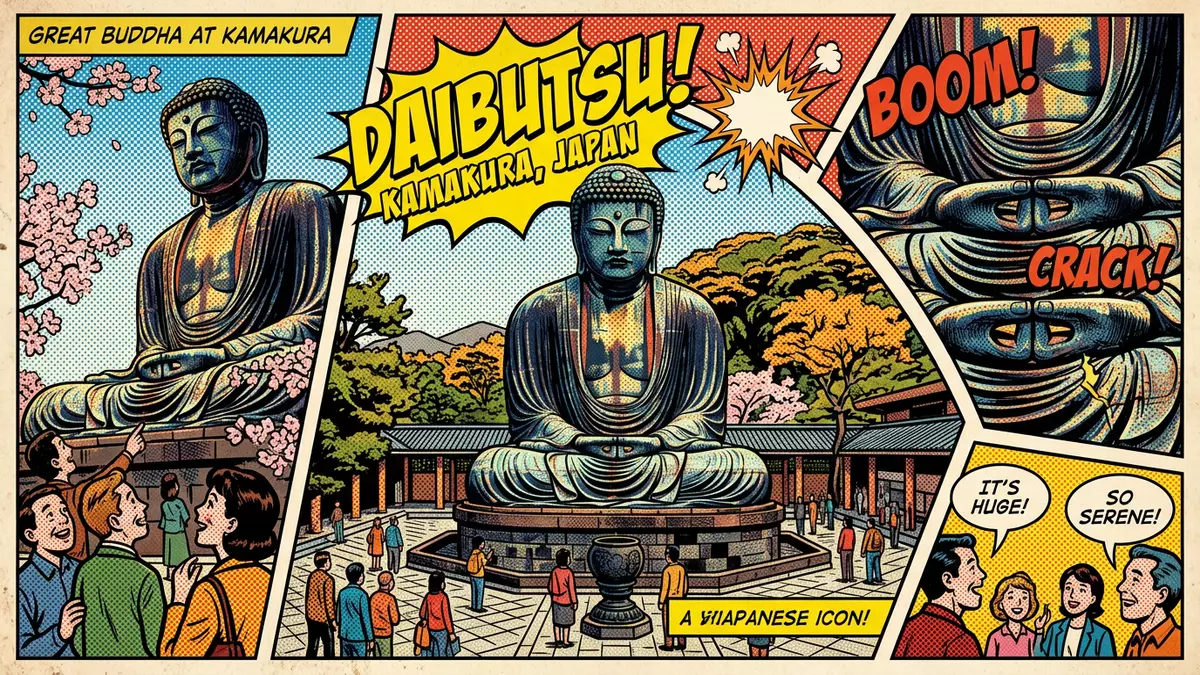
Daibutsu sits beneath the open sky at K?toku-in in Kamakura, a monumental bronze image of Amida Buddha. The statue rises 11.3 metres (37 ft) and weighs around 121 tonnes, while its exposed setting forms part of its visible character.
Daibutsu and the Kamakura period
Construction of Daibutsu began in 1252, during the Kamakura period, when Kamakura served as a major political and religious centre in Japan. The statue is the principal image of K?toku-in, a temple belonging to the J?do Sect of Buddhism. Its religious subject is Amida, the Buddha associated with the Western Pure Land. K?toku-in’s Great Buddha is designated a National Treasure of Japan.
The artist has not been identified, and details of the construction remain unclear. The surviving figure retains its original form as a major example of Japanese Buddhist art. Its broad seated body, composed of bronze, presents a calm face above a vast lap and crossed legs.
A bronze figure without a hall
Daibutsu was originally housed inside a large hall. Historical records describe damage to that building from typhoons in 1334 and 1369, followed by destruction in an earthquake in 1498. The Buddha then remained in the open air, where weathering became part of its long physical history.
The statue’s scale is easiest to read through its individual features. The face measures 2.35 metres (7.7 ft), each ear reaches about 1.9 metres (6.2 ft), and the distance between the knees is about 9.1 metres (29.9 ft). These proportions turn a seated figure into an architectural presence. Daibutsu’s recorded dimensions place the statue among Japan’s major bronze Buddha images.
K?toku-in’s grounds and surrounding details
Daibutsu stands within the grounds of K?toku-in in Hase, Kamakura. The temple setting includes Ni?mon, a gate associated with guardian Deva Kings, and Kangetsud? Hall, a historic building connected with Seoul before its relocation to Japan. The grounds therefore bring together the seated bronze figure, temple architecture and smaller religious works.
A pair of straw sandals measuring 1.8 metres (5.9 ft) hangs beside the statue. The sandals add a human-scale object to the precinct, while the Buddha’s monumental face and hands remain fixed above them. Inside the statue, visitors find a hollow interior formed within the bronze construction. Kamakura Daibutsu in Hase identifies the temple grounds and the statue’s principal features.
Visiting Daibutsu: what travellers from Western Europe should know
- Daibutsu is in Hase, Kamakura, at K?toku-in. The Enoshima Electric Railway reaches Hase Station from Kamakura Station, followed by a signed walk to the temple.
- The approach leads through an urban temple district rather than mountain terrain. Within the grounds, the Buddha stands on level surfaces beside temple buildings and garden elements.
- The statue’s interior is accessible through an opening in its body. The visit combines the exterior bronze figure with a view inside its hollow construction.
- The official language is Japanese and the currency is the Japanese yen.
Searching for Daibutsu on social platforms
These links open searches for Daibutsu on each platform.
Frequently asked questions about Daibutsu
Where is Daibutsu?
Daibutsu stands at K?toku-in in Hase, within Kamakura, Kanagawa Prefecture, Japan. Hase Station on the Enoshima Electric Railway is the nearest named railway stop.
What can visitors see?
The grounds contain the open-air bronze Buddha, temple buildings, guardian figures, Kangetsud? Hall and large straw sandals. An opening also provides access to the hollow interior.
What makes Daibutsu distinctive?
Daibutsu is an 11.3-metre bronze image of Amida Buddha dating from the Kamakura period. Its open-air setting and 1252 construction date define its historical appearance.


