
Dai Noi Hue, the walled imperial heart of Hue
Published on 09/16/2026 at 10:57 | Editorial responsibility: Rafael Müller, Editor-in-Chief AD HOC NEWS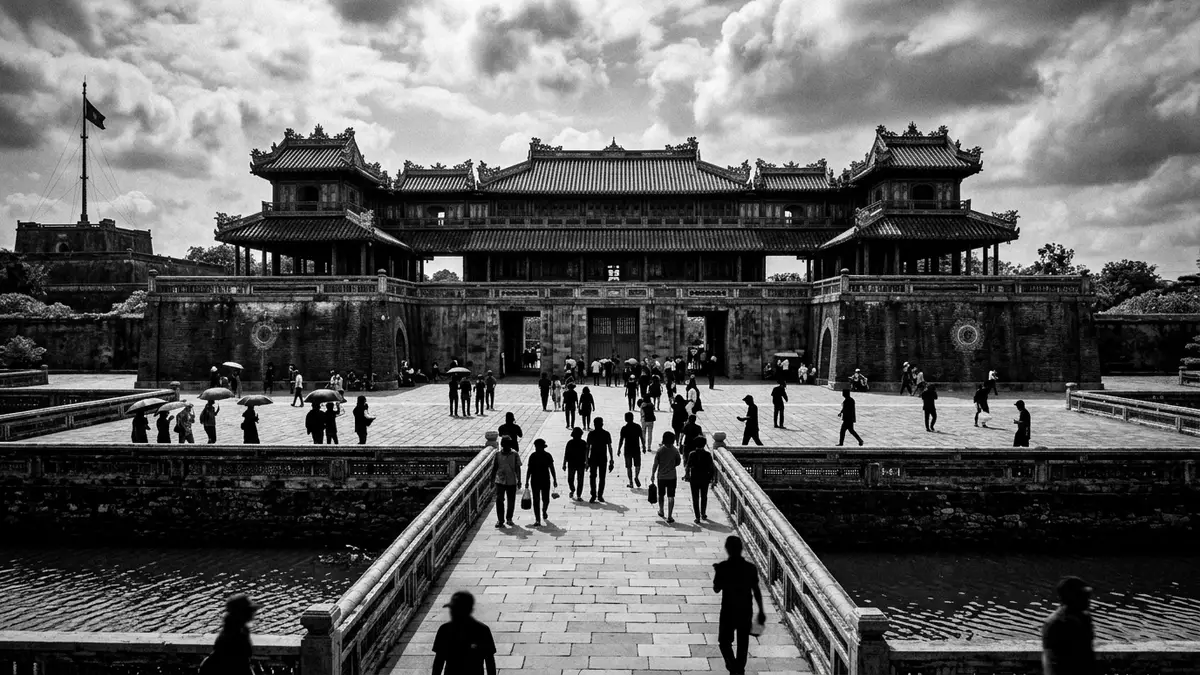
Dai Noi Hue, the Imperial City of Hue, is a vast walled royal enclosure on the north bank of the Perfume River in central Vietnam. It formed the ceremonial and administrative heart of the Nguyen dynasty’s capital in the nineteenth and early twentieth centuries, within the wider citadel known in Vietnamese as the Kinh Thanh.
The imperial citadel on the Perfume River
Dai Noi Hue sits within the Hue Citadel, a fortified urban rectangle laid out under Emperor Gia Long in the early nineteenth century on flat land north of the Perfume River. The citadel’s earth and brick ramparts form a long polygon pierced by city gates and surrounded by a moat that still reads as a defensive belt around the old imperial quarters.four defended enclosures made up the city Kinh Thanh Inside this outer frame, the Imperial City or Hoang Thanh, locally called Dai Noi, occupies a nearly square space aligned on a north–south axis and enclosed by its own brick walls and water channels.
The enclosure of Dai Noi Hue faces south towards the river and the modern districts beyond, symbolically presenting its principal gate to the city and the wider country. That gate, known as Ngo Mon or Meridian Gate, stands on the southern side of the inner walls and leads into the core sequence of courtyards and halls that once staged imperial ceremonies.Ngo Mon Gate is the main southern entrance to the Imperial City Beyond Ngo Mon, the ground rises gently through stone-paved platforms and ornamental ponds towards palaces that held the throne room and other state spaces.
Architecture, layout and dynastic legacy
Dai Noi Hue reflects a synthesis of Vietnamese and Chinese palace architecture filtered through the political culture of the Nguyen dynasty. The Imperial City’s walls are laid out as a near square, each side extending for several hundred metres, braced by bastions and edged by a moat that defines the separation between courtly space and the rest of Hue.Hoang Thanh has a space of nearly square, each surface about 600 m Within this geometry, buildings stand largely in timber on stone plinths, with tiled roofs and courtyards that divide ritual, administrative and residential zones.
The Nguyen emperors ruled from Dai Noi Hue from the beginning of the nineteenth century until the mid twentieth century, using its palace compounds as both residence and stage for court ritual.the Nguyen family controlled southern and central Vietnam from Dai Noi At the heart of the complex lies the Forbidden Purple City, a more tightly enclosed inner precinct behind the main audience hall that once housed the emperor’s private apartments and domestic life.Tu Cam Thanh, the Forbidden Purple City, formed part of the Inner City Together, these layered enclosures embody an imperial order organised through gates, axes and ritual spaces that remain legible even after political power moved away.
Dai Noi Hue as a World Heritage landscape
Dai Noi Hue forms the core of the Complex of Hue Monuments, a cultural landscape inscribed on the UNESCO World Heritage List in 1993. The listed area extends beyond the inner walls to include the wider citadel, royal tombs in the surrounding countryside, temples and other associated sites that together document the Nguyen dynasty’s seat in Hue.the Complex of Hue Monuments is in and around Hue City Within this ensemble, Dai Noi Hue stands out as the most concentrated expression of imperial architecture and planning, the place where ceremonial avenues, palace roofs and defensive works converge.
The scale of the walled city is substantial: the wider Dai Noi citadel, including the Imperial City, runs to a circumference of around 11 km (6.8 mi), enclosing an urban landscape of moats, ramparts and historic buildings.the citadel’s walled circumference is about 11 km Although war and weather have damaged many structures, restoration has returned several key halls, gates and ornamental features to forms that evoke their nineteenth-century appearance, and the pattern of walls, axes and water basins continues to structure the city around it.the Imperial City or Dai Noi is a royal enclosure within the walled city of Hue
Visiting Dai Noi Hue: what travellers from Western Europe should know
- Dai Noi Hue lies in Hue in central Vietnam, on the north bank of the Perfume River opposite the city’s modern commercial districts and riverfront streets.
- The approach to the Imperial City involves crossing bridges over moats and walking through large stone-paved courtyards, with substantial distances on foot between gates, halls and garden areas.
- The official language is Vietnamese and the currency is the Vietnamese dong.
- Entry requirements depend on your nationality; UK travellers can check the FCDO travel advice at gov.uk/foreign-travel-advice, Irish travellers the Department of Foreign Affairs at ireland.ie.
Searching for Dai Noi Hue on social platforms
These links open searches for Dai Noi Hue on each platform.
Frequently asked questions about Dai Noi Hue
Where is Dai Noi Hue located?
Dai Noi Hue is in Hue in central Vietnam, within the Hue Citadel on the north bank of the Perfume River and aligned on a south-facing axis.
What can visitors expect inside the Imperial City?
Visitors walk through walled courtyards, palace terraces, ornamental ponds and garden areas, with historic gates and ceremonial halls arranged along a main north–south route.
What makes Dai Noi Hue distinctive among historical sites?
Its layered system of moats, ramparts, imperial gates and palace compounds forms a complete walled royal city that still shapes Hue’s urban landscape.


