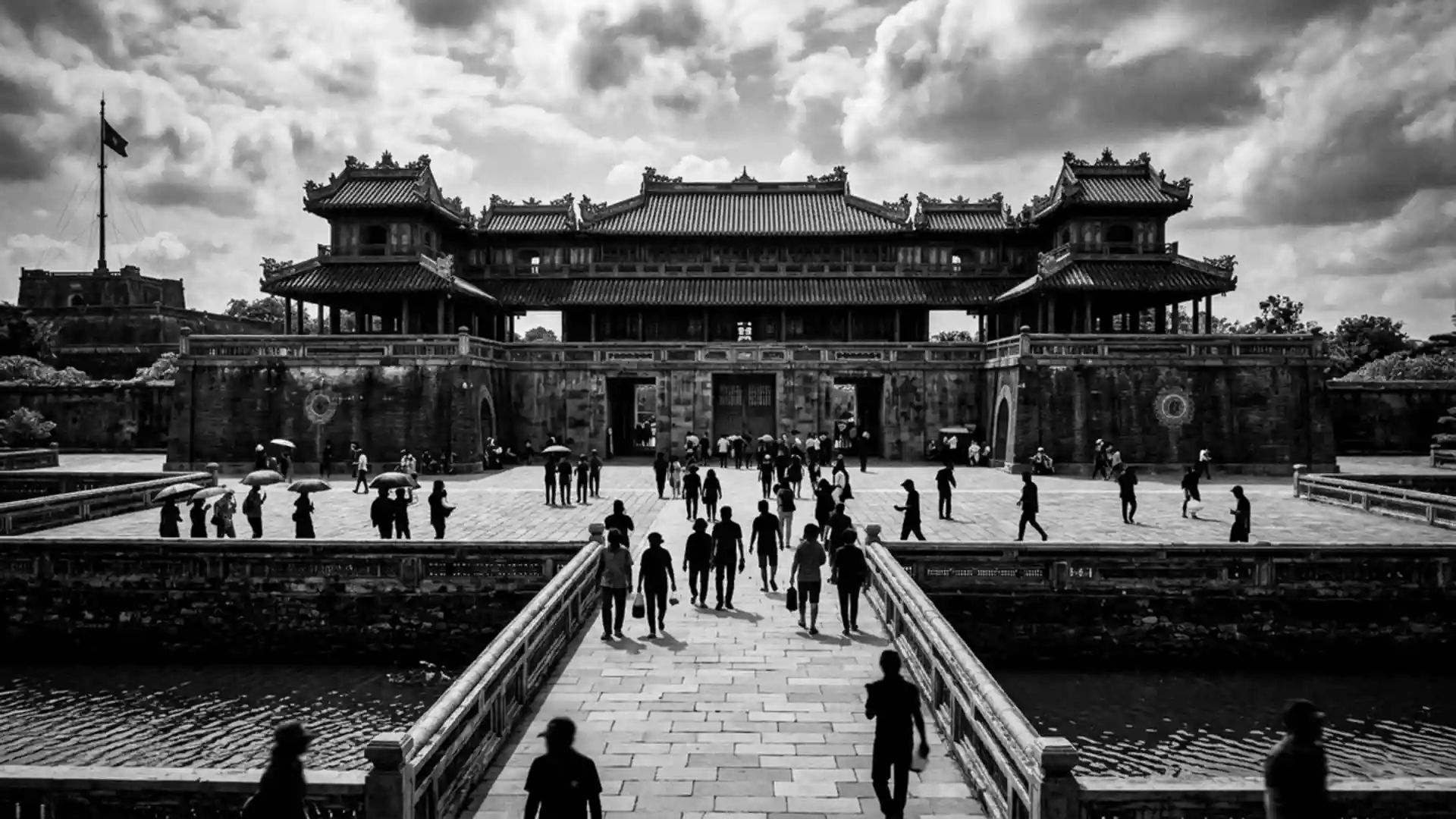
Dai Noi Hue, the imperial citadel on the Perfume River
Published on 09/11/2026 at 22:19 | Editorial responsibility: Rafael Müller, Editor-in-Chief AD HOC NEWS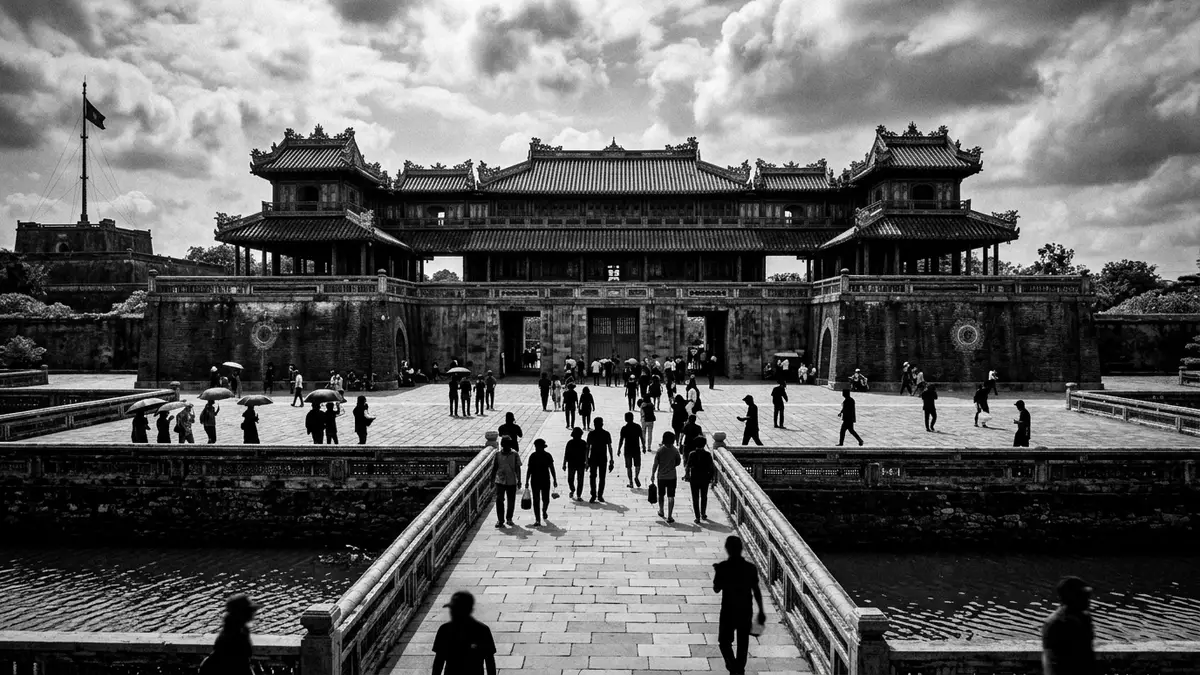
Dai Noi Hue, the Imperial City of Hue, is the inner royal enclosure of the Nguyen dynasty’s citadel on the north bank of the Perfume River in central Vietnam. Built in the early nineteenth century as part of a planned walled capital, it still reads as a self-contained city of palaces, courtyards and defensive works laid out behind monumental gates.
The royal heart of Hue’s walled city
Dai Noi Hue forms the royal core inside Hue’s larger imperial citadel, known in Vietnamese as the Kinh Thanh, or walled city, which enclosed the seat of Nguyen power for more than a century.Chinese-style imperial citadel Within this outer ring, Dai Noi acts as a second, more restricted precinct protecting the most important palaces and ancestral temples, and separating them from administrative quarters and barracks.
Construction of the imperial city complex began in the opening years of the nineteenth century under Emperor Gia Long of the Nguyen dynasty, and major elements of the inner royal enclosure were established during his reign and that of his successor Minh Mang.Hue Citadel built under Gia Long The Hue Imperial City, including Dai Noi, later became part of the Complex of Hue Monuments, recognised as a UNESCO World Cultural Heritage Site in 1993, reflecting its architectural and historical significance.Complex of Hue Monuments, UNESCO
Walls, moats and palace compounds
The wider Hue citadel is laid out as a large square fortress with long ramparts and moats defining its perimeter, and multiple gates leading into different sectors.square citadel with long walls Inside this outer defensive ring, Dai Noi forms a further enclosure of brick walls and a surrounding moat, enclosing a nearly square area that once held the highest organs of monarchy, ceremonial halls and sacred spaces dedicated to the Nguyen emperors.
Beyond its defensive profile, Dai Noi Hue is characterised by an ordered sequence of gates, courtyards and palace buildings, many aligned along a central axis. Within the inner precinct stands the Forbidden Purple City, a still more restricted compound behind the Thai Hoa Palace where the emperor and his family resided.Forbidden City behind Thai Hoa Palace Although wartime damage and later changes have altered parts of the complex, a substantial number of structures survive or have been reconstructed, helping visitors understand the spatial logic of an East Asian royal city.
Dai Noi Hue as a historic landscape
Dai Noi Hue stands on the north bank of the Perfume River, opposite the later commercial districts of Hue, and anchors the city’s historic landscape.imperial enclosure on the Perfume River From the riverfront, the ramparts and flag tower of the citadel signal the former imperial status of Hue, while the inner city reveals a layered environment where defensive earthworks, ceremonial architecture and garden courtyards coexist.
The complex preserves the legacy of the Nguyen dynasty, the last feudal dynasty of Vietnam, and illustrates how royal power was organised in physical form.Nguyen dynasty legacy Visitors encounter spaces that once served as centres of administration, ritual and residence, set within a planned grid of walls and canals that made the imperial city both a working capital and a symbolic landscape.
Visiting Dai Noi Hue: what travellers from Western Europe should know
- Dai Noi Hue lies in Hue in central Vietnam, on the north bank of the Perfume River opposite the more recent commercial districts, reached across bridges from the city streets.
- The inner precinct includes large open courtyards and long walkways, and some palace areas are accessed by stairways and passageways that require steady footing.
- The official language is Vietnamese and the currency is the Vietnamese ??ng.
- Entry requirements depend on your nationality; UK travellers can check the FCDO travel advice at gov.uk/foreign-travel-advice, Irish travellers the Department of Foreign Affairs at ireland.ie.
Searching for Dai Noi Hue on social platforms
These links open searches for Dai Noi Hue on each platform.
Frequently asked questions about Dai Noi Hue
Where is Dai Noi Hue located within Hue?
Dai Noi Hue stands within the imperial citadel on the north bank of the Perfume River in Hue in central Vietnam, opposite the city’s later commercial districts.
What can visitors expect when exploring Dai Noi Hue?
Visitors can walk through walled enclosures, palace compounds, courtyards and moats that together form a historic inner city laid out for imperial ceremony and administration.
What makes Dai Noi Hue distinctive among historic sites in Vietnam?
It is the former royal enclosure of the Nguyen dynasty, embedded in a large planned citadel and recognised as part of a UNESCO-listed complex of monuments along the Perfume River.