

Cudillero Harbour unveils Pixueta memorial on 11 October
Published on 10/18/2026 at 02:19 | Editorial responsibility: Rafael Müller, Editor-in-Chief AD HOC NEWS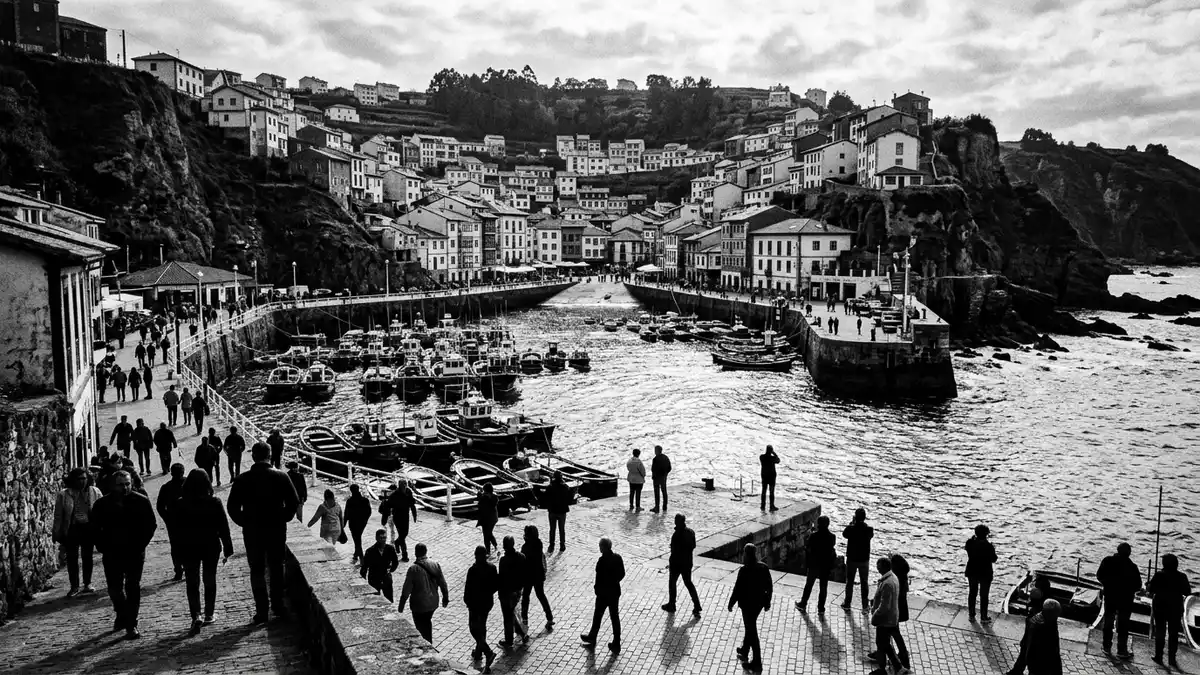
A memorial at Cudillero Harbour (Puerto de Cudillero) was unveiled on 11 October 2026, when the former Muelle del Este received a new name and two sculptures honouring Pixueta women. The change gives a permanent cultural marker to the working harbour in Cudillero, Asturias, Spain.
Pixueta memorial changes the name of an Asturias quay
The Ayuntamiento de Cudillero organised the ceremony as a tribute to women whose work supported the social, family and maritime life of the town across generations. The programme included a parade by the Avante Cuideiru bagpipe band before the institutional ceremony.
Asturian sculptor Sara Iglesias created the two bronze figures. A plaque at the entrance records the new name, Muelle de las Pixuetas, replacing the former Muelle del Este. The event also included the formal unveiling of sculptures that had been installed earlier and kept covered until the ceremony. Details of the 11 October ceremony were reported by Europa Press from information supplied by the council.
Cudillero Harbour connects the memorial with fishing history
The new memorial stands in the same waterfront setting that has shaped Cudillero's identity as a fishing village. Official Asturias tourism information describes the settlement as a natural amphitheatre, with brightly coloured houses rising above the harbour and a lower area focused on fishing and tourism.
The shoreline is not an isolated attraction but the base of the town's visual and working character. From the harbour, visitors see the steep streets and viewpoints climbing between houses, while the lighthouse marks the eastern side of the port. The Pixueta memorial therefore places the story of local women within the maritime landscape that the tribute commemorates. Asturias tourism information on Cudillero identifies the harbour, lighthouse, amphitheatre and fishing traditions as central parts of the visit.
What the new quay name means for a visit
The ceremony took place shortly before 15 October, the International Day of Rural Women, but the quay name and sculptures are intended as a lasting addition to the harbour. The public-facing change is therefore visible beyond the single ceremony: maps, directions and local references may gradually use Muelle de las Pixuetas instead of Muelle del Este.
The figures also connect the harbour to the term Pixueta, used for the people and local cultural identity of Cudillero. The memorial is a small-scale intervention, but its location makes it part of the ordinary waterfront route rather than a separate museum display.
Visiting Cudillero Harbour: what travellers from Western Europe should know
- The memorial and the new Muelle de las Pixuetas name were unveiled on 11 October 2026 at the harbour in Cudillero.
- The two sculptures and the quay plaque are the lasting visitor-facing result of the ceremony; the event itself has ended, but the memorial remains part of the waterfront setting.
- Cudillero is on the Asturias coast in northern Spain. Official tourism information directs road access via the A-8 motorway and the AS-I, AS-II and N-632 roads, with the harbour listed as Puerto Nuevo.
- The village rises steeply above the water in an amphitheatre of narrow streets and viewpoints. Reaching upper viewpoints involves uphill walking and steps, while the harbour forms the lower, maritime part of the settlement.
Searching for Cudillero Harbour on social platforms
These links open searches for Cudillero Harbour on each platform.
Frequently asked questions about Cudillero Harbour
What happened at Cudillero Harbour on 11 October 2026?
Two sculptures honouring Pixueta women were unveiled, and the former Muelle del Este was renamed Muelle de las Pixuetas.
Where is Cudillero Harbour and how do you get there?
It is in Cudillero on the Asturias coast of Spain, with road access via the A-8, AS-I, AS-II and N-632.
What is Cudillero Harbour?
It is the maritime centre of a fishing village arranged in a steep natural amphitheatre above the coast, with a harbour, lighthouse and waterfront quays.


