
Cristo Redentor and the summit line above Rio de Janeiro
Published on 09/21/2026 at 08:54 | Editorial responsibility: Rafael Müller, Editor-in-Chief AD HOC NEWS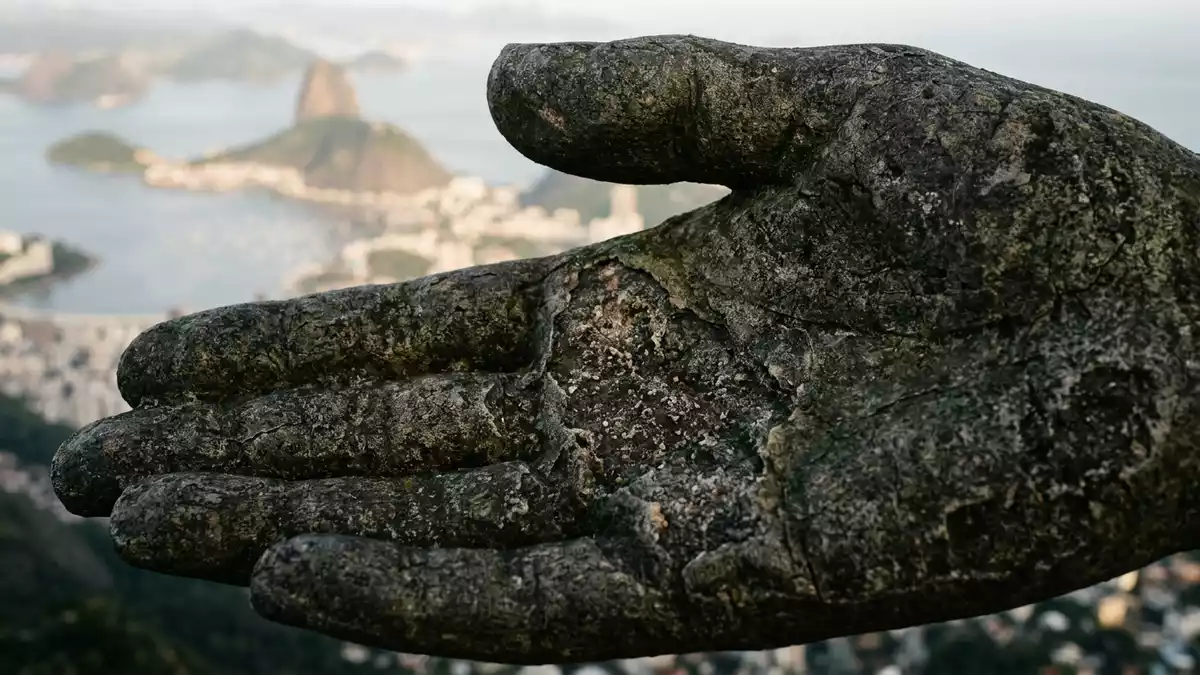
Cristo Redentor rises above Rio de Janeiro as an Art Deco figure with outstretched arms, set on Corcovado and visible across the city. Completed in 1931, it is one of Brazil’s most recognisable monuments, and its scale reads clearly against the mountain ridge.
Corcovado, concrete and the Art Deco figure
The statue was completed in 1931 and is linked with Heitor da Silva Costa, Paul Landowski, Albert Caquot and Gheorghe Leonida. The monument stands 30 metres (98 ft) high without the pedestal, and 38 metres (125 ft) with it.completed in 1931
Its figure is made from reinforced concrete and soapstone, a material combination that gives the surface a pale, matte finish. The Art Deco language is visible in the broad geometry of the body, the simplified folds and the long horizontal line of the arms.reinforced concrete and soapstone
The mountain setting above Rio de Janeiro
The statue stands on Corcovado, within the Tijuca Forest area of Rio de Janeiro, and the approach climbs into a steep urban mountain landscape. From below, the figure reads as a vertical marker above the tree line and the built-up city.on Corcovado
The mountain setting is part of the monument’s identity, because the statue and the rock face belong to the same visual composition. Guanabara Bay and the city spread around the base, while the figure remains fixed above the canopy and the slopes.the Tijuca forest
Names, dates and the monument’s recorded status
Cristo Redentor is commonly presented as part of Rio de Janeiro’s World Heritage landscape, and the monument belongs to the city’s larger cultural profile. The date 1931, the names of Heitor da Silva Costa and Paul Landowski, and the Art Deco style give the statue its historical frame.Heitor da Silva Costa and Paul Landowski
The face is associated with Gheorghe Leonida, and the structural work is linked with Albert Caquot. Those names matter because they show how the monument was realised through engineering and sculpture rather than a single hand.Gheorghe Leonida
Visiting Cristo Redentor: what travellers from Western Europe should know
- The monument stands above Rio de Janeiro on Corcovado, reached through the city’s mountain routes and rail connections. The last approach is on the hillside itself, in open terrain with broad views of the surrounding slopes.
- The setting is exposed and elevated, with stone, concrete and vegetation sharing the same summit area. The figure reads best from a distance as well as from the terraces around it.
- Brazil uses Portuguese as its official language and the currency is the Brazilian real.
- Entry requirements depend on your nationality; UK travellers can check the FCDO travel advice at gov.uk/foreign-travel-advice, Irish travellers the Department of Foreign Affairs at ireland.ie.
Searching for Cristo Redentor on social platforms
These links open searches for Cristo Redentor on each platform.
Frequently asked questions about Cristo Redentor
Where is Cristo Redentor?
It stands on Corcovado in Rio de Janeiro, above the Tijuca Forest area. The statue is part of the city’s mountain backdrop and can be seen from across much of the urban basin.
What does a visit involve?
The setting is high, open and steep, with a final ascent into the summit area. The monument is presented as a large Art Deco figure, so scale and position matter as much as the sculpture itself.
What makes Cristo Redentor distinctive?
Its combination of Art Deco form, concrete and soapstone, and its position above Rio de Janeiro creates a strong visual profile. The 1931 completion and the names linked to its making give it a clear historical identity.


