
Cristo Redentor above Rio de Janeiro’s Corcovado ridge
Published on 09/07/2026 at 07:20 | Editorial responsibility: Rafael Müller, Editor-in-Chief AD HOC NEWS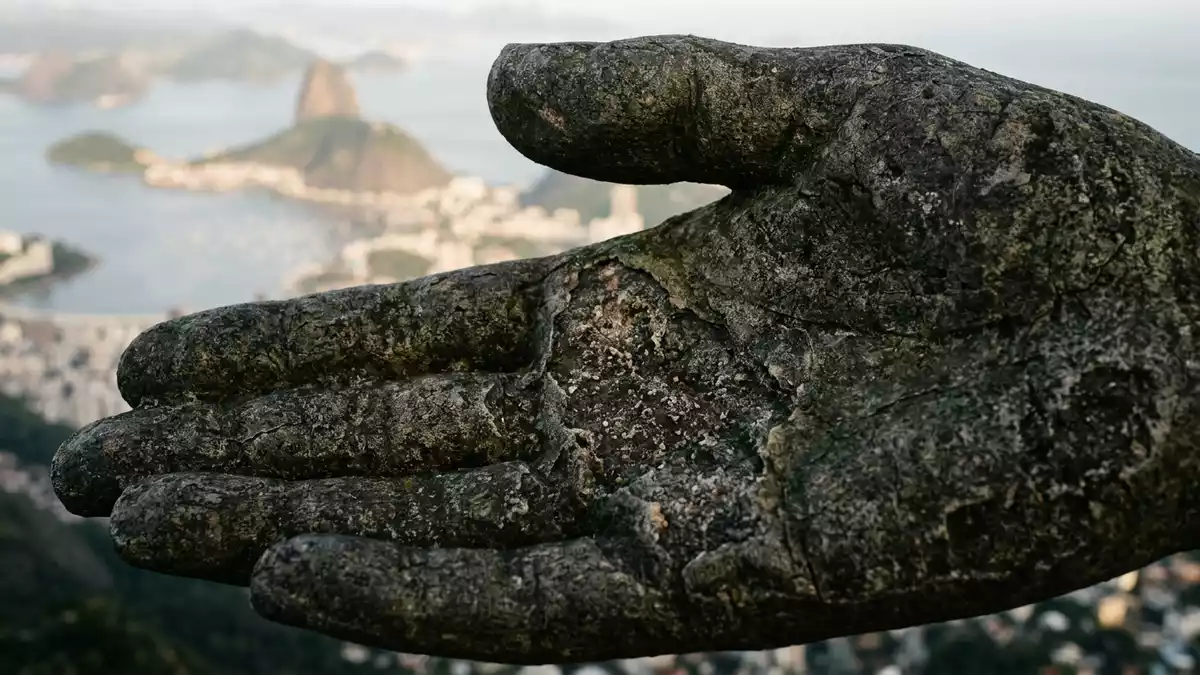
Cristo Redentor, known in English as Christ the Redeemer, stands on the summit of Corcovado above Rio de Janeiro as a vast Art Deco figure stretched along the mountain’s ridge. Completed in 1931 and rising high above the Atlantic bay, the statue turns the narrow top of Corcovado into a monumental terrace where stone, concrete and tropical forest meet.
An Art Deco Christ in concrete and soapstone
Cristo Redentor is an Art Deco statue of Jesus Christ created by the French-Polish sculptor Paul Landowski and realised with the Brazilian engineer Heitor da Silva Costa using reinforced concrete clad in soapstone tiles.Art Deco statue of Jesus The figure itself is about 30 m (98 ft) tall and stands on a pedestal around 8 m (26 ft) high, giving the monument a total height of roughly 38 m (125 ft).completed in 1931 and stands 98 feet Its arms extend outwards along the ridge with a span of about 28 m (92 ft), creating a horizontal cross against the sky.98 feet long and 92 feet wide
The statue’s reinforced concrete core carries a skin of thousands of small soapstone tiles applied by hand, giving the surface a pale, slightly mottled character that withstands the humid coastal climate.concrete armado e revestido com milhares de ladrilhos Together with its pedestal, the monument weighs around 635 metric tonnes (about 700 short tons), a mass that is carried by the internal concrete supports.statue weight: 635 metric tons The head and hands were carved in France before being brought to Brazil, while the larger body was formed on site in concrete, extending Landowski’s sculpted model into a full-scale figure.Landowski thus only carved the head and the hands
Corcovado and Tijuca: a statue in an urban forest
Cristo Redentor stands on the summit of Corcovado Mountain, a peak in the Tijuca National Park above the city of Rio de Janeiro.sits atop Brazil’s 2,300-foot Corcovado Mountain Corcovado reaches about 700 m (2,300 ft) above sea level, and its upper slopes rise steeply from urban districts into dense Atlantic forest that has been replanted and protected as an urban national park.pico a cerca de 710 m acima do nível do mar From the terraces around the statue, the view extends across the city’s bays, hills and beaches, with the granite dome of Sugarloaf and the sweep of Guanabara Bay forming part of the panorama.
The monument forms a clear landmark in the skyline and has become a recognised symbol of both Rio de Janeiro and Brazil, visible from many neighbourhoods as a pale cross-shaped figure above the forested slopes.emblematic of both the city of Rio de Janeiro Tijuca National Park itself is regarded as one of the world’s largest urban forests, with trails, viewpoints and roads climbing through dense vegetation to reach the summit zone.planet’s largest urban forest At the top, the statue, its chapel and the surrounding platform occupy most of the ridge, so the experience of the place combines mountain terrain, a major religious sculpture and wide views over the city and sea.
From idea in the nineteenth century to a twentieth-century monument
Plans for a statue of Christ on a mountain above Rio circulated in the nineteenth century, but the project that led to Cristo Redentor took shape in the 1920s alongside a national fundraising campaign by the Catholic Church in Brazil.circulavam no Rio planos para uma estátua de Cristo Commissioning took place in 1922, during the centenary of Brazilian independence, and construction works on Corcovado began the same year.Commissioned in 1922 The monument was inaugurated and dedicated on 12 October 1931, marking the completion of nearly a decade of design and building.
Christo Redentor’s style reflects the height of the Art Deco movement in monumental sculpture, and the statue is widely described as the largest Art Deco-style sculpture in the world.largest Art Deco-style sculpture in the world In 2007 it was listed among the “New 7 Wonders of the World”, a privately organised global poll that highlighted major landmarks from several continents.One of the Seven Wonders of the World Together, the long gestation of the project, the involvement of Brazilian and European designers and the combination of engineering and sculpture give the monument a clear twentieth-century character even though its subject is religious.
Visiting Cristo Redentor: what travellers from Western Europe should know
- Cristo Redentor stands on Corcovado Mountain in Rio de Janeiro, reached by road and by the Corcovado rack railway that climbs from the Cosme Velho district through Tijuca National Park.
- The summit area lies at about 700 m (2,300 ft) above sea level, and access from the arrival platforms to the base of the statue includes stairs and lift systems over several levels.
- The terrain around the monument consists of steep mountain slopes with protective railings near the platforms, and weather on the exposed summit can change quickly compared with low-lying districts.
- The official language of Brazil is Portuguese and the currency is the Brazilian real.
- Entry requirements depend on your nationality; UK travellers can check the FCDO travel advice at gov.uk/foreign-travel-advice, Irish travellers the Department of Foreign Affairs at ireland.ie.
Searching for Cristo Redentor on social platforms
These links open searches for Cristo Redentor on each platform.
Frequently asked questions about Cristo Redentor
Where is Cristo Redentor located?
Cristo Redentor stands on the summit of Corcovado Mountain in Tijuca National Park above the city of Rio de Janeiro in Brazil.
What should visitors expect at the monument?
Visitors can expect terraces around the base of the statue, stairs and lift systems between levels, and wide views over the bays, beaches and hills of Rio de Janeiro.
What makes Cristo Redentor distinctive among world landmarks?
Its combination of a large Art Deco statue of Jesus, reinforced concrete and soapstone construction, and a high position on an urban mountain ridge gives Cristo Redentor a distinctive profile.


