
Costiera Amalfitana as a Mediterranean cultural landscape
Published on 09/18/2026 at 18:09 | Editorial responsibility: Rafael Müller, Editor-in-Chief AD HOC NEWS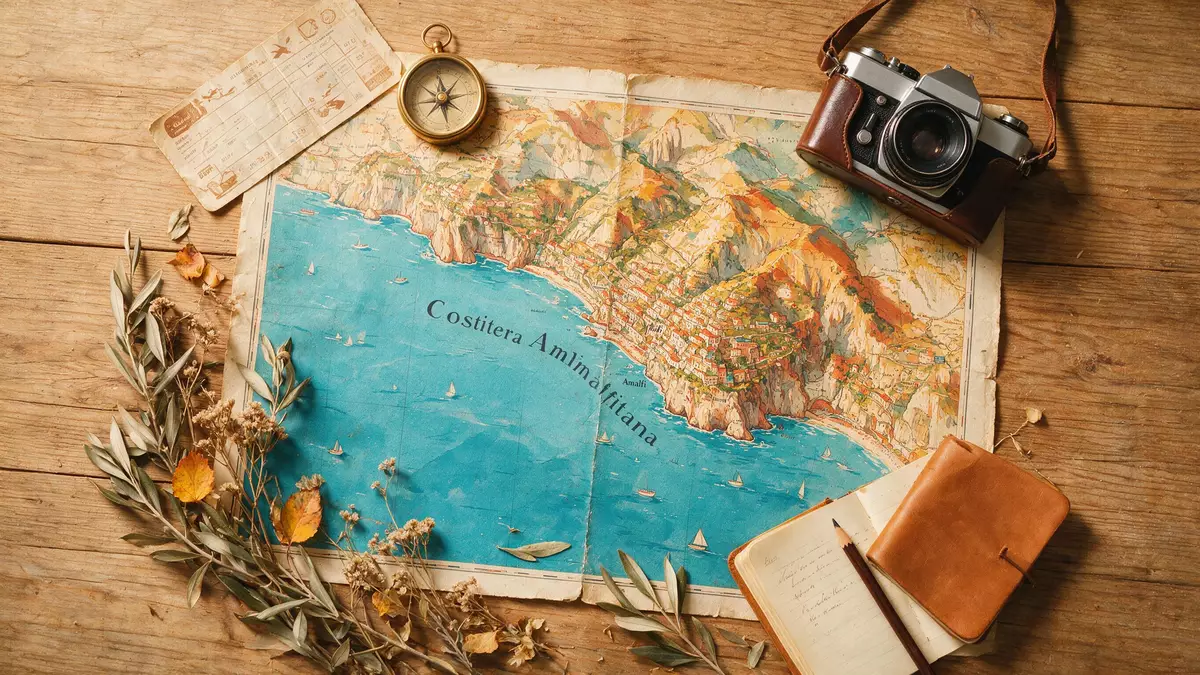
Costiera Amalfitana, known in English as the Amalfi Coast, is a stretch of dramatic Mediterranean shoreline in southern Italy where steep cultivated slopes descend towards the Tyrrhenian Sea and the Gulf of Salerno. Recognised as a cultural landscape on the UNESCO World Heritage List since 1997, it brings together historic towns, terraced agriculture and coastal scenery in one continuous setting.
Coastline, cliffs and terraced slopes
Costiera Amalfitana lies in the Province of Salerno in the Campania region of Italy, along the southern side of the Sorrentine Peninsula facing the Tyrrhenian Sea.Province of Salerno The coastline curves along the Gulf of Salerno, with settlements and cultivated terraces occupying ledges and slopes above the water.Gulf of Salerno The relief is strongly articulated, with limestone ridges, deep valleys and coastal promontories creating alternating headlands and inlets.
The World Heritage inscription defines Costiera Amalfitana as covering more than 11,000 hectares on the Sorrentine Peninsula, incorporating both coastal strips and upland areas.11,231 hectares The landscape includes terraced vineyards, orchards and other agricultural plots arranged on narrow shelves supported by masonry walls, with paths and stairways linking the cultivated ground to the towns and hamlets. Higher slopes carry pastures and more rugged terrain, while the lower ledges sit closer to the sea. Taken together, the coast, the cultivated terraces and the uplands form a continuous sequence between sea level and mountain ridges.
Towns, villages and cultural landscape
UNESCO describes Costiera Amalfitana as a continuing cultural landscape in which settlements, agriculture and natural features have developed together over centuries.continuing cultural landscape The World Heritage property encompasses 15 municipalities, including coastal centres such as Amalfi and Atrani and inland communities like Scala, Tramonti and Ravello.15 municipalities Towns on the coast stand on small deltas or bays where the terrain permits construction, while villages on the slopes occupy saddles and terraces with views towards the sea.
The inscription identifies four main coastal areas: Amalfi, Atrani, Reginna Maior and Reginna Minor, alongside secondary coastal areas including Positano, Praiano, Cetara and Erchie.main coastal areas Hamlets such as Conca and Furore sit between the larger centres, often on steep slopes with cultivated terraces nearby.Conca and Furore In rural zones, terraced plots, orchards and small structures line the valleys and ridges, forming a pattern of intensive land use that contrasts with areas of pasture and more untouched upland ground.
History, UNESCO status and Mediterranean context
Costiera Amalfitana was inscribed on the UNESCO World Heritage List in 1997 under cultural criteria (ii), (iv) and (v, recognising an outstanding Mediterranean landscape shaped by its dramatic topography and historical evolution.criteria (ii), (iv), (v) UNESCO highlights the area’s architectural and artistic works in towns such as Amalfi and Ravello and its long history of settlement, which reaches back to the early Middle Ages in its recorded urban form.early medieval settlement Much of the built fabric reflects influences linked to the period when Amalfi was a maritime republic between the ninth and eleventh centuries, with contacts across the Mediterranean.
Within the wider Mediterranean context, Costiera Amalfitana is cited as an example of a landscape where coastal towns, intensive agriculture and upland pastures coexist within a confined coastal strip.Mediterranean landscape example The UNESCO listing places the site in the “cultural landscape” category introduced in 1992, emphasising both the physical setting and the patterns of human settlement and land use.cultural landscape category The combination of sea views, terraced slopes, historic towns and rural hinterland gives the Amalfi Coast a layered character in which natural landforms and human-made structures are closely interwoven.
Visiting Costiera Amalfitana: what travellers from Western Europe should know
- Costiera Amalfitana runs along the southern side of the Sorrentine Peninsula in Campania; it can be reached by coastal roads linking Vietri sul Mare, Amalfi and Positano.
- The terrain is steep, with roads and stairways connecting towns to terraced slopes; moving between levels frequently involves climbs or descents on foot.
- Parts of the World Heritage area lie above the coast on upland ridges and valleys, so visiting rural sections may involve travel away from the shoreline into higher ground.
- The official language is Italian and the currency is the euro.
Searching for Costiera Amalfitana on social platforms
These links open searches for Costiera Amalfitana on each platform.Frequently asked questions about Costiera Amalfitana
Where is Costiera Amalfitana located?
Costiera Amalfitana is on the southern coast of the Sorrentine Peninsula in the Province of Salerno, within the Campania region of Italy.
What can visitors expect on a visit to the Amalfi Coast?
Visitors encounter coastal towns such as Amalfi and Positano, steep roads and stairways, terraced agricultural slopes and views over the Tyrrhenian Sea and the Gulf of Salerno.
What makes Costiera Amalfitana distinctive among Mediterranean coasts?
Costiera Amalfitana is recognised as a UNESCO cultural landscape where historic towns, terraced agriculture and upland pastures share a confined coastal setting shaped by dramatic topography.


