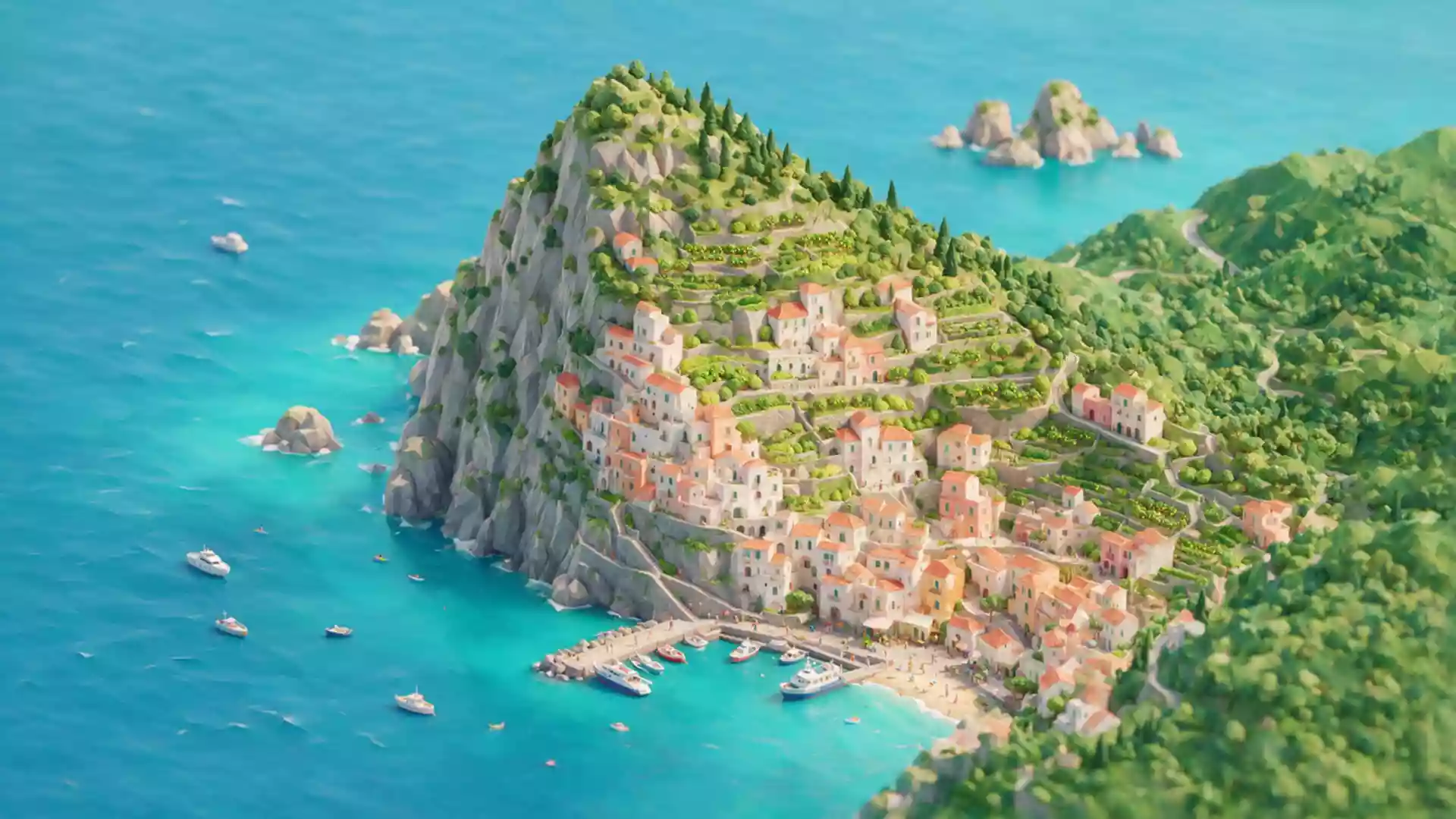
Costiera Amalfitana and its terraced Mediterranean cliffs
Published on 09/02/2026 at 07:44 | Editorial responsibility: Rafael Müller, Editor-in-Chief AD HOC NEWS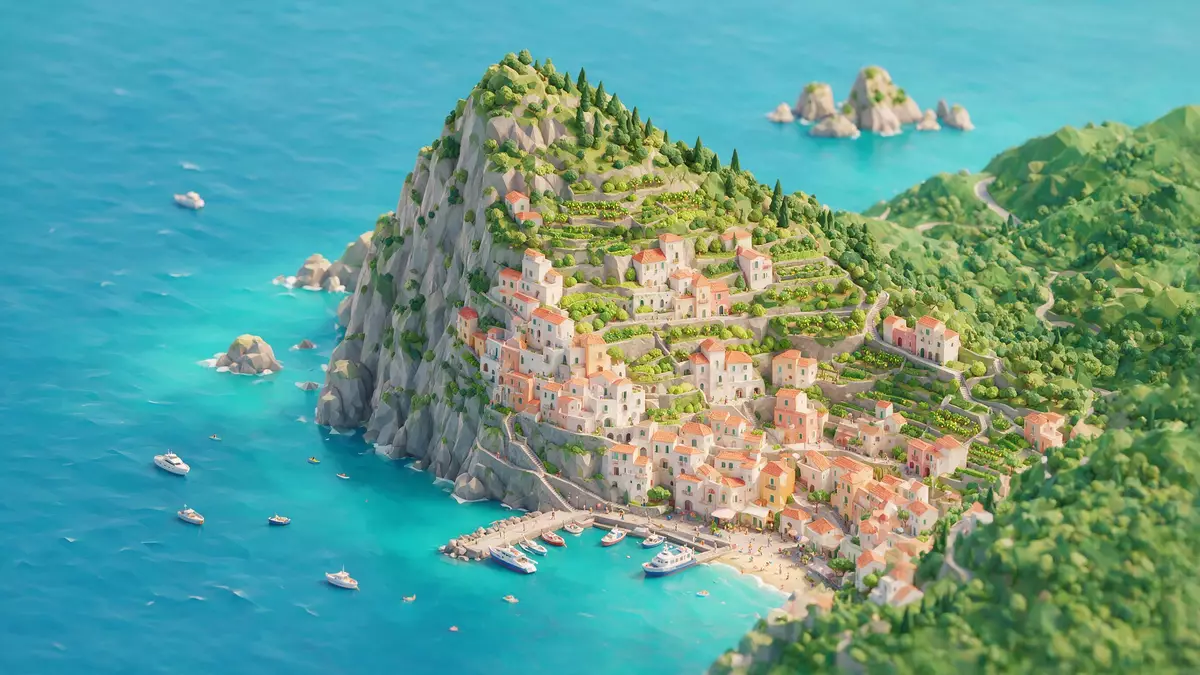
Costiera Amalfitana, better known in English as the Amalfi Coast, runs along the southern side of the Sorrentine Peninsula in Campania, with the town of Amalfi as its historic heart. In 1997 it was inscribed as a UNESCO World Heritage Site under the official name Costiera Amalfitana, recognising a Mediterranean landscape where steep cliffs, stepped terraces and coastal villages form a single cultural landscape.
Cliffside villages between rock and Tyrrhenian Sea
The defining experience of Costiera Amalfitana is the way towns, fields and road cling to the edge of the Tyrrhenian Sea along the Gulf of Salerno. The coastline curves between Positano and Vietri sul Mare, with villages such as Amalfi, Atrani and Ravello occupying ledges and folds in the coastal slopes that drop towards the water.The coast stretches along the province of Salerno and forms the southern face of the Sorrentine Peninsula.
UNESCO describes Costiera Amalfitana as a cultural landscape, a category introduced in 1992 for places where human settlement and the natural setting are woven together.The World Heritage listing covers an area of 11,231 hectares that includes coastal communes such as Positano, Praiano, Maiori, Minori and Vietri sul Mare as well as inland settlements like Scala and Tramonti. From the shore, the view is of steep rock faces, small harbours and staircases of houses stepped up the slopes.
Terraces, lemon groves and medieval paths
Much of the cultivated land on Costiera Amalfitana is laid out in terraces supported by dry-stone walls, creating narrow bands of soil that follow the contours of the cliffs. These terraces are used for vineyards, orchards and vegetable plots; in many places citrus trees and vines grow above stone walls that form a patchwork across the slopes.The Italian UNESCO commission highlights terraced vineyards and orchards as a characteristic feature of the landscape.
The area has been inhabited since at least the early Middle Ages, when Amalfi developed into a maritime republic with trading links across the Mediterranean.World Heritage documentation describes Costiera Amalfitana as a continuing cultural landscape, where medieval churches, monasteries and watchtowers stand above ancient paths that still connect villages on foot. Routes such as the high-level paths between Amalfi, Atrani and Ravello follow old mule tracks, giving views across terraces, valleys and sea.
Churches, domes and coastal architecture
Costiera Amalfitana’s towns are marked by churches and civic buildings that reflect the wealth and religious life of the medieval Amalfi Republic and its neighbours. In Amalfi, the cathedral dedicated to Saint Andrew rises from a flight of steps in the centre of town, its striped facade and campanile looking over a compact urban fabric of arcades and alleys. Ravello, on a high terrace above the sea, has a cathedral facing a broad piazza and historic villas with gardens overlooking the coast.
Along the coast, many churches and chapels are topped by tiled domes, some faced with coloured majolica that catches the light above the surrounding houses.Descriptions of the Amalfi Coast as a Mediterranean cultural landscape point to this combination of religious architecture, domestic buildings and cultivated terraces as a defining ensemble. In places like Vietri sul Mare, ceramic workshops and tiled church domes emphasise a long tradition of pottery and decorative tile work along the shoreline.
Visiting Costiera Amalfitana: what travellers from Western Europe should know
- Costiera Amalfitana forms the southern edge of the Sorrentine Peninsula in Campania, overlooking the Tyrrhenian Sea between Positano to the west and Vietri sul Mare near Salerno to the east.
- The main coastal route runs along the cliffs and passes through towns such as Amalfi, Praiano and Maiori, with side roads and stairways connecting harbours, beaches and upper villages.
- In several places the terrain rises steeply from sea level, and many streets and paths in towns like Amalfi and Atrani include long flights of steps between different levels.
- Costiera Amalfitana lies in Italy, where the official language is Italian and the currency is the euro.
- Entry requirements depend on your nationality; UK travellers can check the FCDO travel advice at gov.uk/foreign-travel-advice, Irish travellers the Department of Foreign Affairs at ireland.ie.
Searching for Costiera Amalfitana on social platforms
These links open searches for Costiera Amalfitana on each platform.
Frequently asked questions about Costiera Amalfitana
Where is Costiera Amalfitana?
Costiera Amalfitana is a stretch of coastline in the province of Salerno in the Campania region of southern Italy, forming the southern side of the Sorrentine Peninsula along the Tyrrhenian Sea.
What can visitors expect on a visit?
Visitors encounter cliffside towns, terraced hillsides planted with vines and citrus trees, coastal roads and paths linking villages, and historic churches and villas overlooking the Gulf of Salerno.
What makes Costiera Amalfitana distinctive?
Its combination of steep coastal topography, long-inhabited terraces, medieval architecture and coastal villages recognised collectively as a UNESCO World Heritage cultural landscape gives Costiera Amalfitana a distinctive character among Mediterranean coasts.