
Corn Islands, Nicaragua’s twin Caribbean outposts
Published on 09/19/2026 at 11:19 | Editorial responsibility: Rafael Müller, Editor-in-Chief AD HOC NEWS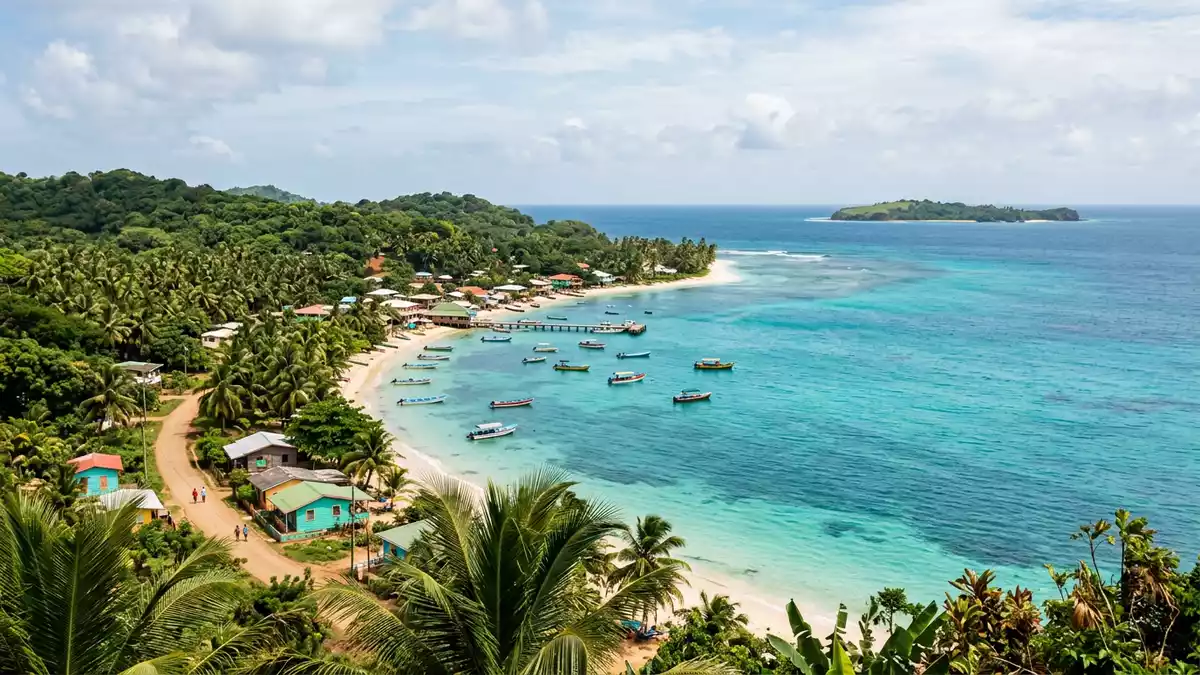
Set off the Caribbean coast of Nicaragua, Corn Islands are a small municipality made up of Big Corn Island and Little Corn Island, where low-rise villages, sandy shores and reef-fringed waters meet an Afro-Caribbean island culture rooted in the wider Mosquitia region.
Two islands on Nicaragua’s Caribbean fringe
Corn Islands sit in the Caribbean Sea east of the Nicaraguan mainland, forming part of the South Caribbean Coast Autonomous Region in Nicaragua. Big Corn Island, also known as Great Corn Island, and Little Corn Island together make up the municipality officially recorded as Corn Island.Corn Islands as a municipality The pair lie tens of kilometres offshore from the coastal town of Bluefields, placing them firmly in the country’s Atlantic-facing Caribbean belt.their position east of Bluefields
Big Corn Island has a hilly interior that slopes towards beaches and mangrove-lined bays, with scattered houses and small guesthouses lining its roads.Big Corn Island’s hilly interior Little Corn Island, smaller in area, has no cars on its paths, with foot tracks leading between shoreline settlements, patches of jungle and simple waterfront lodgings.Little Corn Island without cars Both islands are ringed by clear, warm water where coral reefs lie within reach of the shore, and small boats shuttle between them across the short stretch of open sea.
Afro-Caribbean histories and everyday island life
The islands belong to a coastal region historically linked with the Mosquitia, and their communities trace strands of Afro-descendant and Indigenous heritage that run across the southwestern Caribbean. English is in official use on the islands alongside Spanish, reflecting a legacy of Caribbean connections rather than exclusively mainland Central American roots.English as an official language Villages on Big Corn Island and Little Corn Island combine wooden houses, small churches and local shops, with fishing boats drawn up along beaches and modest piers.
Corn Islands entered twentieth-century international politics when Nicaragua and the United States signed the Bryan–Chamorro Treaty in 1914, with the lease later ratified in 1916. Under that agreement Nicaragua leased the islands to the United States for naval use linked to a proposed interoceanic canal project, and the lease remained in force until 1971.Bryan–Chamorro Treaty lease Despite the scale of the treaty, the United States built only a lighthouse on Little Corn Island and did not take over wider land on either island.construction of a lighthouse on Little Corn Agriculture and fishing remain important livelihoods, with copra, coconut oil, lobsters and shrimp recorded among island products.principal products of the islands
Sea, reef and slow travel between Big and Little Corn
The main physical draw of Corn Islands lies in their relationship with the sea. Beaches with light-coloured sand curve around parts of Big Corn Island and Little Corn Island, backed by palms and simple buildings, while offshore reef systems host marine life including tropical fish and crustaceans.coral reefs and marine life Waters around the islands support diving, snorkelling and fishing, and small local boats act as a practical link between settlements and sites along the shore.
Access to Corn Islands runs primarily through Big Corn Island’s airfield at Brig Bay, which receives regular flights connecting with Managua and Bluefields.Brig Bay airfield connections Travellers arriving by sea come through Bluefields by river and coastal boat, boarding ferries that cross to Big Corn Island before continuing onward to Little Corn Island in smaller craft.ferry route from Bluefields On Little Corn Island, movement is on foot along narrow paths, and the absence of cars shapes how visitors and residents encounter its shoreline and interior.
Visiting Corn Islands: what travellers from Western Europe should know
- Corn Islands lie off Nicaragua’s Caribbean coast, reached via flights to Big Corn Island’s airfield from Managua and the coastal town of Bluefields, or by ferries that depart from Bluefields.
- Terrain on Big Corn Island includes paved and unpaved roads with short slopes down to beaches, while Little Corn Island is car-free, with narrow footpaths linking small settlements, jungle patches and shores.
- The islands sit in the Caribbean Sea east of Bluefields; the official language on Corn Islands is English and the currency is the Nicaraguan córdoba.
- Entry requirements depend on your nationality; UK travellers can check the FCDO travel advice at gov.uk/foreign-travel-advice, Irish travellers the Department of Foreign Affairs at ireland.ie.
Searching for Corn Islands on social platforms
These links open searches for Corn Islands on each platform.
Frequently asked questions about Corn Islands
Where are Corn Islands?
Corn Islands are a small Nicaraguan municipality in the Caribbean Sea, made up of Big Corn Island and Little Corn Island east of the coastal town of Bluefields.
What can travellers expect on a visit to Corn Islands?
Travellers encounter low-rise villages, beaches, mangrove-fringed bays and coral-rich waters, together with an Afro-Caribbean island culture and a pace shaped by small-scale roads and footpaths.
What makes Corn Islands distinctive among Nicaragua’s regions?
Their offshore Caribbean setting, English-language island communities, histories linked with the Bryan–Chamorro Treaty and a combination of reef ecosystems and modest settlement patterns make Corn Islands distinct within Nicaragua.


