
Copan’s carved stone city in the hills of Honduras
Published on 09/16/2026 at 08:09 | Editorial responsibility: Rafael Müller, Editor-in-Chief AD HOC NEWS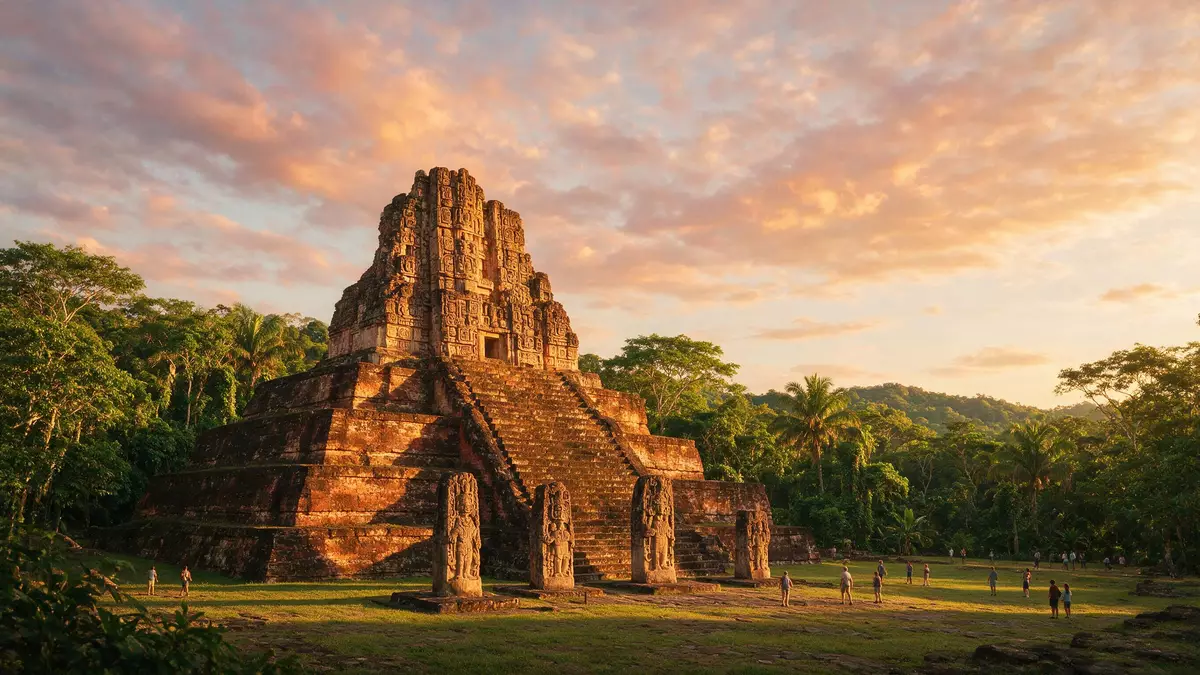
On the edge of the small town of Copan Ruinas in western Honduras lies Copan, a compact Maya city built in stone and preserved as an archaeological park. Copan’s temples, plazas and carved monuments sit in a shallow river valley close to the Guatemalan border, and the site’s inscription as a UNESCO World Heritage property in 1980 anchors its status as one of the central places of Maya civilisation.
Stone temples and a dense acropolis
Copan occupies the floodplain of the Copan River, where the ancient city’s central district rises on an artificial platform that forms an acropolis of monumental courts and pyramids.artificial platform acropolis The heart of the ruins is a tight cluster of stone structures laid out around plazas, stairways and terraces, giving the site a feeling of an enclosed ceremonial core rather than a sprawling city.
Within this central area stand stone temples, two large pyramids, sculpted stairways and open plazas that once framed ritual and political gatherings.stone temples and pyramids The acropolis sits above residential zones that extended across a wider area of the valley, where surveys have identified thousands of mounds and platforms marking former houses and minor structures.ruined structures in the Copan valley
Carved stelae and the Hieroglyphic Stairway
Copan is particularly known for its carved stone monuments, including tall stelae set in plazas and richly decorated stairways whose risers carry hieroglyphic inscriptions.Copan carved stone monuments These stelae depict a succession of kings in elaborate dress, and the inscriptions record dynastic history and ritual events in the city.
On the plaza known for its Hieroglyphic Staircase, a monumental flight of steps forms one of the most distinctive structures of the Maya world.Plaza of the Hieroglyphic Staircase Each riser is carved with blocks of glyphs, creating a long text that has been the subject of intensive epigraphic study and adds considerable detail to the understanding of Classic-period Copan.
Maya city, valley setting and World Heritage status
Archaeological work and historical research place Copan within the Classic Maya period, with the city thriving between the fifth and ninth centuries AD before its abandonment in the early tenth century.thrived between the 5th and 9th centuries The site was first noted in European records in 1570 by Diego García de Palacio, and large-scale excavation began in the nineteenth century, revealing the ruined citadel and its three main stages of development.discovered in 1570 by Diego García de Palacio
Copan lies within the municipality of Copan Ruinas in the Copan Department of Honduras, in a valley marked by the Copan River and fringed by low hills.Copan Archaeological Park in Copan Department The archaeological park covers an area measured in tens of hectares, while the wider archaeological landscape of the valley extends over a significantly larger zone that encompasses the main ceremonial group and satellite residential areas under formal protection.area of the archaeological monument
Visiting Copan: what travellers from Western Europe should know
- Copan lies just outside the town of Copan Ruinas in western Honduras, in the Copan Department near the border with Guatemala, reached over paved highways from larger Honduran cities.route to Copan Ruinas
- The ruins stand on gently rising ground in the Copan River valley, with stone stairways, terraces and temple platforms that require climbing and descending uneven steps.
- The Copan River runs close to the archaeological core, and paths lead through grassy areas and light woodland between the entrance and the principal group of structures.Copan on the river floodplain
- The official language is Spanish and the currency is the Honduran lempira.
- Entry requirements depend on your nationality; UK travellers can check the FCDO travel advice at gov.uk/foreign-travel-advice, Irish travellers the Department of Foreign Affairs at ireland.ie.
Searching for Copan on social platforms
These links open searches for Copan on each platform.Frequently asked questions about Copan
Where is Copan and how is it related to Copan Ruinas?
Copan is an archaeological site of the Maya civilisation in western Honduras, within the municipality of Copan Ruinas in the Copan Department close to the Guatemalan border.Copan in Copan Ruinas
What should a visit to Copan expect in terms of layout and terrain?
Visitors encounter temple platforms, stairways, plazas and grassy areas set on an artificial acropolis above the river floodplain, with several groups of structures linked by paths and low slopes.central district covers 54 acres
What makes Copan distinctive among Maya sites?
Copan stands out for its concentration of carved stelae, its long Hieroglyphic Staircase text and the dense layout of its ceremonial core, all within a compact valley setting recognised as a UNESCO World Heritage Site since 1980.UNESCO World Heritage Site in 1980


