
Copan’s carved Maya citiescape in western Honduras
Published on 09/15/2026 at 15:24 | Editorial responsibility: Rafael Müller, Editor-in-Chief AD HOC NEWS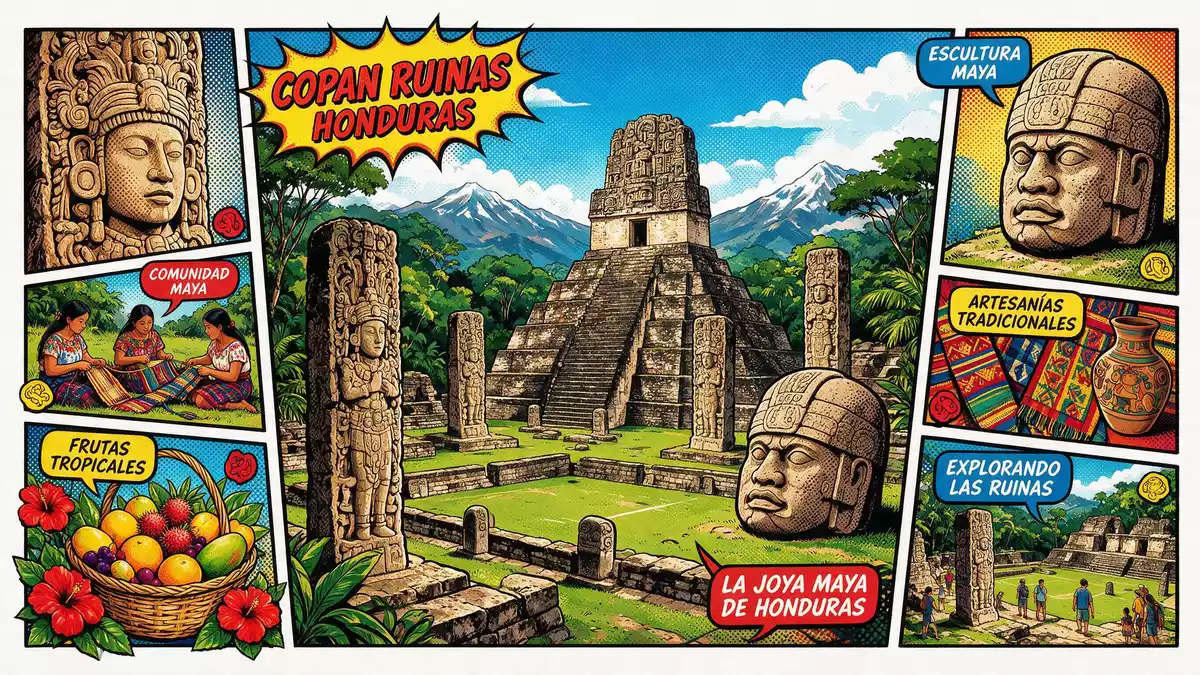
Copan in western Honduras is a classic Maya city whose carved stone monuments turn a fertile valley near Copan Ruinas into a vast open-air record of royal life and ceremony. The ruins lie in the Copan Department close to the Guatemalan border, and the site was inscribed as a UNESCO World Heritage Site in 1980.
A royal Maya capital written in stone
Copan is an archaeological site of the Maya civilisation in the Copan Department of western Honduras, within the municipality of Copan Ruinas and near the border with Guatemala.archaeological site of the Maya civilisation For much of the Classic Period of Mesoamerican history, roughly between the third and ninth centuries AD, Copan served as the political, civil and religious centre of the Copan Valley.political, civil and religious centre The ruined city stands on the west bank of the Copan River in a fertile landscape framed by low hills.
The site emerged from a smaller settlement into a regional power over centuries, and a dynasty founded by the ruler Yax K’uk’ Mo’ in 427 strengthened its position within the wider Maya world.dynasty that Yax K’uk’ Mo started Copan’s kings ruled from an Acropolis and surrounding complexes that combined temples, plazas and terraces into a dense ceremonial core.temples, plazas and terraces The city was abandoned in the early tenth century AD, and later surveys mapped an archaeological area extending across hundreds of hectares in the valley.
Hieroglyphic stairways, stelae and plazas
At the heart of Copan lies a central district with stone temples, pyramids, stairways and plazas laid out in tiers above the riverside plain.central district covers 54 acres One of its most distinctive features is a hieroglyphic stairway whose lengthy inscription records Copan’s royal history and ritual events in a single monumental text.lengthy hieroglyphic inscription Nearby courts and terraces include a field for the Maya ball game and platforms carrying richly carved stelae.
The sculptural detail at Copan is especially noted for its quality, with stone figures, altars and façades showing rulers in elaborate dress, mythic beings and calendrical symbols.Maya sculpture reach its highest artistic expression These monuments stand within plazas that mark different stages of the city’s development before its abandonment, giving the archaeological park a layered structure in which older and later constructions sit alongside each other.three main stages of development Walking through Copan today means crossing broad squares edged by platforms, stairways and pyramids, each carrying its own sequence of carvings and inscriptions in stone.
Copan Ruinas, the valley and the wider landscape
The ruins of Copan stand a short distance outside the small town of Copan Ruinas, which shares their name and serves as a base for visits to the archaeological park.near the town of Copan Ruinas The wider Copan River Valley holds residential groups and smaller structures that formed part of the pre-Hispanic city and its tributary communities, extending the reach of the urban area beyond the ceremonial core.entire Copan River Valley National legislation declared Copan a monument in 1982, covering the valley to protect both the main centre and its outlying sites.
Within the designated World Heritage property the archaeological park occupies a defined area, documented at roughly 15 ha in one description, while broader surveys describe a much larger urban footprint.area 15.095 hectares The valley landscape combines river terraces with cultivated plots and wooded slopes, and parts of the ancient city remain unexcavated beneath fields and vegetation. From the plazas and temple platforms the surrounding hills form a backdrop that underlines Copan’s position at the south-eastern frontier of the Maya area.southeastern frontier of the Maya area
Visiting Copan: what travellers from Western Europe should know
- Copan lies in western Honduras in the Copan Department, close to the border with Guatemala and just outside the town of Copan Ruinas, which has road links to larger Honduran cities.
- Inside the archaeological park, temple platforms, stairways and terraces rise above the valley floor, and visiting the main groups involves walking on uneven ground and climbing stone steps.
- The ruins stand in a tropical valley at modest elevation, with surrounding hills and the Copan River nearby, so paths can include exposed stretches and shaded sections among trees.
- The official language is Spanish and the currency is the Honduran lempira.
- Entry requirements depend on your nationality; UK travellers can check the FCDO travel advice at gov.uk/foreign-travel-advice, Irish travellers the Department of Foreign Affairs at ireland.ie.
Searching for Copan on social platforms
These links open searches for Copan on each platform.
Frequently asked questions about Copan
Where is Copan and how is it related to Copan Ruinas?
Copan is a Maya archaeological site in the Copan Department of western Honduras, near the border with Guatemala, and it stands close to the town of Copan Ruinas.
What can visitors expect when walking through the ruins?
Visitors encounter plazas, temple platforms, pyramids, stairways and carved stelae laid out across the valley floor and low terraces, with uneven surfaces and stone steps throughout the core area.
What makes Copan distinctive among Maya sites?
Copan is known for its hieroglyphic stairway and highly detailed sculpture, as well as for its role as a Classic Period royal capital whose plazas and monuments preserve a long sequence of urban development.


