

Copán Ruins receives stairway grant on 13 October
Published on 10/18/2026 at 03:47 | Editorial responsibility: Rafael Müller, Editor-in-Chief AD HOC NEWS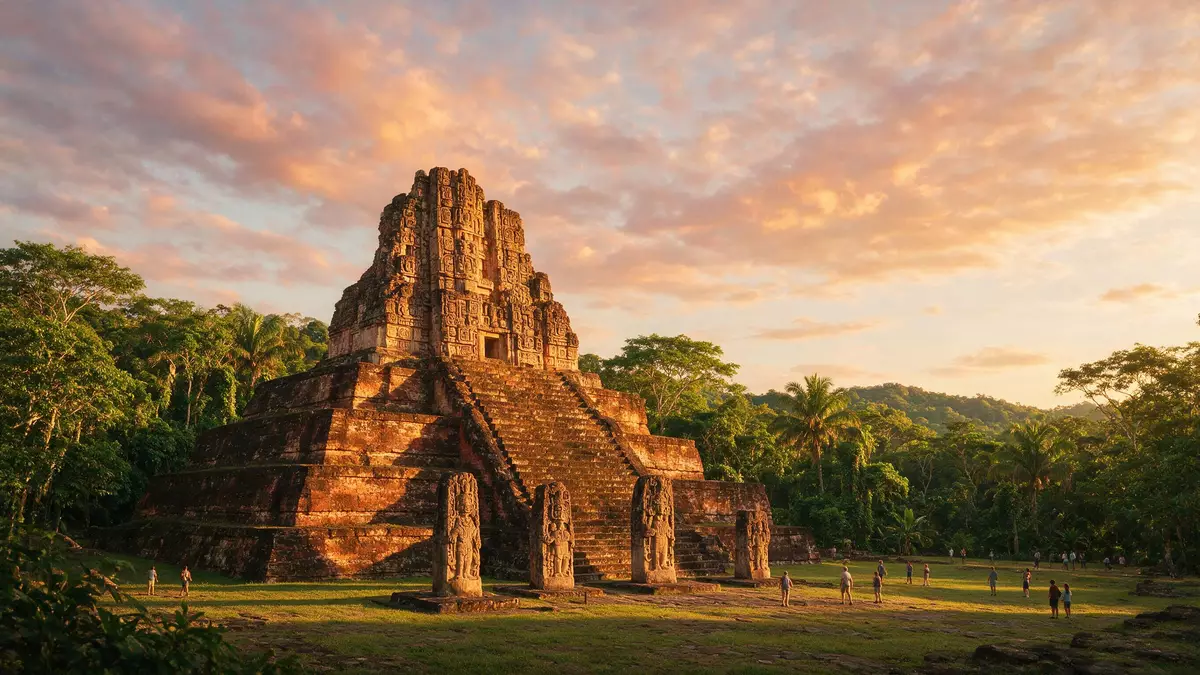
Copán Ruins (Copán) in Copan Ruinas, Honduras, is at the centre of a US grant announced on 13 October 2026 for conservation of its Hieroglyphic Stairway. The US$245,000 award will be channelled to the Honduran Institute of Anthropology and History, the body responsible for work on the archaeological monument.
The announcement gives travellers a current reason to follow developments at the Maya site, while the archaeological park remains the setting for a long-term preservation project rather than a newly announced visitor event.
US grant targets the Hieroglyphic Stairway
The United States awarded the grant through its Ambassador's Fund for Cultural Preservation. The support was discussed during a meeting on 13 October 2026 involving Colleen A. Hoey, the US embassy's charge d'affaires, and Yasser Handal, Honduras's culture minister.
The funding is intended to support technical conservation efforts for the Hieroglyphic Stairway. Its carved blocks form a sequence of Maya inscriptions that records episodes from the history of the ancient city. The announcement identifies the Instituto Hondureño de Antropología e Historia, or IHAH, as the institution that will receive and manage the funds.
The 13 October grant announcement does not set out a detailed timetable for the work. It also does not specify which conservation interventions will be carried out first.
Why the stairway matters at Copán Ruins
The Hieroglyphic Stairway is one of the principal monuments within the archaeological site. Its stone text links the visible remains to the political organisation, writing and historical memory of the Maya civilisation.
The Maya Site of Copán has been inscribed on the UNESCO World Heritage List since 1980. The international body describes the site as a former political, civil and religious centre with influence across the region, and identifies IHAH as the institution responsible for its management.
That status gives the October grant a direct connection to the place's identity: the money is aimed not at a general cultural programme in the town, but at a named monument inside the protected archaeological site. The stairway's exposed stone surfaces also explain why the announcement presents conservation as an ongoing task rather than a single completed repair.
UNESCO's account of the site's heritage and management background is available in its World Heritage overview.
Visiting Copán Ruins: what travellers from Western Europe should know
- The conservation grant was announced on 13 October 2026 and concerns the Hieroglyphic Stairway inside the archaeological site.
- The announcement does not state that the park or stairway will close. It also provides no confirmed dates for construction or conservation activity.
- The site is in Copan Ruinas, Honduras, and is managed by the Honduran Institute of Anthropology and History.
- Entry requirements depend on your nationality; UK travellers can check the FCDO travel advice at gov.uk/foreign-travel-advice, Irish travellers the Department of Foreign Affairs at ireland.ie.
The stairway remains part of the site's heritage story, while the practical effect of the grant will depend on the work schedule still to be announced.
Searching for Copán Ruins on social platforms
These links open searches for Copán Ruins on each platform.
Frequently asked questions about Copán Ruins
What changed at Copán Ruins on 13 October 2026?
A US$245,000 conservation grant was announced for the Hieroglyphic Stairway. The funds will be channelled to the Honduran Institute of Anthropology and History.
What is the Hieroglyphic Stairway grant?
It is support from the US Ambassador's Fund for Cultural Preservation for technical conservation work at the Maya monument. The announcement did not provide a detailed schedule or list of interventions.
Where is Copán Ruins?
The archaeological site is in Copan Ruinas, Honduras. It has been inscribed on the UNESCO World Heritage List since 1980.


