
Copan Ruinas between cobbled town and Maya stonework
Published on 08/27/2026 at 20:08 | Editorial responsibility: Rafael Müller, Editor-in-Chief AD HOC NEWS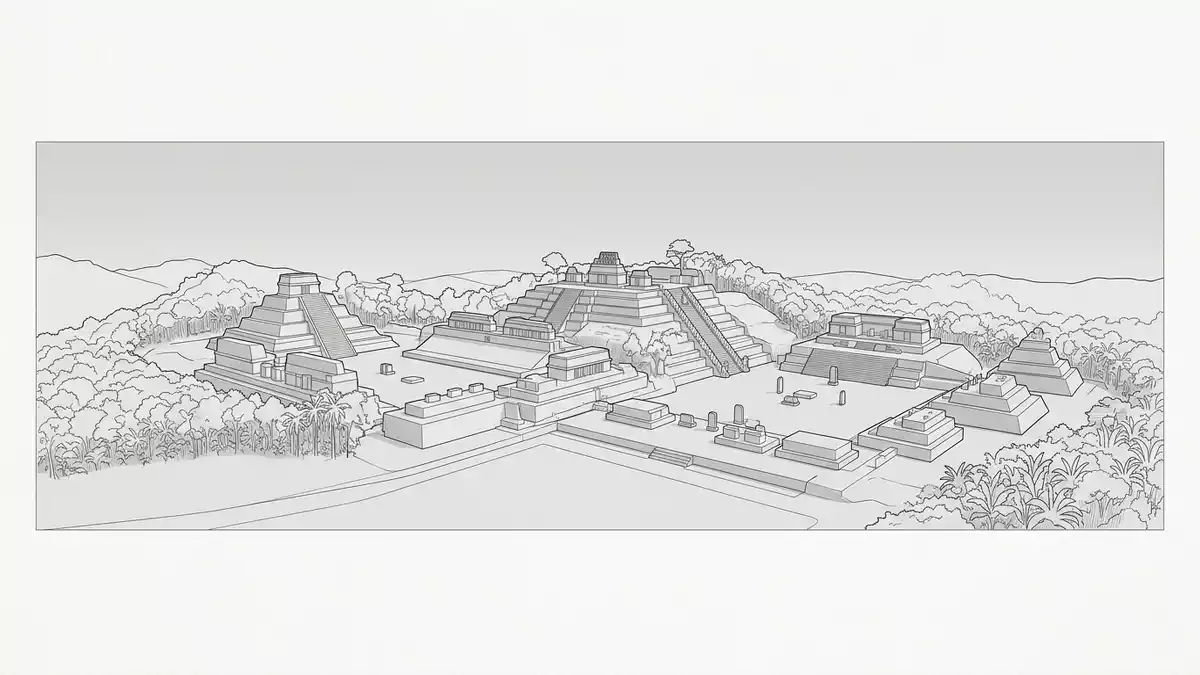
Copan Ruinas in western Honduras is a small highland town that shares its name with one of the classic centres of Maya civilisation, Copán, spread across a fertile valley nearby. The town and the archaeological site sit close together in the Copán Department, near the border with Guatemala, giving this corner of Honduras a compact mix of cobbled streets and ancient stonework.
A Maya city in a Honduran valley
The archaeological site of Copán lies in the municipality of Copan Ruinas, in a valley framed by foothills and drained by the Copán River. The ruins occupy terraces and plazas above the floodplain, set out in a sequence of ceremonial spaces that once formed the heart of a major Maya city.major Maya city Copán is widely recognised for its finely carved stelae, stepped platforms and temple clusters, many of them still bearing traces of sculpted figures and hieroglyphic panels.
In 1980 Copán was inscribed on the UNESCO World Heritage List as the “Maya Site of Copan”, recognised for the density of its hieroglyphic inscriptions and the quality of its architecture.UNESCO World Heritage List The ruined citadel and public squares show three main stages of development before the city was abandoned in the early tenth century, a sequence that makes the valley an important reference point for the later history of the Maya lowlands.three main stages of development
Hieroglyphic stairways and carved stone figures
Among the best known features of Copán is a monumental stairway, each riser carved with hieroglyphs that together form one of the longest known Maya inscriptions. This hieroglyphic stairway runs up a temple platform at the edge of a plaza, its blocks recording dynastic history in stone and giving epigraphers a dense, layered text to work with.hieroglyphic stairway Around the main groups stand stelae, carved shafts of stone with human figures and inscriptions that mark key dates and rulers.
Copán is also noted for the richness of its decorative sculpture, from reliefs along staircase sides to zoomorphic motifs on platforms and walls.richness of its decorative sculpture The surviving temples and terraces form a compact architectural complex, with plazas that link the main pyramidal structures to adjacent residential and ritual areas. Walking through the site brings repeated encounters with carved faces, glyph blocks and weathered figures, all drawn from the same limestone and shaped across successive building phases.
The town of Copan Ruinas beside the ruins
The modern town of Copan Ruinas grew up as a gateway to the ruins, anchored in the same valley but laid out in streets and squares rather than ceremonial groups. It forms a municipality in the Copán Department of Honduras, with a largely rural population spread across villages and hamlets around the central settlement.municipality in the Copán Department The town itself has cobbled streets, low-rise buildings and views towards the surrounding hills.
Copan Ruinas lies at around 700 m (2,300 ft) above sea level, giving it a temperate climate with an annual average close to 18°C and distinct dry and rainy seasons.700 m above sea level In the urban area, the economy leans heavily on tourism centred on the archaeological park, while the wider municipality includes agricultural land and rural communities. The proximity between town and ruins shapes daily life: the archaeological site lies just outside the built-up area, reached along local roads from the central streets.
Visiting Copan Ruinas: what travellers from Western Europe should know
- Copan Ruinas is in western Honduras, close to the border with Guatemala. The town is linked by road to other Honduran cities, and the archaeological park lies just outside the settlement.
- The archaeological site includes terraces, plazas and temple platforms, with uneven stone surfaces and stairways that require steady footing, while the town’s streets are cobbled and gently sloping.
- The valley sits at around 700 m (2,300 ft) above sea level, and the surrounding hills rise higher, so visits combine moderate altitude with warm temperatures and exposure to sun in open plazas.
- Copan Ruinas is near the El Florido border crossing with Guatemala, making it part of regional itineraries through Honduras and neighbouring Central American countries.
- The official language is Spanish and the currency is the Honduran lempira; entry requirements depend on your nationality, UK travellers can check the FCDO travel advice at gov.uk/foreign-travel-advice, Irish travellers the Department of Foreign Affairs at ireland.ie.
Searching for Copan Ruinas on social platforms
These links open searches for Copan Ruinas on each platform.
Frequently asked questions about Copan Ruinas
Where is Copan Ruinas and what is nearby?
Copan Ruinas is a municipality in the Copán Department of western Honduras, close to the Guatemalan border, with the Maya archaeological site of Copán in the same valley.
What should visitors expect on a visit?
Visitors encounter a compact town with cobbled streets and a nearby archaeological park of terraces, plazas, temples and carved stelae, all set within a hilly landscape.
What makes Copan Ruinas distinctive?
The close relationship between the living town of Copan Ruinas and the World Heritage-listed Maya site of Copán gives the valley a rare combination of everyday life and ancient stone architecture.


