
Copan Ruinas and the Maya city of Copán in western Honduras
Published on 09/09/2026 at 21:23 | Editorial responsibility: Rafael Müller, Editor-in-Chief AD HOC NEWS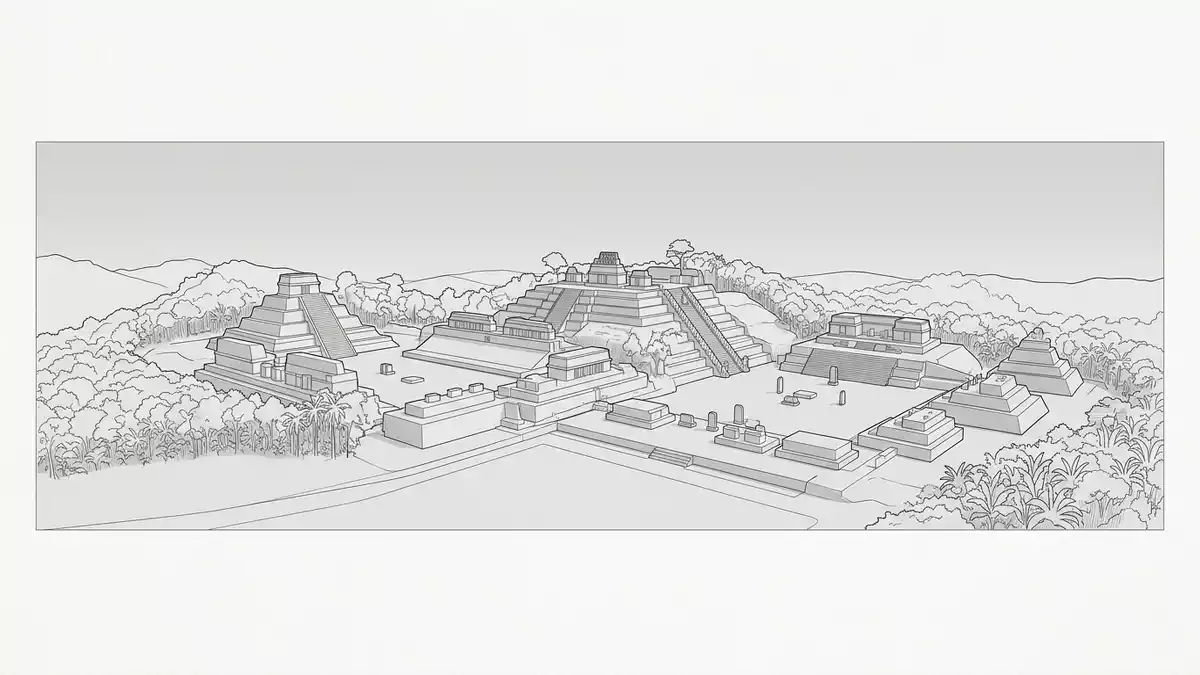
In western Honduras, Copan Ruinas brings together a modest highland town and the remarkably preserved Maya city of Copán, whose carved stone monuments, plazas and terraces dominate the surrounding valley. The ancient city lies within the municipality of Copan Ruinas in the Copán Department, close to the border with Guatemala, and its archaeological core has been recognised as the Maya Site of Copán on the UNESCO World Heritage List since 1980. The pairing of an intimate town and an extensively excavated Classic Maya capital gives Copan Ruinas a character shaped as much by sculpture and hieroglyphs as by cobbled streets and rural hillsides.
The Maya city of Copán: stone, sculpture and hieroglyphs
The archaeological site of Copán occupies a valley floor west of Copan Ruinas, where temples, plazas, terraces and other structures form a dense architectural complex identified as one of the most important remnants of Maya civilisation. Copán flourished during the Classic period of Maya history, with its major urban development between the fifth and ninth centuries AD, and was abandoned around the early tenth century as its political role faded.archaeological site of the Maya civilisation Within the core area, stone stelae and altars stand in public spaces, their bas-reliefs and long hieroglyphic texts recording dynastic histories and rituals in detail rarely matched elsewhere in the Maya world.Maya Site of Copan
One focus of the site is the Hieroglyphic Stairway, a monumental flight whose risers bear an extended hieroglyphic inscription that runs for many metres and is regarded as a key narrative source for Classic Maya history. Nearby, a ball court, plazas and temple platforms form an ensemble in which architecture and sculptural decoration are closely integrated, from human figures and deities to emblem glyphs carved into lintels and façades. Excavations have revealed multiple phases of construction in several buildings, including structures whose earlier forms are preserved below later additions, and tunnels open to researchers show the way successive rulers reshaped the ceremonial core of Copán over time.ruined citadel and imposing public squares
Town and valley: Copan Ruinas beside the ruins
Copan Ruinas, the contemporary town, lies in the Copán valley a short distance east of the main entrance to the archaeological park, and functions as the everyday gateway to the ruins. Low-rise buildings line cobbled streets, with a central park and modest church forming a small urban core surrounded by residential neighbourhoods and farmland extending up the valley slopes. The town is part of the Copán Department of Honduras and stands near the international border, with the El Florido crossing towards Guatemala located to the west along the same valley.western Honduras in the department of Copan
From Copan Ruinas, a road leads towards the archaeological site, and visitors typically reach the ruins on foot or by local transport along this short link. The landscape around the town and ruins is made up of gentle hills and cultivated plots, with the archaeological structures rising from a cleared area in the valley rather than from dense forest, which gives sightlines across plazas and allows the sculptural detail on stelae and stairways to be seen clearly. Beyond the principal group of ruins, further archaeological areas such as Las Sepulturas extend the footprint of ancient Copán along the valley, illustrating how the city’s residential quarters related to the central ceremonial core.Copan Ruinas town and Parque Arqueológico Copán
Copán in the wider Maya and UNESCO context
Copán holds a documented place within the wider geography of the Maya world and within international heritage frameworks, which adds depth to a visit from Copan Ruinas. The ruins were described in the sixteenth century by Diego García de Palacio and later attracted archaeological attention in the nineteenth century, leading to systematic excavation and recording of the stone inscriptions and architectural remains.discovered in 1570 by Diego García de Palacio In 1979 Honduras nominated the “Maya Site of Copan” for inscription on the UNESCO World Heritage List, and the site was formally inscribed in 1980 on the basis of criteria relating to its characteristic Maya architectural complex and the historic significance of the Hieroglyphic Stairway inscription.
Within Maya studies, Copán is recognised for the refinement of its sculptural tradition and the richness of its hieroglyphic record, which together provide a detailed picture of royal succession and ritual practice in a Classic-period city. The combination of temples, plazas, terraces and sculpted monuments in the valley near Copan Ruinas illustrates how a major Maya centre organised its ceremonial and residential spaces, and the continuing conservation of the site reflects its importance as a reference point for understanding pre-Columbian art and urbanism in Central America.one of the most important remnant sites of the Mayan civilization
Visiting Copan Ruinas: what travellers from Western Europe should know
- Copan Ruinas stands in western Honduras near the Guatemalan border, and the archaeological park of Copán is reached along the valley road west from the town’s central streets.
- The approach to the main ruins involves walking along a made path and then over uneven ground among stone structures, with steps and sloping surfaces on temple platforms and around the Hieroglyphic Stairway.
- The Copán valley landscape around Copan Ruinas includes low hills and farmland, so short walks between town, ruins and nearby archaeological areas take place at modest altitude rather than in flat coastal terrain.
- The official language is Spanish and the currency is the Honduran lempira.
- Entry requirements depend on your nationality; UK travellers can check the FCDO travel advice at gov.uk/foreign-travel-advice, Irish travellers the Department of Foreign Affairs at ireland.ie.
Searching for Copan Ruinas on social platforms
These links open searches for Copan Ruinas on each platform.
Frequently asked questions about Copan Ruinas
Where is Copan Ruinas and the Maya site of Copán located?
Copan Ruinas is a town in the Copán Department of western Honduras, near the border with Guatemala, and the Maya city of Copán lies just to its west in the same valley.
What should a visitor to Copan Ruinas expect on a visit?
A visit combines time in a small Honduran town with exploration of the archaeological park, where temples, stelae, plazas and the Hieroglyphic Stairway stand among grassy terraces and low hills.
What makes Copan Ruinas distinctive among Maya-related destinations?
Copan Ruinas is distinctive for the close relationship between the town and the extensively studied Maya city of Copán, whose sculpted monuments and long hieroglyphic inscription on the stairway give the site particular historical depth.


