
Copan Ruinas and the carved city in the valley
Published on 09/19/2026 at 15:13 | Editorial responsibility: Rafael Müller, Editor-in-Chief AD HOC NEWS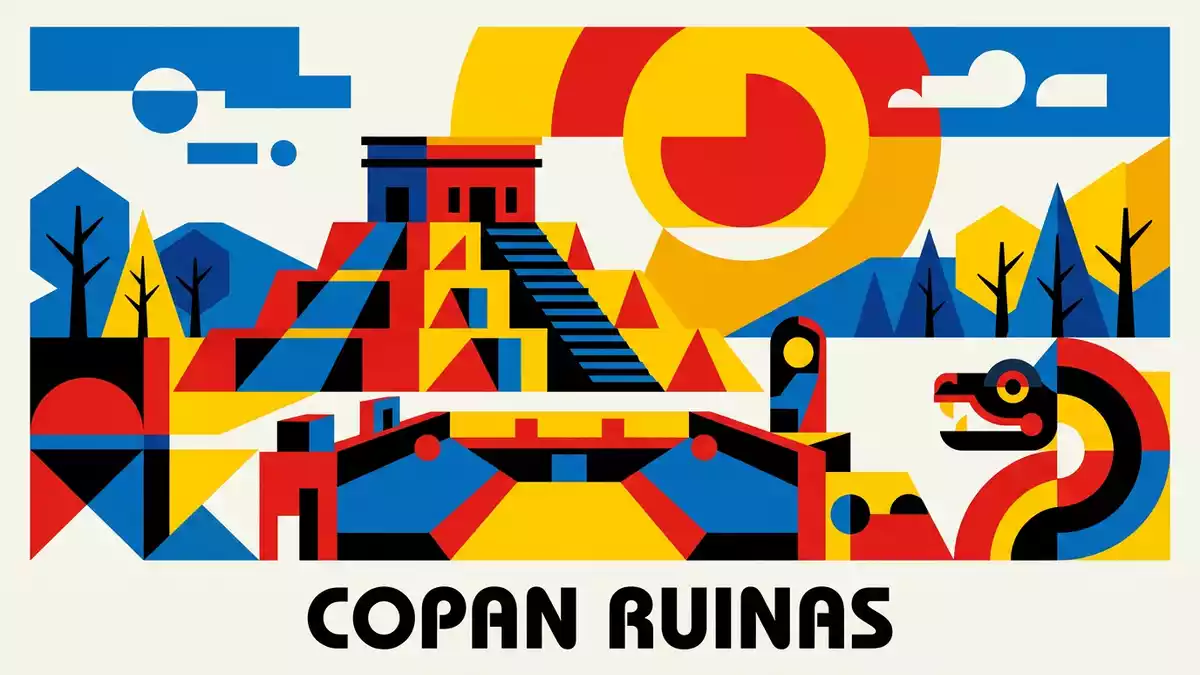
Copan Ruinas in western Honduras is tied to the Maya Site of Copan, a Classic Maya centre with stone monuments, plazas and temples. The place is defined by carved surfaces as much as by scale, with the Acropolis and Great Plaza forming its most recognisable core.
Copan Ruinas and the Classic Maya valley
The archaeological site lies in the municipality of Copan Ruinas in western Honduras, close to Guatemala. It sits in the Copán Valley, where the river and the surrounding hills give the ruins a strong sense of enclosure.
Copán was discovered in 1570 by Diego García de Palacio, and excavation began in the nineteenth century. The city belongs to the Classic period of Maya civilisation, and its buildings were later abandoned in the early tenth century.
The site is associated with K'inich Yax K'uk' Mo', who founded the dynasty in AD 426, and with the Hieroglyphic Stairway, whose text is the longest known Maya inscription. That combination of ruling names and carved writing gives Copán a historical depth that remains visible in the masonry itself.
Stelae, stairways and royal courts
The Great Plaza holds a dense group of stelae and altars, while the Acropolis rises beside it as a layered royal complex. Structures and courts overlap across different phases, so the site reads as a sequence of additions rather than a single plan.
Among the best-known monuments is Altar Q, dedicated by Yax Pasaj Chan Yopaat in AD 776. It shows the line of Copán rulers, linking the sculpture of the plaza to the dynasty that shaped the city.
The Hieroglyphic Stairway climbs the west side of Temple 26, and the stair contains more than 1,800 glyphs. Its carved blocks make the monument part staircase and part text, with the inscriptions arranged across the risers.
Temple 16, the Acropolis and the surrounding plazas preserve earlier phases beneath later rebuilding. That layered fabric is one reason Copán remains so legible as a Maya city, even where erosion has cut through the masonry.
Archaeology, erosion and the museum landscape
The Copán River has cut through part of the eastern acropolis, leaving an archaeological section that exposes wall layers and building phases. The cut is one of the most striking physical features on the site, because it reveals the depth of construction rather than hiding it.
The valley also includes the residential zone of Las Sepulturas, linked to the main group by a causeway. Elite houses, benches and tombs survive there, extending the story of Copán beyond the ceremonial core.
Copán is on the UNESCO World Heritage List, and the property is identified as the Maya Site of Copan. That status reflects both the sculptural quality of the monuments and the way the site preserves a major Maya political centre.
Visiting Copan Ruinas: what travellers from Western Europe should know
- The site lies in western Honduras, in the municipality of Copan Ruinas near the Guatemalan border. Road access runs through the valley, and the archaeological park is reached from town by local transport or on foot.
- The ground is uneven in places, with large stone surfaces, steps and raised courts. The acropolis, stairways and cut-through sections make the terrain varied rather than level.
- The official language is Spanish and the currency is the Honduran lempira.
- Entry requirements depend on your nationality; UK travellers can check the FCDO travel advice at gov.uk/foreign-travel-advice, Irish travellers the Department of Foreign Affairs at ireland.ie.
Searching for Copan Ruinas on social platforms
These links open searches for Copan Ruinas on each platform.
Frequently asked questions about Copan Ruinas
Where is Copan Ruinas?
Copan Ruinas is a town and municipality in western Honduras, beside the archaeological site of Copán. It lies near the border with Guatemala.
What does a visit involve?
The ruins are spread across plazas, the Acropolis, stairways and residential groups. The site is shaped by stone platforms, steps and carved monuments rather than a single enclosed route.
What makes Copan Ruinas distinctive?
The place is marked by the density of its sculpture and by the Hieroglyphic Stairway. Altar Q, the stelae and the layered Acropolis make Copán read as both a ceremonial landscape and a historical record.


