
Colossi of Memnon: stone pharaohs on Luxor’s West Bank
Published on 09/10/2026 at 22:36 | Editorial responsibility: Rafael Müller, Editor-in-Chief AD HOC NEWS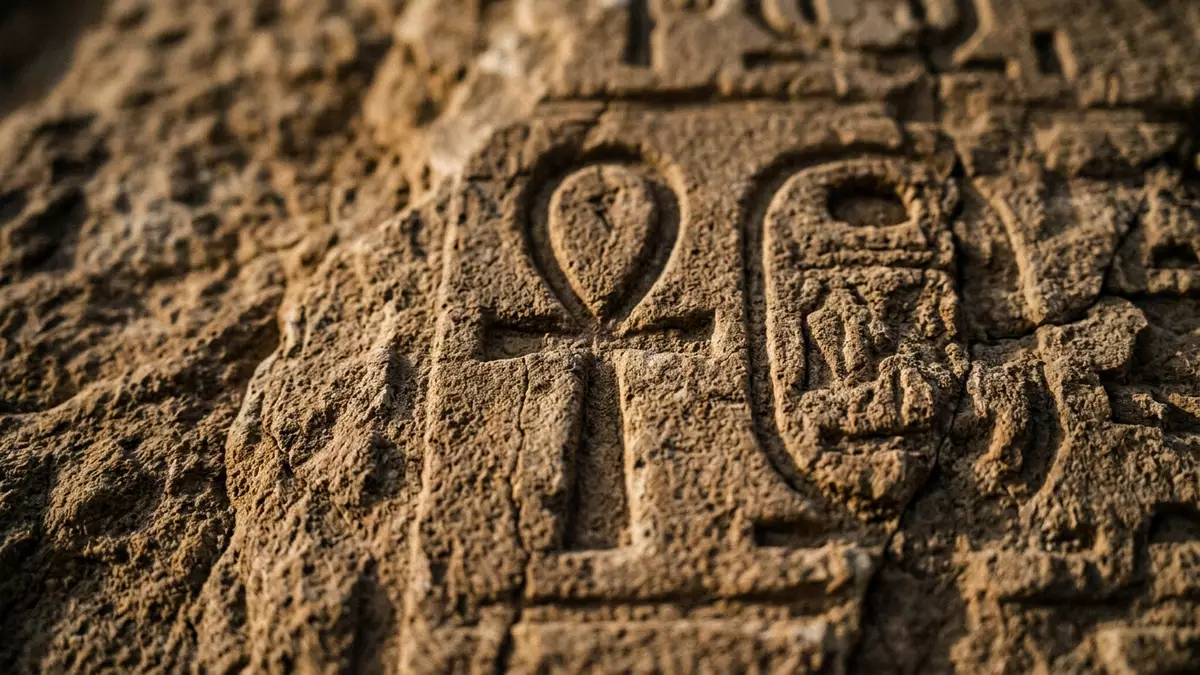
The Colossi of Memnon in Luxor are two vast seated statues of Pharaoh Amenhotep III, rising from the flat Theban plain on the west bank of the Nile. Their scale, their isolation and their role as guardians of a vanished mortuary temple give this pair of stone figures a distinctive presence in the landscape.
Stone pharaohs in the Theban necropolis
The Colossi of Memnon stand in the ancient Theban necropolis west of the modern city of Luxor, near the main road that leads towards the Valley of the Kings and other royal tombs. They mark the eastern edge of the site of the mortuary temple of Amenhotep III, a vast New Kingdom complex that once occupied part of the plain at Kom el-Hettan.The Colossi of Memnon represent Amenhotep III of the eighteenth dynasty, a ruler whose reign in the fourteenth century BC is associated with prosperity and monumental building across Egypt.Amenhotep III
Each statue shows the pharaoh enthroned with his hands on his knees, wearing the royal headdress and with smaller figures carved alongside his legs. These smaller figures represent family members, including his wife Tiye and his mother Mutemwiya, carved in high relief against the bulk of the main figure.flanking figures of Tiye and Mutemwiya The statues face east towards the river, so that the rising sun would have illuminated the fronts of the thrones and the carved hieroglyphs along their bases.
Scale, material and survival of the colossi
The most immediate impression at the Colossi of Memnon is sheer size: each figure is about 18 m (59 ft) tall including its pedestal, making them among the largest surviving ancient statues in Egypt.rise 60 ft high They are carved from quartzite, one of the hardest stones used in ancient Egyptian sculpture, which gives the surfaces a dense, granular texture where the original carving survives.Sie sind aus Quarzit The blocks used for the statues were quarried at Gebel el-Ahmar near modern Cairo and transported hundreds of kilometres upriver to Thebes, a logistical feat that continues to attract interest from archaeologists and engineers.quarried at Gebel el-Ahmar
The colossi are all that remains standing above ground of Amenhotep III’s mortuary temple, which was once one of the largest temple complexes at Thebes but suffered heavy damage from ancient earthquakes and later stone quarrying.largest and richest temple complex The northern statue is more heavily fractured and repaired, while the southern colossus preserves more of its original upper structure. In classical antiquity the northern figure became associated with a phenomenon known as the “singing Memnon”, a sound reported at sunrise from the damaged stone that led Greek and Roman visitors to link the statue with the mythic Ethiopian hero Memnon.klingende Memnonsäule
Myth, excavation and the wider temple site
The name “Colossi of Memnon” dates from Graeco-Roman times, when travellers connected the damaged northern statue with Memnon, a heroic figure from Greek mythology said to have been the son of Eos and Tithonos. This classical renaming overlay the original Egyptian identity of the figures as Amenhotep III, but the older association is clear from the inscriptions and surviving reliefs.in der römischen Kaiserzeit bekamen sie ihren heutigen Namen In antiquity the statues stood at the monumental entrance to a temple complex filled with colonnades, courtyards and secondary shrines; only detailed archaeological work has begun to recover that layout.
Since the late 1990s, the broader site around the Colossi of Memnon has been the focus of the Colossi of Memnon and Amenhotep III Temple Conservation Project, directed by Hourig Sourouzian in collaboration with the German Archaeological Institute. Excavations and reconstructions have brought to light further statues, stelae and architectural elements from the mortuary temple, some of which have been re-erected on their original bases.Temple Conservation Project under Hourig Sourouzian The two colossi remain the visual focal points, standing slightly apart from this growing field of recovered masonry and reinforcing the sense of the site as both ruin and active excavation area.
Visiting Colossi of Memnon: what travellers from Western Europe should know
- The Colossi of Memnon stand on Luxor’s West Bank in southern Egypt, beside the main road that runs towards the Theban necropolis and the Valley of the Kings.
- The statues rise directly from the plain beside the road, with compacted ground and low kerbs rather than formal paving; reaching the bases involves walking on uneven surfaces.
- The surrounding landscape is largely flat agricultural land merging into the desert, so there is little shade close to the statues and exposure to sun is sustained.
- The official language is Arabic and the currency is the Egyptian pound.
- Entry requirements depend on your nationality; UK travellers can check the FCDO travel advice at gov.uk/foreign-travel-advice, Irish travellers the Department of Foreign Affairs at ireland.ie.
Searching for Colossi of Memnon on social platforms
These links open searches for Colossi of Memnon on each platform.
Frequently asked questions about Colossi of Memnon
Where are the Colossi of Memnon located in relation to Luxor?
The Colossi of Memnon stand on the west bank of the Nile opposite Luxor, beside the main road that leads towards the Theban necropolis and major tomb sites.
What can visitors expect to see at the Colossi of Memnon?
Visitors encounter two monumental quartzite statues of Amenhotep III on low platforms, with carved throne sides, smaller family figures and views over the surrounding fields and desert edge.
What makes the Colossi of Memnon distinctive among Luxor’s monuments?
Their combination of great height, quartzite monolith construction, association with Amenhotep III’s lost mortuary temple and later link with the “singing Memnon” legend gives the site a distinctive character.


