Colosseo’s ring of stone and history in Rom
Published on 08/16/2026 at 14:22 | Editorial responsibility: Rafael Müller, Editor-in-Chief AD HOC NEWS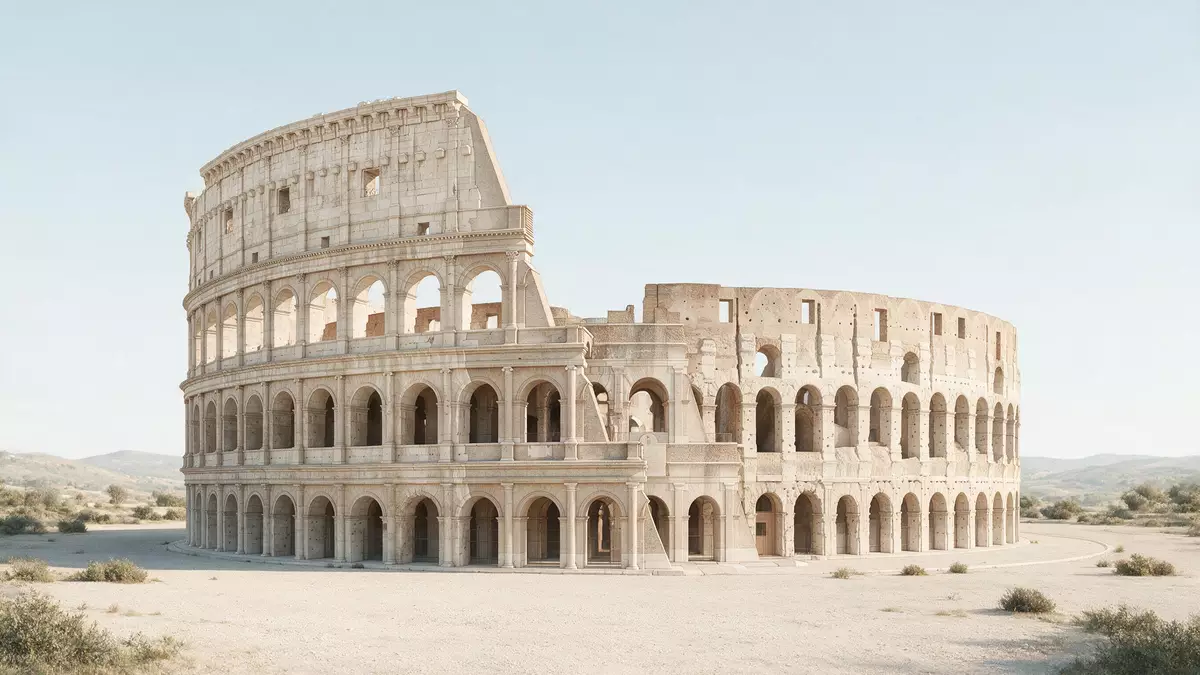
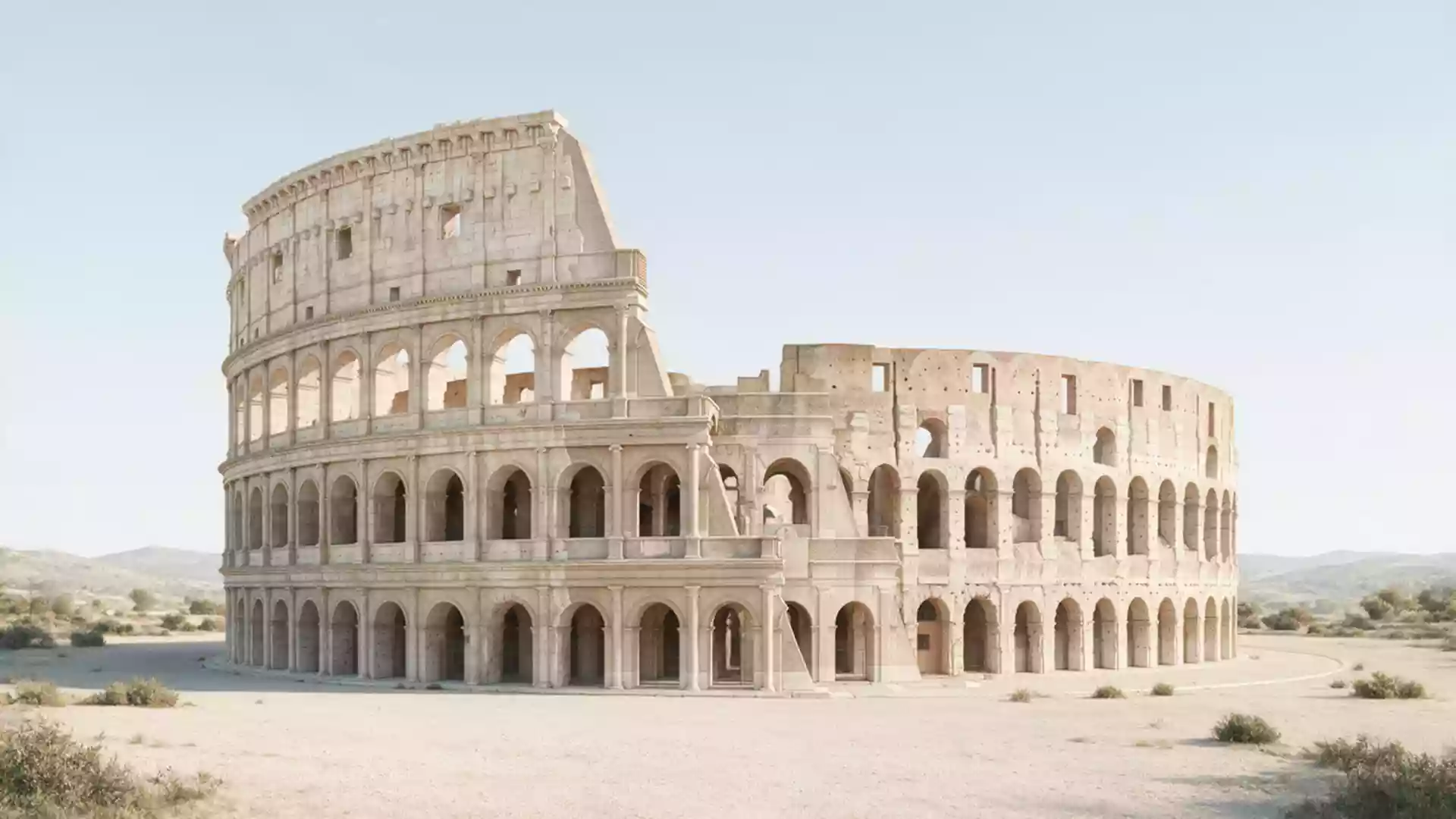
Colosseo in Rom is the Colosseum, the great Roman amphitheatre begun under Vespasian and completed in 80 CE. Its oval frame, arcaded exterior and layered seating make the building’s mass visible from the first glance. Roman amphitheatre
Flavian stone in the centre of Rom
The Colosseo belongs to the Flavian dynasty, and its original name was the Flavian Amphitheatre. The building stands as a Roman monument of concrete, stone and tuff, with a four-storey exterior and a vast arena inside. Flavian Amphitheatre
Construction began under Emperor Vespasian between 70 and 72 CE, and the completed structure was dedicated by Titus in 80 CE. The fourth story was added under Domitian in 82 CE, giving the exterior its finished height and rhythm. dedicated by Titus
An oval shell with layered arcades
The Colosseo is one of Rome’s clearest exercises in mass and repetition: arcades stack above one another, and the outer wall rises in ordered tiers. Its proportions are substantial, measuring about 190 m by 155 m, with the arena enclosed inside the oval plan. 190 m by 155 m
Travertine, concrete and tuff give the structure its texture and colour, while the surviving shell preserves the logic of Roman amphitheatre design. The interior once held tiered seating for large public gatherings, and the building’s form still reads clearly despite its broken edges. tiered seating
A public monument with a long Roman afterlife
The Colosseo is part of the Historic Centre of Rome, listed as a UNESCO World Heritage site with the broader historic fabric of the city. That status places the amphitheatre among the monuments that define the ancient core of Rom. Historic Centre of Rome
The monument was linked to games and public spectacle in Roman antiquity, and the amphitheatre later became a ruin within the city it once dominated. Its broken arcades, open interior and weathered masonry make it one of the most legible survivors of imperial Rome. public spectacle
Visiting Colosseo: what travellers from Western Europe should know
- The Colosseo stands in central Rom, close to the Roman Forum and the wider archaeological centre. It is reached on foot from nearby historic streets and by the city’s public transport network.
- The building is large and open to the weather, with worn stone surfaces and exposed masonry. The interior floor plan is broad, and the upper structure is broken in places.
- The official language is Italian and the currency is the euro.
- Entry requirements depend on your nationality; UK travellers can check the FCDO travel advice at gov.uk/foreign-travel-advice, Irish travellers the Department of Foreign Affairs at ireland.ie.
Searching for Colosseo on social platforms
These links open searches for Colosseo on each platform.
Frequently asked questions about Colosseo
Where is Colosseo?
Colosseo is in central Rom, within the ancient Roman core near the Forum and other major imperial remains.
What should a visit feel like?
The place is a large open ruin with massive masonry, arcades and broad interior space. The surviving shell still conveys the scale of a Roman amphitheatre.
What makes Colosseo distinctive?
Its oval plan, stacked arcades and Flavian origins make it one of the clearest surviving Roman amphitheatres. The building’s long stone perimeter remains the strongest visual feature.