Colosseo: Rome’s stone arena on a monumental scale
Published on 08/26/2026 at 06:58 | Editorial responsibility: Rafael Müller, Editor-in-Chief AD HOC NEWS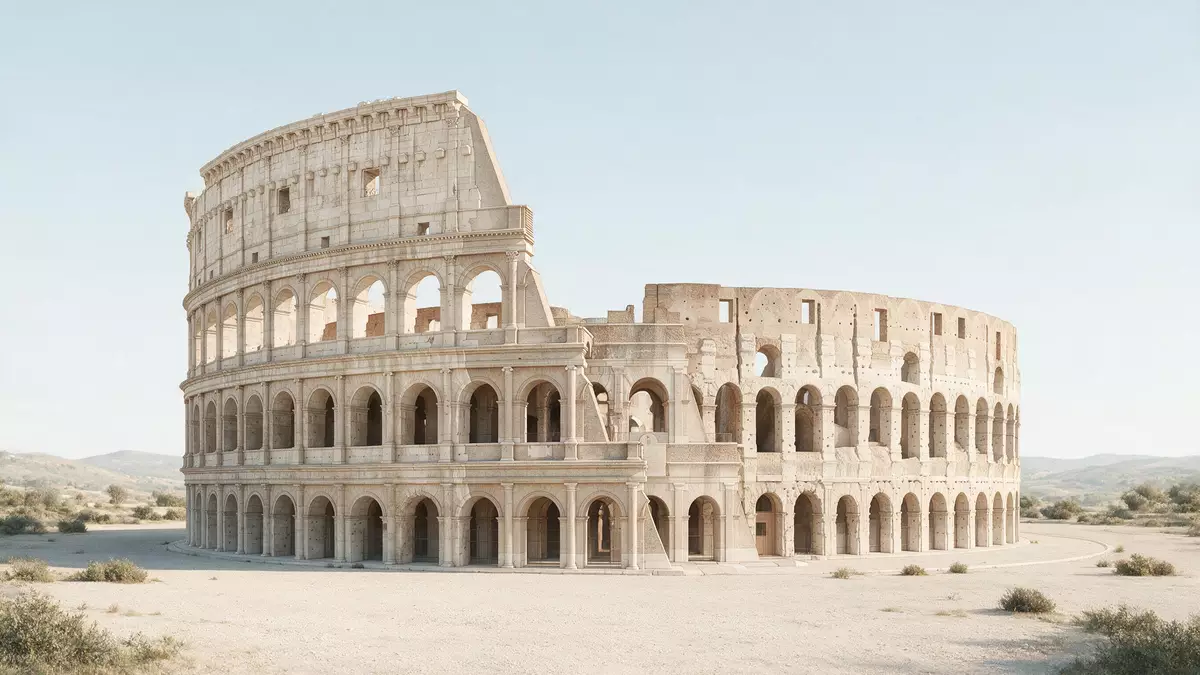
Colosseo, known in English as the Colosseum, rises beside the Roman Forum in Rom as a vast stone amphitheatre whose tiered terraces and arena floor still define the space even in ruins. Built under the Flavian emperors in the first century CE, it remains a landmark of Roman engineering and mass entertainment on an urban scale that is hard to grasp until standing within its oval outline.
An oval of stone, concrete and arches
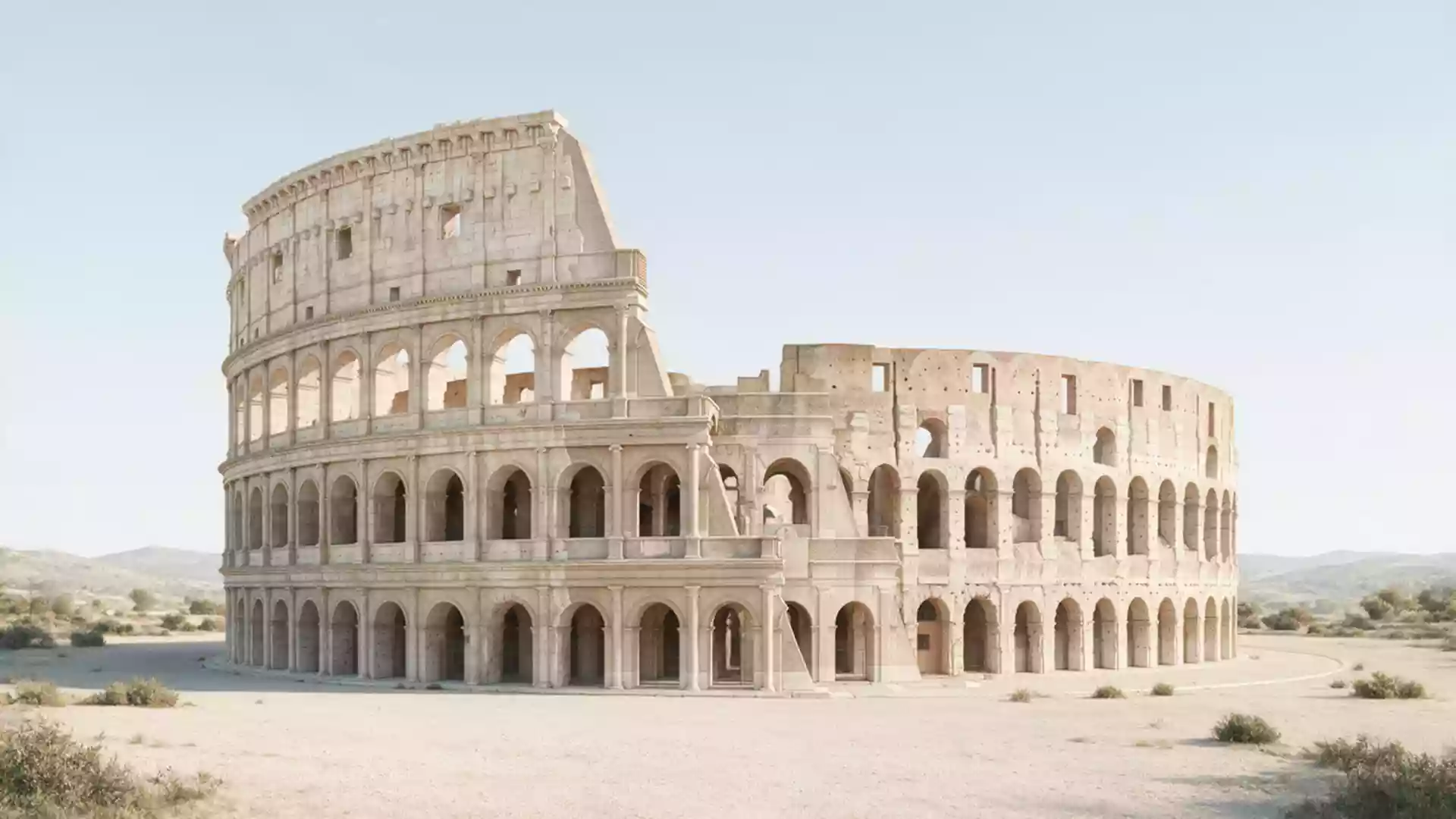
Colosseo is an amphitheatre of the Flavian dynasty, begun under Emperor Vespasian between 70 and 72 CE and dedicated in 80 CE by his son Titus as a venue for large public spectacles.Built in Rome under the Flavian emperors A further construction phase took place under Domitian, who completed the upper level and enclosed the structure as a four-storey monument.The arena built under Vespasian, Titus and Domitian From the outside, visitors see a ring of superimposed arcades, each level marked by a different classical order: sturdy columns at the lowest tier, more refined profiles above and an attic storey with pilasters framing the top.
The building combines concrete, travertine limestone and volcanic tuff, with brick and marble once completing the finishes.Travertine, tuff and concrete In plan, Colosseo forms an elongated oval measuring about 189 m by 156 m (620 ft by 513 ft), rising to roughly four storeys and enclosing the arena at its centre.The oval footprint and dimensions The arcaded facade once formed a continuous sequence of open bays, through which spectators entered and climbed to their seats on staircases and sloping corridors hidden within the thickness of the structure.
The arena and the hidden hypogeum
Inside, the focus is the central arena, a long oval of sand that once hosted gladiatorial combats, hunts with wild animals and other public spectacles for tens of thousands of spectators.Spectacles for Roman crowds The seating rose in concentric terraces around it, with the best places close to the arena and progressively higher rows for the wider population, creating a steep bowl of masonry and steps encircling the performance space. Walking the perimeter today, it is easy to trace the curvature of this bowl and to look down into the substructures where the arena floor once stretched as a wooden deck covered in sand.
Beneath that vanished floor lies the hypogeum, a warren of masonry corridors, service rooms and animal pens that occupied the arena’s footprint.The hypogeum below the arena Stone walls, passages and vertical shafts show where lifts and machinery once brought scenery, cages and fighters up to the surface. From the surviving terraces, visitors look directly into this exposed underworld of the amphitheatre, reading the pattern of passages like a plan in three dimensions.
A Roman landmark in the cityscape
Colosseo stands on the eastern edge of the Roman Forum area, at Piazza del Colosseo, where the line of the ancient city intersects with present-day streets.Piazza del Colosseo address Approached from the direction of Via dei Fori Imperiali, the amphitheatre appears aligned with other ruins and church facades, so that older and later layers of Rom share the same view. Its outer arcades open onto a paved area that frames the structure and provides vantage points back towards the Forum and the Palatine Hill.
The building’s name preserves the Latin designation Amphitheatrum Flavium, even as the Italian Colosseo has become standard over the centuries.The Flavian Amphitheatre and Colosseo From outside, the alternating zones of original masonry and repaired areas show how earthquakes, stone robbing and conservation campaigns have altered its outline. Yet the overall oval and the rhythm of arches remain legible from all sides, so that the amphitheatre continues to anchor this part of Rom both as a monument and as a point of orientation in the street pattern.
Visiting Colosseo: what travellers from Western Europe should know
- Colosseo stands in central Rom on Piazza del Colosseo, immediately east of the Roman Forum and close to the Palatine Hill, with streets and squares opening around the amphitheatre.
- The interior involves climbing and descending stone steps between levels, with some staircases narrow and worn, and extensive walking along corridors and terraces around the arena.
- The site lies in Italy, where the official language is Italian and the currency is the euro.
- Colosseo is close to the wider archaeological area that includes the Roman Forum and the Palatine, so the surrounding streets are lined with other ancient structures within easy walking distance.
Searching for Colosseo on social platforms
These links open searches for Colosseo on each platform.
Frequently asked questions about Colosseo
Where is Colosseo and what is it?
Colosseo is the Roman Colosseum, a first-century CE stone and concrete amphitheatre standing beside the Roman Forum in central Rom.
What does a visit to Colosseo involve?
A visit usually means entering through the arcaded exterior, walking the corridors and terraces, and looking down into the exposed hypogeum where the arena floor once covered the substructures.
What makes Colosseo distinctive among Roman remains?
Its vast oval form, multi-storey arcaded facade and preserved arena substructures make Colosseo a rare chance to experience the scale and layout of a Roman amphitheatre in three dimensions.