
Colosseo, Rome’s great stone amphitheatre
Published on 09/16/2026 at 07:38 | Editorial responsibility: Rafael Müller, Editor-in-Chief AD HOC NEWS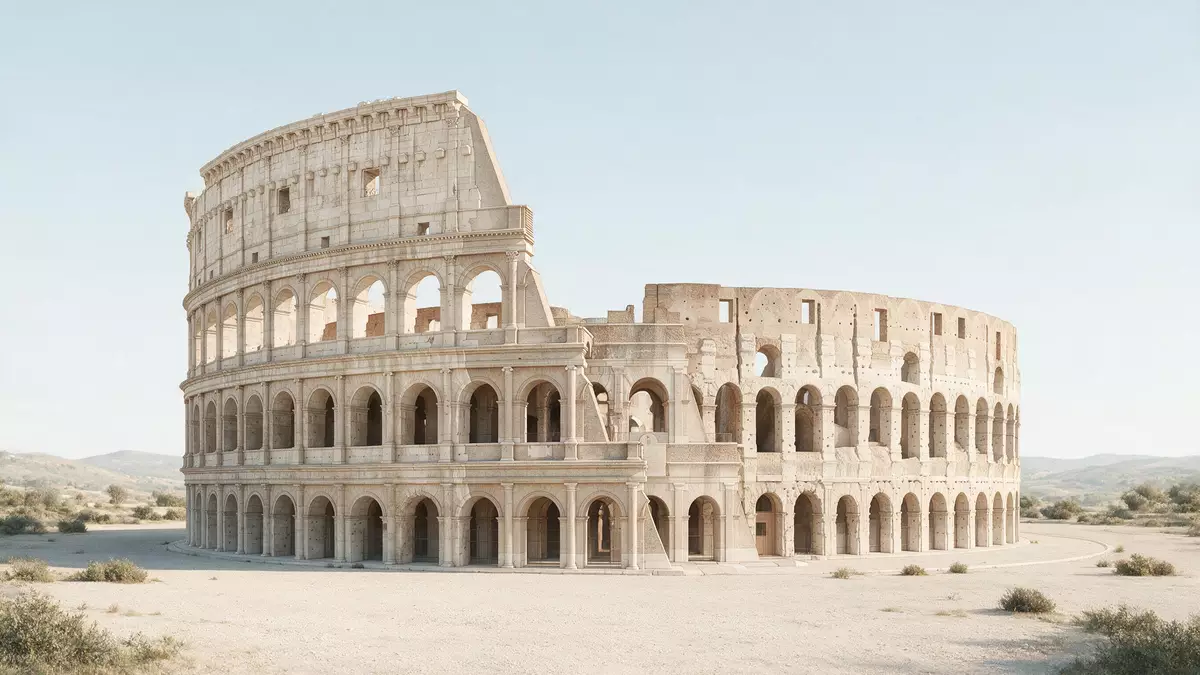
Colosseo, known in English as the Colosseum, is the monumental stone amphitheatre that rises beside the ancient Forum in Rom, a vast elliptical arena dating from the first century CE.
The Flavian amphitheatre in stone and concrete
The Colosseo was built under the Flavian emperors, with construction beginning under Emperor Vespasian around the year 70 CE and the dedication taking place under his son Titus in 80 CE.construction began under Vespasian The arena is widely known in Latin as Amphitheatrum Flavium, a name that links it directly to this dynasty of rulers.
The building takes the form of a freestanding oval, measuring about 189 m (620 ft) along its major axis and 156 m (513 ft) across the minor axis, rising to roughly four storeys in height.an oval 189 by 156 metres Its structure combines travertine limestone, volcanic tuff and brick-faced concrete, materials that were characteristic of major Roman engineering projects of the period.travertine limestone and tuff
Spaces for spectacles: arena and seating
Inside Colosseo the arena is set within a broad tiered cavea, the seating bowl that once accommodated tens of thousands of spectators drawn from different strata of Roman society.completed in 80 CE The performance space itself measured roughly 87 m by 55 m (285 ft by 180 ft), its timber floor originally covered with sand, a practical surface for gladiatorial combat and staged animal hunts.arena about 87 by 55 metres
The seating was organised in concentric rings, supported by a system of barrel and groin vaults that formed corridors and staircases behind the outer facade.vaulted structure with four storeys This arrangement allowed the amphitheatre to be filled and emptied through numerous entrances that opened into the surrounding city fabric near the Forum, between the Esquiline and Caelian hills.between the Esquiline and Caelian hills
Colosseo in the archaeological heart of Rom
Colosseo stands in Piazza del Colosseo on the eastern edge of the Roman Forum, a location that places it within the wider archaeological area that includes the Palatine hill and other imperial monuments.Piazza del Colosseo in Rome The amphitheatre is a landmark in the city’s urban landscape, its arcaded outer wall forming a familiar backdrop to the streets and open spaces around it.
Modern visitors encounter Colosseo as both a ruin and a carefully managed heritage site, with surviving sections of the outer wall, interior corridors and parts of the arena revealing the scale of Roman entertainment architecture.largest ancient amphitheatre ever built The structure’s mix of travertine blocks, tuff and concrete shows the engineering ambition of the Flavian period and its enduring role as a symbol of Rom’s ancient power.
Visiting Colosseo: what travellers from Western Europe should know
- Colosseo stands in the centre of Rom on Piazza del Colosseo, east of the Roman Forum, with Metro line B serving the nearby “Colosseo” station and tram line 3 running past the site.
- Moving through the amphitheatre involves walking along stone corridors and climbing stairways between levels; footwear suited to uneven historic surfaces is important.
- The official language is Italian and the currency is the euro.
Searching for Colosseo on social platforms
These links open searches for Colosseo on each platform.
Frequently asked questions about Colosseo
Where is Colosseo in Rom?
Colosseo stands on Piazza del Colosseo on the eastern side of the Roman Forum, within the central archaeological area of the city.
What can visitors expect inside Colosseo?
Visitors move through stone arcades, stairways and viewing platforms that overlook the former arena and the subterranean structures exposed where the floor once stood.
What makes Colosseo distinctive among Roman monuments?
Colosseo is the largest ancient amphitheatre ever built, combining an elliptical plan, tiered seating and massive stone construction on a scale unmatched by other surviving arenas.


