

Colonial City of Santo Domingo tests climate toolkit until 15 November
Published on 10/18/2026 at 05:37 | Editorial responsibility: Rafael Müller, Editor-in-Chief AD HOC NEWS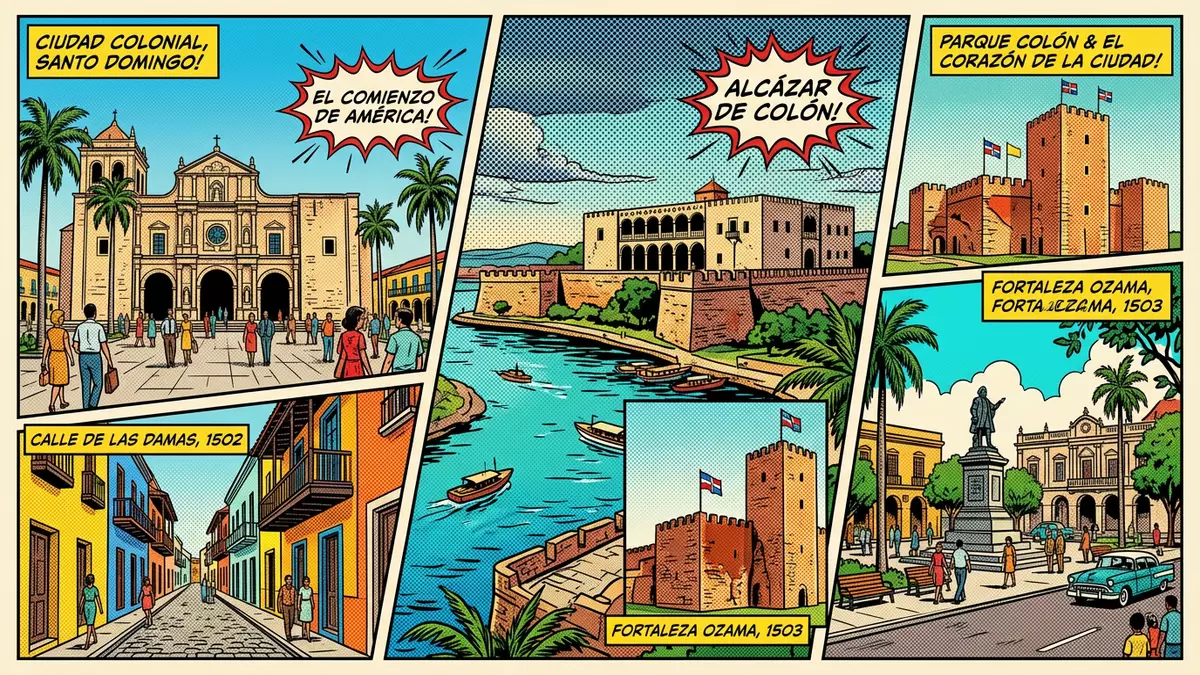
Colonial City of Santo Domingo (Ciudad Colonial de Santo Domingo) is being used to test UNESCO's Climate Action Toolkit in Santo Domingo, with the wider process running from 17 September to 15 November 2026. UNESCO reported the pilot on 16 October 2026, linking climate-risk planning to the protection of the historic centre.
The work concerns the Dominican Republic's best-known historic district, but it is not a public festival or a new visitor attraction. It is a management process involving heritage, urban-planning and climate specialists whose findings are expected to support a future Climate Action Plan.
UNESCO climate toolkit continues in Santo Domingo until 15 November
The pilot application of the toolkit's Zero Draft took place in the historic centre from 5 to 9 October 2026. UNESCO said the five-day workshop used ten practical exercises to apply the methodology to the area's urban and social context.
The wider process continues until 15 November 2026 and combines online sessions, in-person work, practical exercises and opportunities for feedback. UNESCO, ICCROM, ICOMOS and IUCN organised the workshop with the Dominican Ministry of Culture and support from the governments of the Netherlands, Norway and Australia, as set out in UNESCO's toolkit report.
Why the historic centre is testing climate planning
The methodology is designed to help World Heritage managers assess how climate risks could affect the attributes that express a site's Outstanding Universal Value. Participants examined hurricanes, heavy rainfall, flooding, changing temperatures and sea-level rise alongside the needs of a living urban centre.
The pilot is significant for the place because UNESCO describes it as the first cultural property and the first property in Latin America and the Caribbean to begin testing the Climate Action Toolkit. The participating institutions expect the process to move towards a Climate Action Plan, while the toolkit itself remains under development.
Colonial City of Santo Domingo links a 1498 plan to climate work
UNESCO's World Heritage record says the town was founded in 1498 after an earlier establishment on the east side of the Ozama River in 1496. In 1502, institutions were transferred to the west bank, where a grid pattern was created from the main square.
That historic layout gives the climate pilot a precise setting. The inscribed property covers 106 hectares, with 32 streets crossing 116 blocks, and retains much of its original urban plan. Its World Heritage status dates from 1990, as recorded in the UNESCO World Heritage record.
The relationship between the new toolkit and the old street grid is direct: climate projections are being connected to the buildings, public spaces and urban patterns that give the district its recognised heritage value. The process therefore concerns the long-term management of the same streets and structures visitors encounter on foot.
Visiting Colonial City of Santo Domingo: what travellers from Western Europe should know
- The UNESCO process runs from 17 September to 15 November 2026. Its in-person pilot workshop took place in the historic centre from 5 to 9 October 2026.
- The process is institutional rather than a public programme, and UNESCO does not announce a special entrance, closure or altered visitor route for 15 November 2026.
- The site lies at the mouth of the Ozama River in Santo Domingo, on the south coast of Hispaniola. The historic district is organised around a grid of streets and blocks.
- The World Heritage property covers 106 hectares and includes walls, bastions, forts and mainly one- or two-storey historic buildings. Visitors should expect an urban walking environment rather than a single enclosed monument.
- Spanish is the official language and the national currency is the Dominican peso.
- Entry requirements depend on your nationality; UK travellers can check the FCDO travel advice at gov.uk/foreign-travel-advice, Irish travellers the Department of Foreign Affairs at ireland.ie.
Searching for Colonial City of Santo Domingo on social platforms
These links open searches for Colonial City of Santo Domingo on each platform.
Frequently asked questions about Colonial City of Santo Domingo
When does the Climate Action Toolkit process take place?
The wider process runs from 17 September to 15 November 2026. The in-person pilot workshop took place from 5 to 9 October 2026.
What is Colonial City of Santo Domingo?
It is a World Heritage historic centre founded in 1498, with a grid plan, walls, forts and buildings spread across 106 hectares.
Where is Colonial City of Santo Domingo and how do you get there?
The site is in Santo Domingo at the mouth of the Ozama River on Hispaniola's south coast. Its streets form the historic centre's walking grid.


