

Cologne Cathedral hosts St Martin celebration on 6 November
Published on 10/10/2026 at 06:54 | Editorial responsibility: Rafael Müller, Editor-in-Chief AD HOC NEWSKey points in brief
- Cologne Cathedral will host a public St Martin celebration on 6 November 2026.
- The celebration begins with a word service at 5pm inside Cologne Cathedral on 6 November 2026.
- The procession will leave Cologne Cathedral on 6 November 2026 and continue through Cologne's Old Town to Groß St Martin church.
- Cologne Cathedral began construction in 1248, was completed in 1880 and became a UNESCO World Heritage Site in 1996.
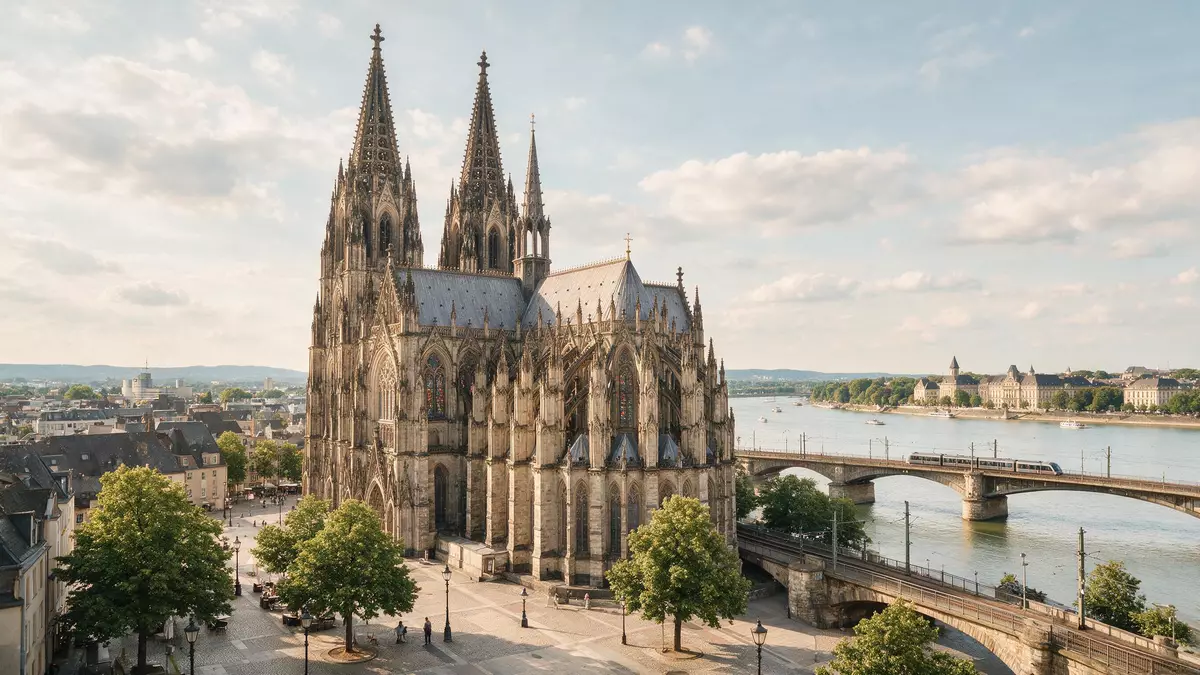
Cologne Cathedral (Kölner Dom) will host a public St Martin celebration in Cologne, Germany, on 6 November 2026. The programme begins with a word service at 5pm before a procession crosses the city's historic centre and ends at Groß St Martin church.
St Martin celebration starts at Cologne Cathedral on 6 November
The cathedral's official notice invites children and parents to the celebration on 6 November 2026. It gives the opening time as 5pm and places the first part of the programme inside Cologne Cathedral, making the building the starting point rather than a distant backdrop.
After the word service, the St Martin procession will move through the historic streets of Cologne's Old Town. The route ends at Groß St Martin, where a final blessing will be given and traditional Weckmänner will be distributed, according to the official celebration notice.
Cologne Cathedral links a new procession to a 1248 foundation
The event adds a short, public route through the city to a building whose history spans more than seven centuries. Work on the Gothic cathedral began in 1248 and was completed in 1880, after construction had taken place in several stages.
The procession's start at the cathedral also relates the November programme to the building's continuing religious use. UNESCO describes the site as a High Gothic five-aisled basilica, 144.5 metres long, with a 157.22-metre tower facade and a Shrine of the Magi in the choir. The cathedral was inscribed on the World Heritage List in 1996, as recorded in the UNESCO World Heritage record.
From the cathedral interior to Groß St Martin
For visitors, the important geographical detail is the movement between two historic churches. The programme starts inside Cologne Cathedral, then passes through Cologne's Old Town before reaching Groß St Martin for its concluding blessing.
The route gives the event a clear connection to the urban setting around the cathedral. It is not solely a service inside a monument: the public procession carries the celebration into the historic streets before returning to a church setting at its destination.
Visiting Cologne Cathedral: what travellers from Western Europe should know
- The St Martin celebration takes place on 6 November 2026 and begins with a word service at 5pm inside Cologne Cathedral.
- The procession follows the service, crosses Cologne's Old Town and ends at Groß St Martin, where the final blessing is given.
- The venue is Cologne Cathedral in central Cologne, Germany, and the route continues through the city's historic centre to Groß St Martin.
- The programme combines an indoor church service with an outdoor procession, so visitors should expect both a cathedral interior and historic city streets.
- English-speaking visitors should note that the celebration is a Christian religious event, while the official notice names the traditional food distributed at the end as Weckmänner.
Searching for Cologne Cathedral on social platforms
These links open searches for Cologne Cathedral on each platform.
Frequently asked questions about Cologne Cathedral
When does the St Martin celebration take place at Cologne Cathedral?
The celebration takes place on 6 November 2026 and begins with a word service at 5pm.
Where is Cologne Cathedral and how does the procession continue?
The cathedral is in Cologne, Germany. After the service on 6 November 2026, the procession crosses the Old Town and ends at Groß St Martin.
What is Cologne Cathedral?
It is a High Gothic five-aisled basilica begun in 1248 and completed in 1880. UNESCO added it to the World Heritage List in 1996.


