
Ciudad Colonial, Santo Domingo’s stone grid of early empire
Published on 09/16/2026 at 11:42 | Editorial responsibility: Rafael Müller, Editor-in-Chief AD HOC NEWS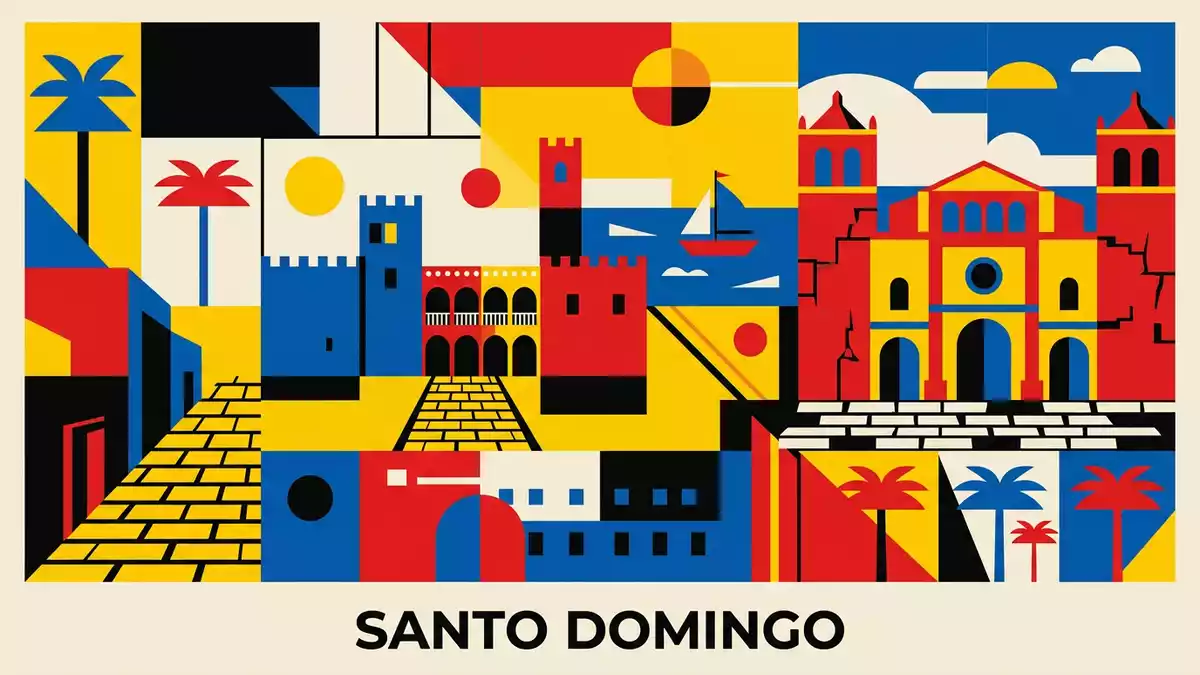
Ciudad Colonial in Santo Domingo is the historic core of the Dominican Republic’s capital, laid out as a tight grid of streets beside the Ozama River and enclosed by old stone defences. It is recognised as the first permanent European-built city in the Americas and has been inscribed as a UNESCO World Heritage Site for its concentration of early colonial buildings and urban layout.
A four-century grid beside the Ozama River
Ciudad Colonial occupies the western bank of the Ozama River near its mouth on the southern coast of the island of Hispaniola, forming the oldest urban quarter of Santo Domingo de Guzmán.Located at the mouth of the Ozama Within its walled perimeter, the district extends over roughly 106 ha of land, with streets crossing in a regular grid of rectangular blocks and blocks filled with one- and two-storey buildings in stone, brick and earth.over an area of 106 ha
The neighbourhood was founded by Spanish colonisers in the early 1500s and developed into the seat of administration for their Caribbean territories.Dating back to the early 1500s Buildings and streets retain much of this early plan, making Ciudad Colonial a rare example of a living district where the colonial grid, fortified perimeter and central squares remain legible in daily use.Its original plan and scale
Streets, plazas and the first cathedral of the Americas
Walking Ciudad Colonial reveals a sequence of stone-fronted houses, convents and civic buildings opening onto plazas where church facades and statues mark the centre of power. Among these, the Cathedral of Santa María la Menor stands beside Parque Colón, between the streets Arzobispo Meriño and Isabel la Católica, as the first cathedral built on the American continent.Catedral Primada de América Its stone exterior and mix of Gothic and Renaissance detail recall the architectural language of early sixteenth-century Spain translated to the Caribbean.
Close by, the former palace known as the Alcázar de Colón overlooks the river from an elevated position within the grid, once the residence of Diego Colón, son of Christopher Columbus and governor of the colony.Alcázar de Colón The building’s stone arcades and enclosed courtyard form part of a wider ensemble that includes the Fortaleza Ozama, a fortress guarding the river approach and illustrating how religious, residential and military architecture were interwoven in Ciudad Colonial’s early centuries.Fortaleza Ozama and other monuments
UNESCO status and a living historic district
The historic value of Ciudad Colonial was internationally recognised when the “Colonial City of Santo Domingo” was added to the UNESCO World Heritage List in 1990, highlighting the intact colonial street pattern, early civic buildings and continuity of urban life within the walls.inscribed on the UNESCO World Heritage List in 1990 In UNESCO documentation the area is described as the core from which Santo Domingo de Guzmán was founded, with its grid and built fabric substantially preserved from the fifteenth and sixteenth centuries.the core from which Santo Domingo was founded
Ciudad Colonial remains a lived-in neighbourhood as well as a heritage site, its streets carrying shops, homes and public buildings alongside museums and churches that interpret the colonial period. Spanish remains the everyday language, and the Dominican peso is the national currency used in local businesses. Squares such as Parque Colón and plazas beside the fortress provide open stone-paved spaces framed by historic facades, where the layered history of the Dominican Republic’s capital can be read in walls, street names and building styles.
Visiting Ciudad Colonial: what travellers from Western Europe should know
- Ciudad Colonial lies in the southern part of Santo Domingo beside the Ozama River on the south coast of the Dominican Republic, reached by road from Las Américas International Airport and other city districts.
- Many routes through the district involve walking on cobbled or paved streets, with sections of uneven stone and some staircases within historic buildings and along the old fortifications.
- In the wet season, stone surfaces and steps can be slippery, particularly near the river and in shaded courtyards, so footwear with good grip is important for exploring the area on foot.
- The official language is Spanish and the currency is the Dominican peso.
- Entry requirements depend on your nationality; UK travellers can check the FCDO travel advice at gov.uk/foreign-travel-advice, Irish travellers the Department of Foreign Affairs at ireland.ie.
Searching for Ciudad Colonial on social platforms
These links open searches for Ciudad Colonial on each platform.
Frequently asked questions about Ciudad Colonial
Where is Ciudad Colonial located within Santo Domingo?
Ciudad Colonial occupies the historic centre of Santo Domingo on the west bank of the Ozama River, close to the Caribbean shoreline on Hispaniola’s south coast.
What can visitors expect when walking through Ciudad Colonial?
Visitors encounter a compact grid of stone and brick buildings, cobbled streets, churches, fortifications and plazas that reflect the city’s early Spanish colonial period.
What makes Ciudad Colonial distinctive among historic districts in the Americas?
Ciudad Colonial combines an intact colonial street layout, the first cathedral in the Americas and major early Spanish administrative and military buildings within a lived-in urban quarter.


