
Ciudad Colonial, Santo Domingo’s early grid of the Americas
Published on 09/10/2026 at 09:47 | Editorial responsibility: Rafael Müller, Editor-in-Chief AD HOC NEWS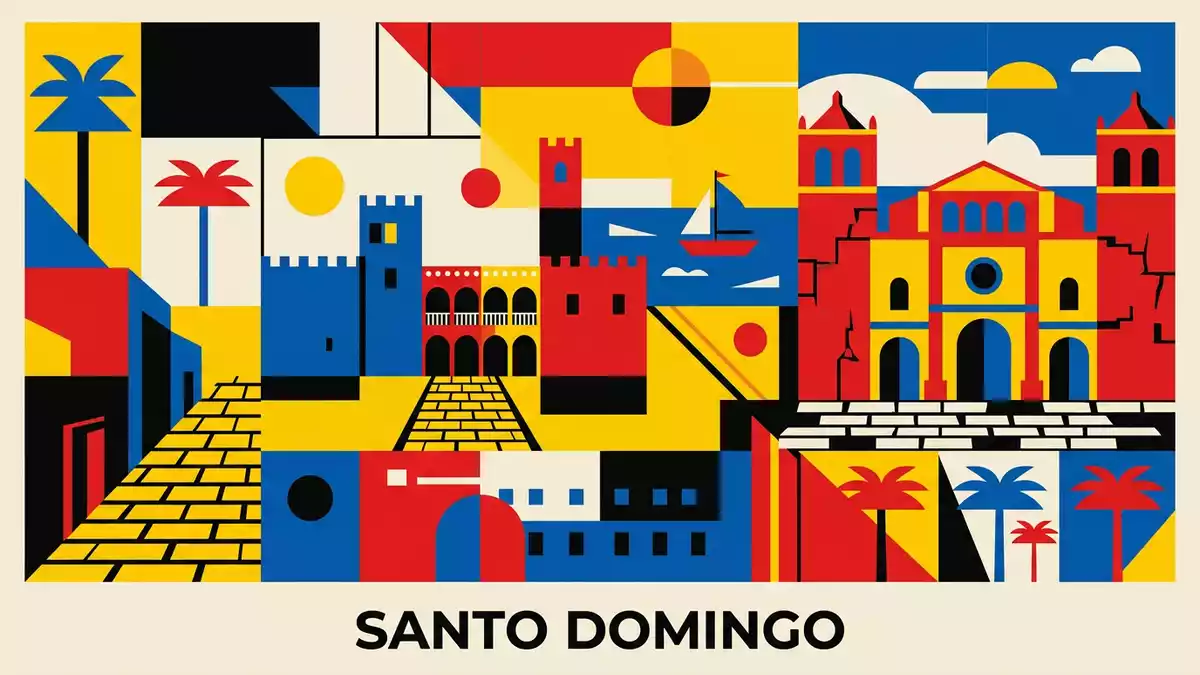
Ciudad Colonial in Santo Domingo is the historic core of the Dominican capital, a walled district where an early European-style street grid, stone churches and civic buildings still define the urban fabric.Colonial City of Santo Domingo was founded on the south coast of Hispaniola at the mouth of the Ozama River in the late fifteenth century and later became the first permanent Spanish colonial city in the Americas.
A planned colonial city on the Ozama River
Ciudad Colonial occupies a compact area on the west bank of the Ozama River near where it meets the Caribbean Sea, forming a distinct historic district within greater Santo Domingo.Colonial City of Santo Domingo travel guide describes how the city was founded in 1498 as an early colonial settlement whose urban form strongly influenced later towns across the Americas.
The streets of Ciudad Colonial follow a rectilinear pattern laid out as a grid, organised around central plazas and framed by civic and religious buildings.The UNESCO World Heritage description notes that this checkerboard plan became a model for town planners throughout the New World, giving the district enduring importance in the history of urban design.
Walls, plazas and early colonial monuments
Over an area of around 100 hectares, Ciudad Colonial is bordered by sections of defensive walls, bastions and forts that recall its role as an early seat of Spanish power in the Caribbean.UNESCO’s listing for site 526 describes how thirty-two streets cross more than one hundred blocks, many lined with one- or two-storey buildings built with stone, brick or earthen walls.
Within this grid, plazas open among the blocks and monumental structures stand out, including the cathedral complex known as the Catedral Primada de América, recognised as the first cathedral in the Americas.UNESCO’s site gallery highlights the cathedral among the key monuments, alongside early hospitals, monasteries and administrative buildings that marked Ciudad Colonial as a centre of colonial authority.
A World Heritage district at the heart of the Dominican capital
Ciudad Colonial is part of Santo Domingo de Guzmán, capital of the Dominican Republic, and functions as both a historic neighbourhood and an urban museum of early European settlement in the Americas.The Santo Domingo overview notes that many of the city’s most notable landmarks lie within this district.
UNESCO inscribed the Colonial City of Santo Domingo as a cultural World Heritage Site in 1990 under criteria ii, iv and vi, recognising its grid plan, fortifications and cluster of early institutions as having outstanding universal value.The Ciudad Colonial entry records the inscription date and identifies the area as a protected core within the modern metropolis, where the original layout and significant portions of the walls can still be appreciated.
Visiting Ciudad Colonial: what travellers from Western Europe should know
- Ciudad Colonial forms the historic district at the eastern edge of central Santo Domingo, on the west bank of the Ozama River close to the Caribbean shoreline.
- The district’s streets follow a compact grid with short blocks; many routes involve walking on stone or paved surfaces, with occasional sections of uneven ground near old walls and forts.
- Santo Domingo is reached by air through Las Américas International Airport, with road connections leading westward into the city and towards the historic centre.
- The official language is Spanish and the currency is the Dominican peso.
- Entry requirements depend on your nationality; UK travellers can check the FCDO travel advice at gov.uk/foreign-travel-advice, Irish travellers the Department of Foreign Affairs at ireland.ie.
Searching for Ciudad Colonial on social platforms
These links open searches for Ciudad Colonial on each platform.Frequently asked questions about Ciudad Colonial
Where is Ciudad Colonial located within Santo Domingo?
Ciudad Colonial lies on the western bank of the Ozama River near its mouth, forming a distinct historic district embedded in the wider city of Santo Domingo.
What can visitors expect when walking through Ciudad Colonial?
Visitors encounter a rectilinear grid of streets, fortified walls, plazas and early colonial churches and civic buildings built mainly in stone, brick and masonry.
What makes Ciudad Colonial distinctive among historic city centres?
Ciudad Colonial combines an early European-style grid, preserved fortifications and monuments such as the first cathedral in the Americas, recognised collectively as a UNESCO World Heritage Site.


