
Cinque Terre’s cliffside villages and stone terraces
Published on 09/17/2026 at 14:43 | Editorial responsibility: Rafael Müller, Editor-in-Chief AD HOC NEWS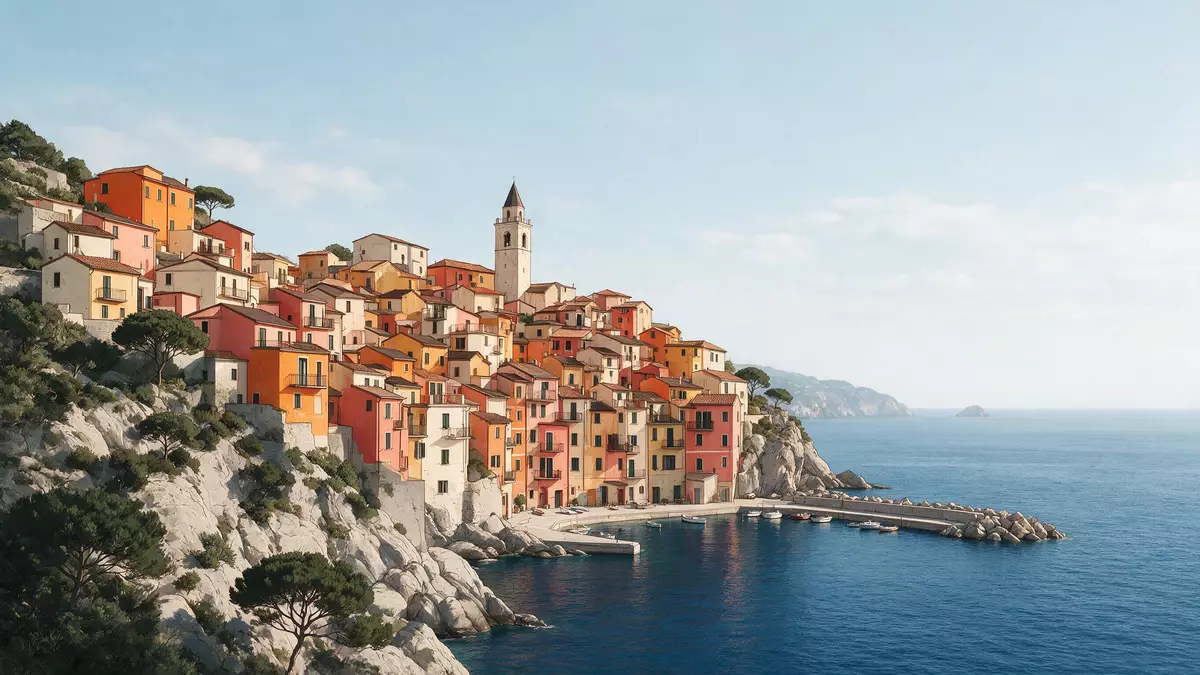
Cinque Terre on the Ligurian coast near La Spezia is a compact stretch of villages and cultivated slopes where houses, terraces and sea sit tightly together. The five settlements of Monterosso al Mare, Vernazza, Corniglia, Manarola and Riomaggiore line the coast, forming a continuous inhabited landscape that has developed over many centuries.
Five Ligurian villages along a short coast
Cinque Terre is a coastal area in the region of Liguria in north-west Italy, lying to the west of La Spezia in a province that shares its name with the city.coastal area in Liguria The name means “five lands” and refers directly to the villages that make up the area: Monterosso al Mare, Vernazza, Corniglia, Manarola and Riomaggiore.five villages from Punta Mesco Each village sits between steep slopes and the Ligurian Sea, with buildings rising in close-packed tiers above small harbours or rocky shorelines.
Monterosso al Mare lies at the western end of the chain and is the largest of the five villages, with an area that includes a sandy seafront where the coast opens out into a broader bay.Monterosso as the largest village Vernazza and Manarola cluster around compact waterfronts where houses and lanes gather around small inlets. Corniglia stands higher on a rocky spur set back from the immediate shoreline, and Riomaggiore occupies the eastern end of the coastal strip, its streets running down towards the sea between tall residential buildings.
Terraced slopes and a protected cultural landscape
The slopes behind the villages are shaped by long bands of stone walls that retain soil for vines and olive trees, creating terraces that mark human cultivation across the steep terrain.stone-walled terraces for vines These walls, footpaths and small plots run along the coast between Levanto and La Spezia, giving Cinque Terre a distinctive appearance where agriculture and settlement share the same narrow strip of land. The terraces rise above the villages and continue along ridges and gullies, with paths linking settlements and viewpoints on the cliffs.
The coastline, villages and surrounding hillsides form part of Cinque Terre National Park, a protected area that recognises both the natural setting and the built structures that define it.Cinque Terre National Park UNESCO inscribed Portovenere, Cinque Terre and the islands of Palmaria, Tino and Tinetto as a cultural landscape in 1997, highlighting the way settlement and terraced agriculture have adapted to the steep Ligurian coast.UNESCO inscription in 1997 Tracks and stairways across the terraces connect the villages and offer long views over the sea, with stone walls and cultivated plots forming continuous lines across the slopes.
Approaching each village: harbours, lanes and cliffs
Monterosso al Mare has a more open seafront than the other villages, with sandy shore and promenade-like frontage that sits between the sea and the lower line of houses.Monterosso with wide sandy beaches Vernazza is wrapped around a small harbour where boats gather in front of a compact cluster of buildings, backed by a tower and defensive structures that rise above the waterfront. Corniglia stands higher, set on a rocky promontory that lifts it above the immediate shoreline, with terraces and paths leading outwards across the slopes behind.Corniglia on a rocky promontory
Manarola presents a compact group of houses climbing above a narrow waterfront, with terraced vineyards rising behind and paths leading along the cliffs. Riomaggiore is built along a descending main street that runs towards a small inlet, its tall residential buildings emphasising the narrowness of the valley. Together, the five villages share elements of vernacular Ligurian architecture, with multi-storey houses, tight lanes and public spaces that open towards the sea or the terraces.
Visiting Cinque Terre: what travellers from Western Europe should know
- Cinque Terre lies in Liguria on the Mediterranean coast, west of La Spezia, and can be reached by regional rail services that link the five villages with nearby towns.
- The terrain includes steep slopes, stairways and paths across terraced hillsides, so moving between streets and viewpoints within and between the villages involves gradients and steps.
- The area forms part of a national park and a UNESCO-listed cultural landscape, with marked footpaths across the terraces that connect the villages and run above the sea.
- In Italy, the official language is Italian and the currency is the euro.
Searching for Cinque Terre on social platforms
These links open searches for Cinque Terre on each platform.Frequently asked questions about Cinque Terre
Where is Cinque Terre located?
Cinque Terre is on the Ligurian coast of north-west Italy, in the province of La Spezia, west of the city of the same name.
What should visitors expect on a first visit?
Visitors encounter five compact villages set between steep terraces and the sea, with narrow lanes, stairways and paths linking harbours, squares and hillside viewpoints.
What makes Cinque Terre distinctive among coastal regions?
Cinque Terre is distinctive for its combination of cliffside villages, extensive stone-walled terraces for vines and olives, and its recognition as a UNESCO-listed cultural landscape.


