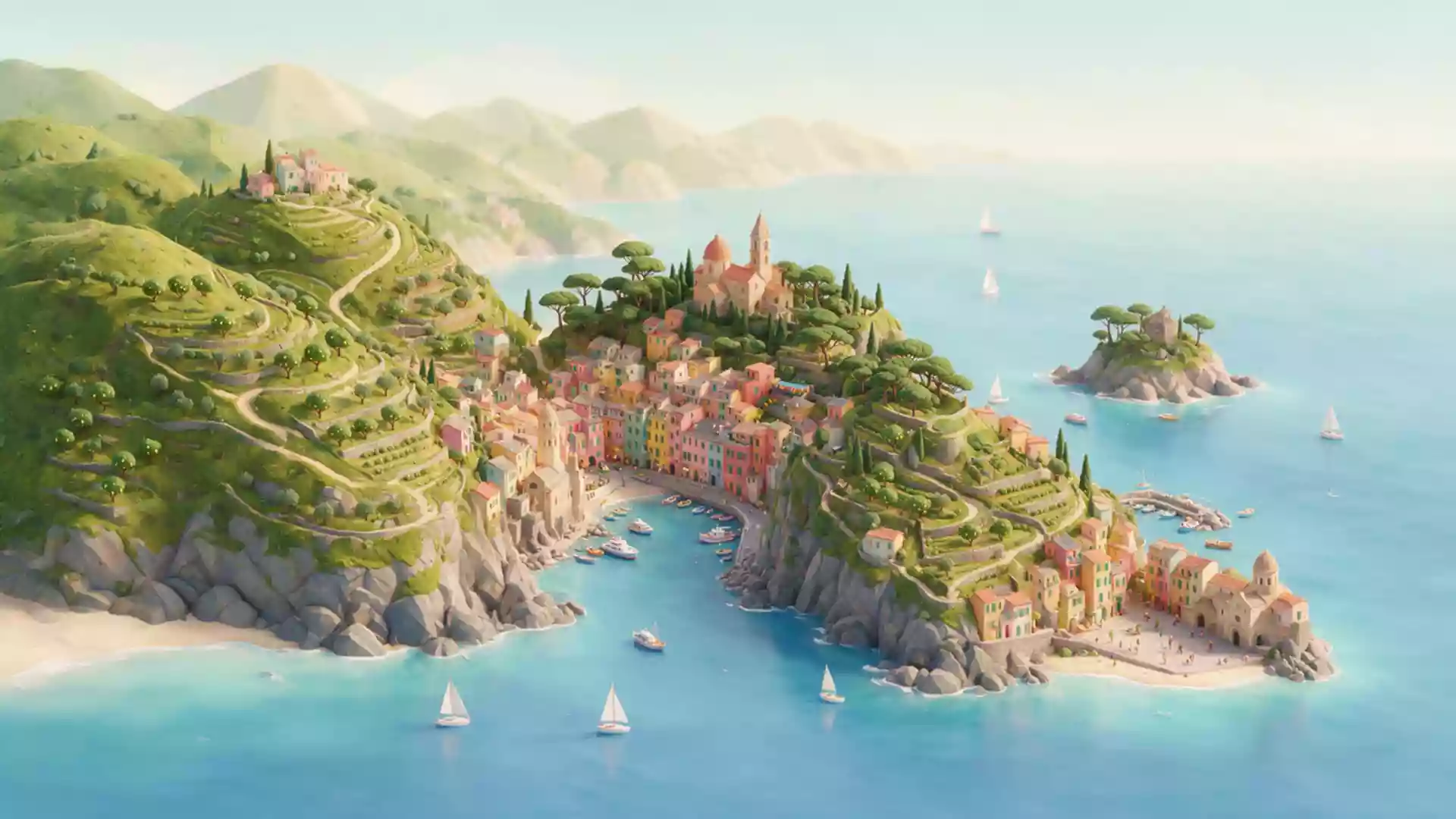
Cinque Terre’s cliffside villages and cultivated terraces
Published on 09/03/2026 at 22:02 | Editorial responsibility: Rafael Müller, Editor-in-Chief AD HOC NEWS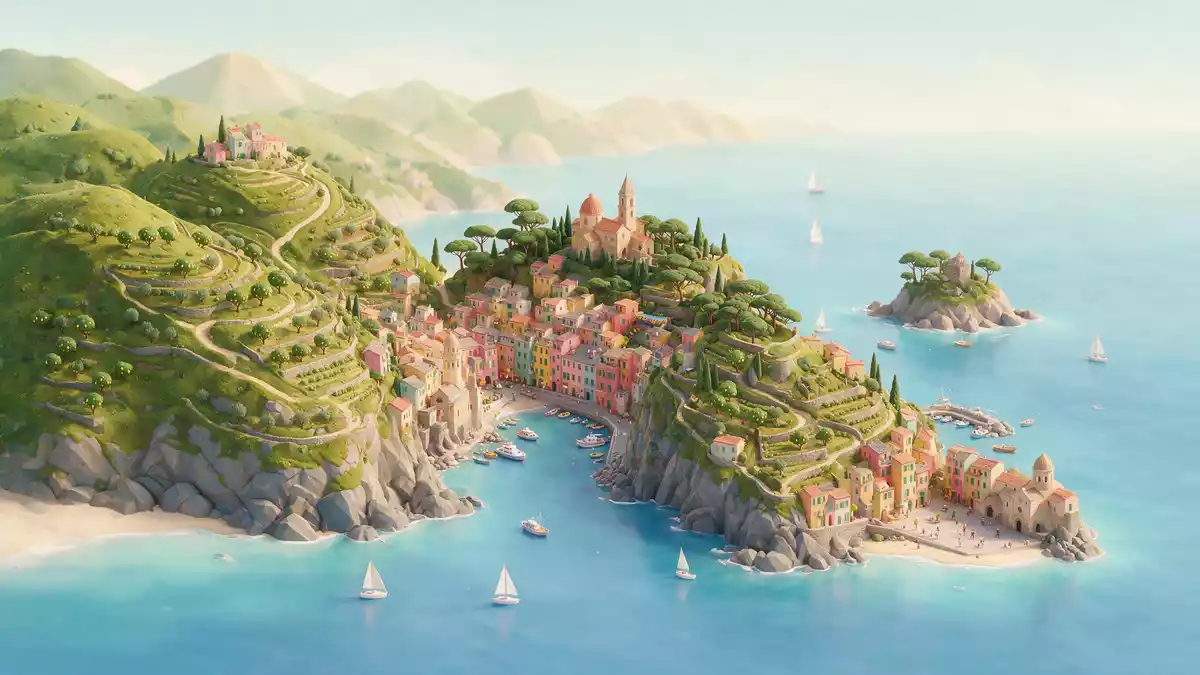
Cinque Terre on the Ligurian coast in La Spezia province is a compressed landscape where five villages cling to cliffs above the sea and terraced slopes rise behind them. The coastline, the settlements and the surrounding hillsides form part of Cinque Terre National Park, which was designated an Italian national park in 1999 and inscribed as a UNESCO World Heritage Site in 1997 for its cultural landscape shaped by agriculture and maritime life.Cinque Terre National Park
Five cliffside villages along the Ligurian Sea
The core of Cinque Terre is a chain of five coastal villages: Monterosso al Mare, Vernazza, Corniglia, Manarola and Riomaggiore, strung along a short stretch of the Ligurian Sea.the five villages of Monterosso, Vernazza, Corniglia, Manarola and Riomaggiore Each occupies a small pocket of more level ground between steep slopes and the water, so the built fabric is dense, multi-layered and compact.
Monterosso al Mare sits at the western end and spreads across lower ground near the shore, creating a broader, more open village plan than its neighbours.Cinque Terre is a rugged coastline Vernazza clusters around a small harbour backed by houses rising in tiers, while Corniglia occupies a higher spur above the sea, set back from the water and reached by paths and roads that climb from the coastal strip.five ancient maritime villages that cling to steep cliffs Manarola and Riomaggiore occupy narrow inlets where tall, closely spaced houses line steep streets and lanes that drop towards small harbours or boat landings.
Terraced slopes and cultivated hillsides
Behind the houses and lanes of Cinque Terre, the hillsides have for centuries been shaped into terraces supported by dry-stone walls, built to carry vines, olive trees and other crops on land that would otherwise be too steep for cultivation.stone walled terraces for the growing of vines and olive trees These terraces extend in long bands along the contours, creating a patterned landscape that wraps around the villages and reaches towards headlands such as Punta Mesco in the west and Punta Persico in the east.
The terraced slopes form a key part of the protected area recognised as Cinque Terre National Park, which encompasses the territory of the five villages and adjoining stretches of coastline belonging to the communes of Levanto and La Spezia.Cinque Terre National Park was established on 6 October 1999 The terraces demonstrate long-term adaptation to steep terrain, with stone construction and narrow paths threading between cultivated plots, and they are an integral part of the cultural landscape recognised by UNESCO.
Protected status and ways of moving between the villages
Cinque Terre’s protected status rests on the combined value of its coastal villages, terraced agriculture and surrounding marine area, which together were inscribed on the World Heritage List in 1997 under a listing that also includes Portovenere and the islands of Palmaria, Tino and Tinetto.Portovenere, Cinque Terre, and the Islands Within this framework, Cinque Terre National Park covers land above the villages and parts of neighbouring communes, and a protected marine area extends into the Ligurian Sea.includes an area of the communes of Levanto and La Spezia
The five villages are linked by rail, with a local train service running along the short coastal corridor and connecting Monterosso al Mare, Vernazza, Corniglia, Manarola and Riomaggiore in sequence.Cinque Terre Express trains are running between the five villages Paths and hiking trails also connect the settlements, climbing through the terraces and along the slopes, while boat routes on the Ligurian Sea provide another means of moving between villages and viewing the cliffs and houses from the water.villages perched high on the Italian Riviera
Visiting Cinque Terre: what travellers from Western Europe should know
- Cinque Terre lies on the Ligurian coast in La Spezia province in northern Italy, with rail links running along the coastal corridor and connecting the five villages.
- The terrain is steep, with stairways, narrow lanes and terraced slopes above the sea; moving between levels in the villages often involves climbing or descending sizeable flights of steps.
- Hiking trails cross the hillsides and link the villages; routes can involve exposed sections on slopes, uneven surfaces and significant changes in elevation.
- The official language is Italian and the currency is the euro.
Searching for Cinque Terre on social platforms
These links open searches for Cinque Terre on each platform.Frequently asked questions about Cinque Terre
Where is Cinque Terre located?
Cinque Terre is on the Ligurian coast in northern Italy, within La Spezia province, forming part of Cinque Terre National Park along the Italian Riviera.
What should visitors expect on a visit?
Visitors encounter steep coastal terrain, compact villages with multi-level streets and houses, terraced hillsides supporting vineyards and olive groves, and short travel distances between the five settlements.
What makes Cinque Terre distinctive?
Cinque Terre is distinctive for the close interaction of cliffside villages, long bands of dry-stone terraces and a protected coastal and marine landscape recognised as a UNESCO World Heritage Site.