Chocolate Hills, a sea of limestone cones in Bohol
Published on 09/11/2026 at 08:48 | Editorial responsibility: Rafael Müller, Editor-in-Chief AD HOC NEWS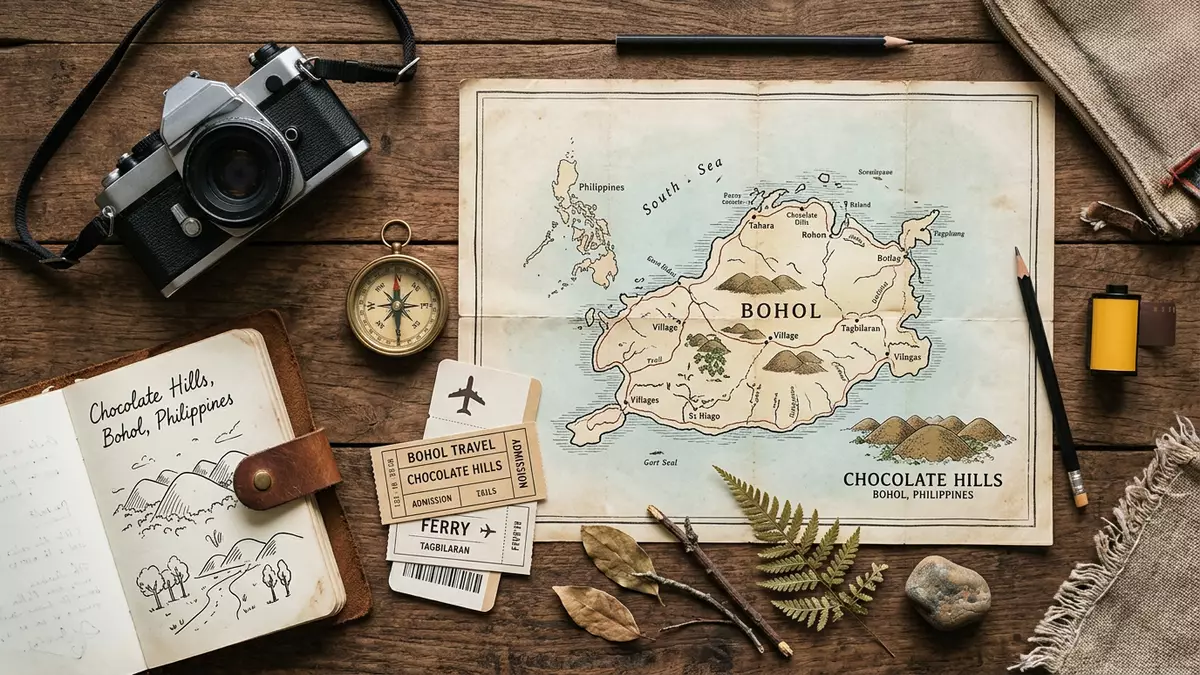
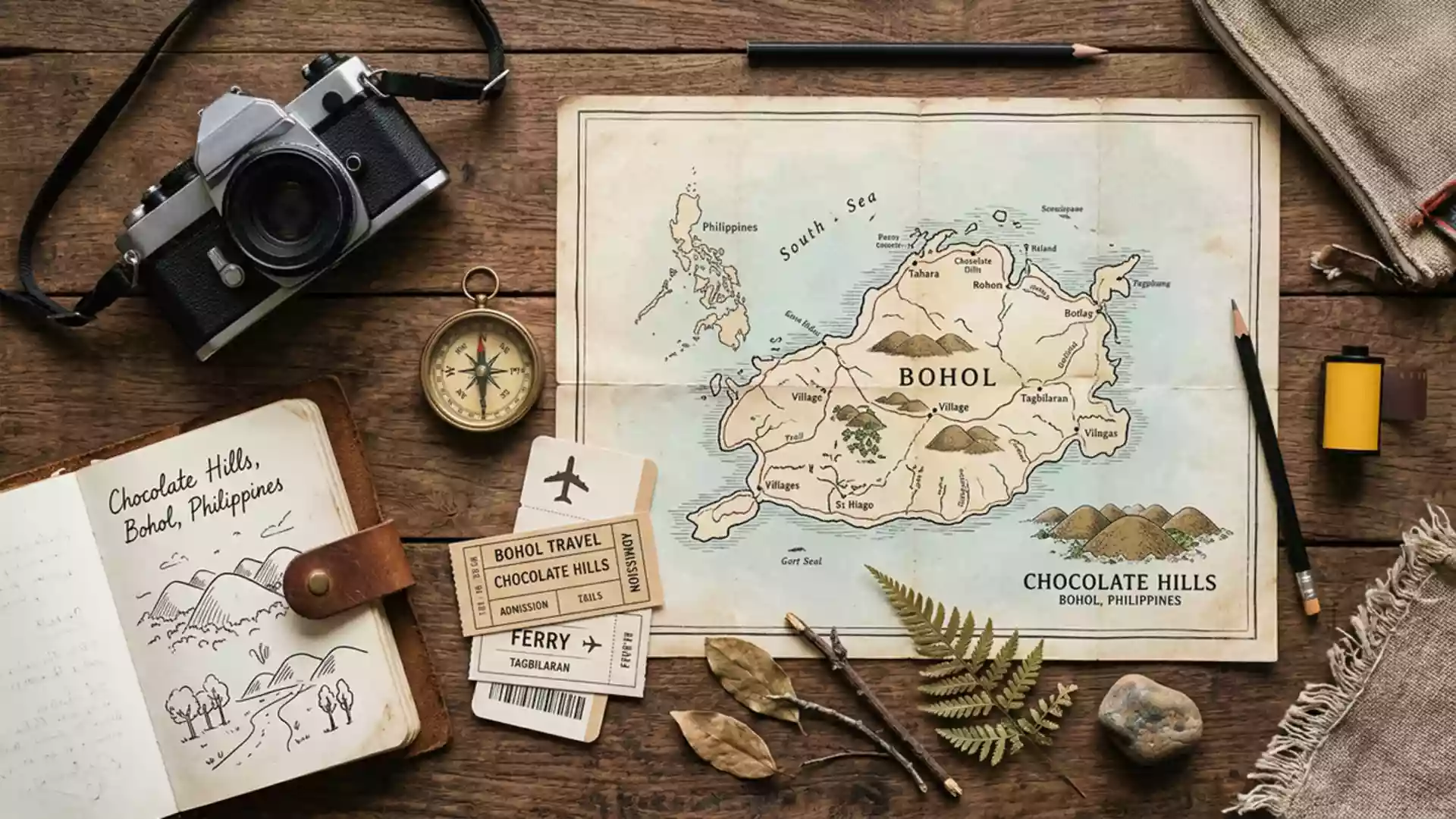
Chocolate Hills in Bohol, Philippines, form an inland landscape of hundreds of grass-covered limestone cones that rise from otherwise gentle terrain like a frozen wave of geology. Set in the central part of the island and recognised as a National Geological Monument of the Philippines since the twentieth century, they present an ordered, repeating pattern that appears almost regular when seen from the established viewpoints.
An inland landscape made of countless hills
The area known as Chocolate Hills stretches across the interior of Bohol, with conical hills scattered through the municipalities of Carmen, Sagbayan and Batuan in a broad band away from the coast.the hills are located throughout these townsBetween the mounds lie flat to gently rolling plains, used for settlement and agriculture, so the traveller moves between open ground and sudden, steep slopes that rise directly from the fields.
Individual hills reach elevations of around 30 to 120 m (98 to 394 ft) above the surrounding plains, giving the whole area a low-relief topography with no single dominant summit but an accumulation of similar forms.heights between 30 and 120 metresThe consistent size and spacing of the hills contributes to the sense of repetition; whether viewed from roadside vantage points or from purpose-built observation platforms, the landscape appears as a regular field of rounded cones rather than a single dramatic peak.
Limestone origins and karst forms
Chocolate Hills are built from marine limestone that formed when Bohol lay beneath a shallow tropical sea during the Late Pliocene to Early Pleistocene epochs, several million years ago.the area was once a shallow marine environmentCoral reefs and other marine organisms accumulated on the sea floor, creating thick layers of calcium carbonate that later hardened into bedded limestone rich in fossils of foraminifera, corals, molluscs and algae.limestone containing marine fossils
Tectonic uplift raised this limestone platform above sea level and fractured it, exposing it to tropical rainfall, surface streams and groundwater. Over two to five million years, dissolution of the limestone and subaerial erosion carved the surface into cone karst, a distinctive variety of karst topography characterised by conical hills with relatively uniform slopes.a karst landform built from uplifted marine limestoneThe result is a landscape that geologists describe using terms such as cone karst, mogotes and cockpit karst, all referring to tropical karst forms where solution and erosion of soluble rock generate isolated, steep-sided hills.
Grass cover and the “chocolate” appearance
The hills are covered by thin soils supporting grasses rather than dense forest, which gives the landscape a uniform texture and leaves the underlying geometry easy to read from afar.grass-covered limestone hillsDuring wetter months the slopes appear green, while in drier periods the grasses dry and take on a brown tone that has given the area its “Chocolate” name, as the hills resemble clustered mounds of confectionery when viewed in certain light.
At ground level, roads weave between the hills and low-lying areas contain settlements, cultivated plots and patches of woodland, so the traveller experiences the contrast between everyday rural life and a geomorphological field that surrounds it on nearly every horizon. Caves, springs and other karst features occur within the broader limestone belt of Bohol, though the hills remain the most visually distinctive expression of the same rock sequence.numerous caves and springs in the region
Visiting Chocolate Hills: what travellers from Western Europe should know
- Chocolate Hills lie in the central part of Bohol Island in the Philippines, inland from the northern and southern coasts, with well-established viewpoints near the town of Carmen.
- The terrain alternates between level plains and steep hill slopes; established viewpoints are reached by road and then by stairs or ramps climbing to raised viewing platforms.
- The official language is Filipino alongside regional languages, and the currency is the Philippine peso.
- Entry requirements depend on your nationality; UK travellers can check the FCDO travel advice at gov.uk/foreign-travel-advice, Irish travellers the Department of Foreign Affairs at ireland.ie.
Searching for Chocolate Hills on social platforms
These links open searches for Chocolate Hills on each platform.Frequently asked questions about Chocolate Hills
Where are Chocolate Hills located?
Chocolate Hills are in the interior of Bohol Island in the Philippines, spread across municipalities such as Carmen, Batuan and Sagbayan.
What should visitors expect when they go to Chocolate Hills?
Visitors encounter a broad inland landscape of regularly spaced, grass-covered limestone hills, viewed from roadside vantage points and raised platforms reached by stairs or ramps.
What makes Chocolate Hills distinctive compared with other landscapes?
The combination of marine limestone origins, cone karst forms and the sheer number of similarly shaped hills creates a repeating pattern that is rarely seen in other lowland areas.