Chichen Itza’s stone city of calendars and courts
Published on 09/11/2026 at 20:34 | Editorial responsibility: Rafael Müller, Editor-in-Chief AD HOC NEWS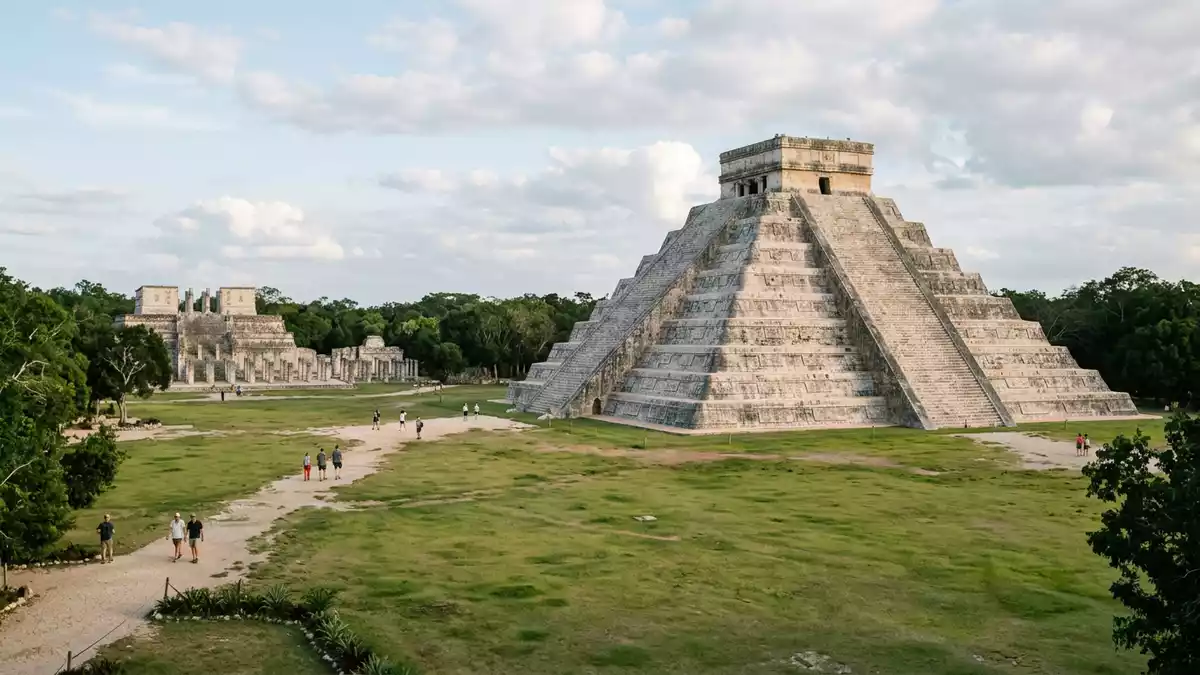
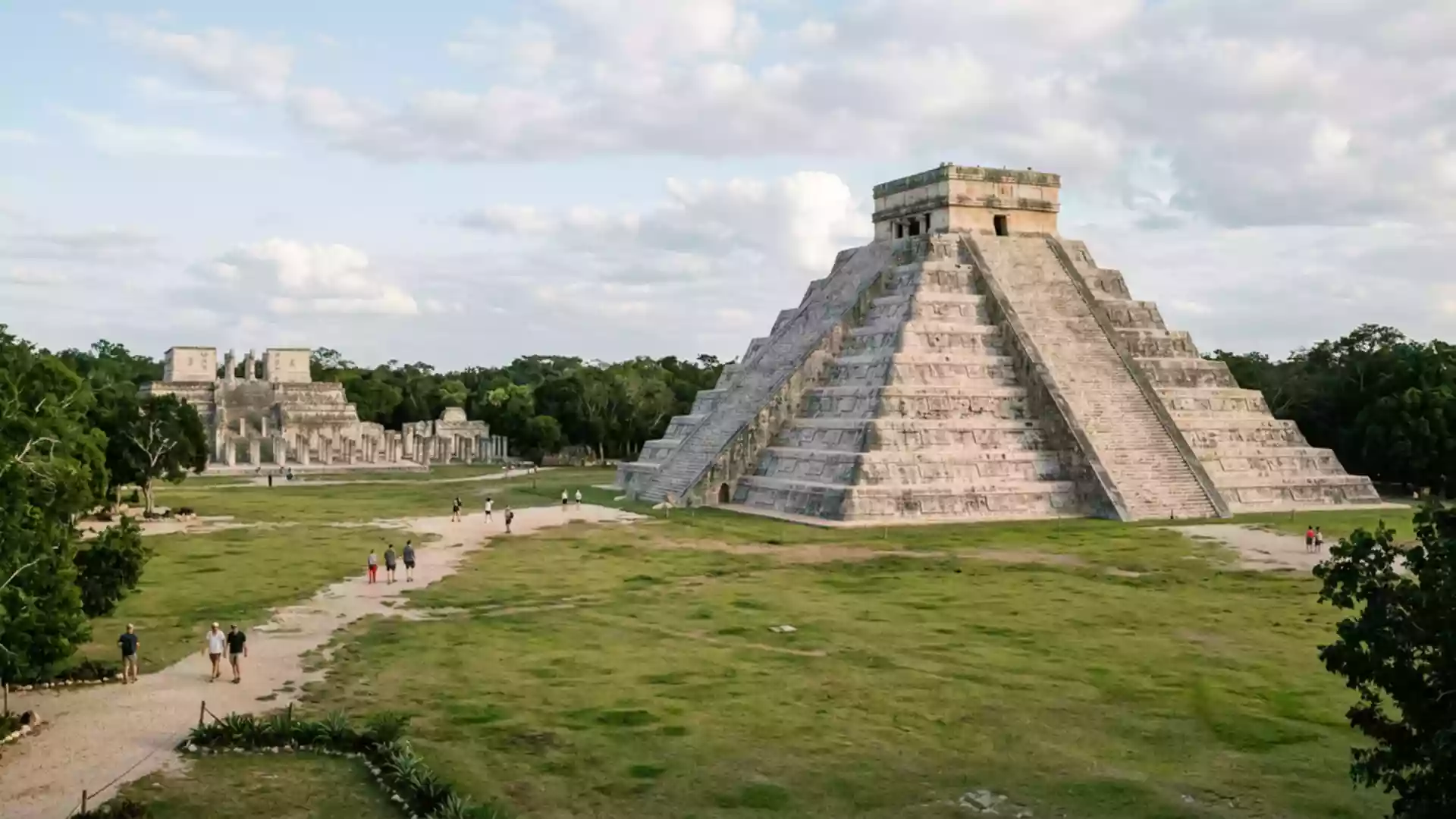
Chichen Itza in Mexico’s Yucatán Peninsula is an ancient Maya-Toltec city whose monumental stone architecture turns ideas of time, ritual and power into visible form. At its centre rises the Temple of Kukulcán, also known as El Castillo, a stepped pyramid aligned to the sun and built between the Late Classic and Early Postclassic periods.
El Castillo: a pyramid shaped by the calendar
The most recognisable structure at Chichen Itza is the Temple of Kukulcán, a dominant stepped pyramid on the main plaza of the site. This pyramid stands about 30 m (98 ft) high and is arranged in tiers that create a strong geometric profile against the flat limestone plain of northern Yucatán.Temple of Kukulcán Each side carries stairways climbing from the base to a temple platform at the summit, where rituals once focused on the feathered serpent deity Kukulcán, closely linked to the central Mexican god Quetzalcoatl.feathered serpent deity
El Castillo is closely connected to the Maya calendar, and the number of steps and panels on its terraces echoes cycles of days and ritual periods.calendrical knowledge The pyramid’s orientation means that on certain dates, light and shadow create the effect of a serpent moving along the balustrades towards a sculpted serpent head at the base, linking the building’s form with celestial events in a way visitors can still recognise. Around the pyramid stand platforms, smaller temples and columned halls, forming a dense ceremonial precinct that reflects the city’s peak between about 750 and 1200 CE.flourishing between c. 750 and 1200 CE
The Great Ball Court and a city of games
North of El Castillo lies the Great Ball Court, part of a cluster of ball courts spread across Chichen Itza’s urban core. This main court measures about 168 m (551 ft) in length and is enclosed by high parallel walls, creating a narrow playing space between long stone surfaces.Ballcourt, measuring 168 meters Stone reliefs along the sides depict players, ritual scenes and motifs of jaguars and eagles, linking the sporting contest with ideas of warfare, sacrifice and cosmic struggle.imagery of jaguars, eagles, and feathered-serpents
The Great Ball Court is the largest known ball court in Mesoamerica and forms part of a wider ceremonial landscape of platforms and temples around it.largest ball court in all of Mesoamerica Elevated viewing structures at each end provided places for rulers and priestly elites to watch the game, while sculpted rings mounted high on the walls marked the target for the heavy rubber ball. Within walking distance of the court, visitors encounter the Temple of the Warriors with its forest of columns, the Tzompantli or skull rack platform, and other monuments that collectively show how Chichen Itza bound sport, ceremony and political authority into one stone-built setting.Pre-Hispanic City of Chichen-Itza
Caracol, cenotes and a city across centuries
To the west of El Castillo stands El Caracol, the circular tower known as the Observatory, raised on a square platform within a broader architectural group. Its name in Spanish refers to the spiral staircase inside, and the building’s openings align with key positions of celestial bodies such as Venus, making it an instrument for watching the sky as well as a distinctive piece of architecture.Caracol, or the Observatory The presence of El Caracol beside temples and courts underlines how astronomy and ritual timekeeping were integral to the city’s life.
Chichen Itza takes its name from a nearby cenote, or natural sinkhole, and the wider archaeological zone covers several kilometres of structures ranging from Puuc-style buildings to later Toltec-influenced complexes.Puuc architectural style The city flourished roughly between the ninth and thirteenth centuries CE and became a major centre in the Northern Maya Lowlands, blending local traditions with influences from central Mexico.Northern Maya Lowlands from the Late Classic Its importance is recognised through inscription on the UNESCO World Heritage List as the Pre-Hispanic City of Chichen-Itza, a cultural site designated in 1988.World Heritage by UNESCO since 1988
Visiting Chichen Itza: what travellers from Western Europe should know
- Chichen Itza lies in the state of Yucatán in eastern Mexico, north-east of Valladolid, and is reached by road from that regional city and from Mérida.
- The site is largely flat but extensive, with stone paths across uneven ground and stairways climbing major structures that require steady footing.
- Several cenotes and shaded areas punctuate the archaeological zone, yet much of the walk between groups of buildings crosses exposed open terrain.
- The official language is Spanish and the currency is the Mexican peso.
- Entry requirements depend on your nationality; UK travellers can check the FCDO travel advice at gov.uk/foreign-travel-advice, Irish travellers the Department of Foreign Affairs at ireland.ie.
Searching for Chichen Itza on social platforms
These links open searches for Chichen Itza on each platform.
Frequently asked questions about Chichen Itza
Where is Chichen Itza located?
Chichen Itza is in the state of Yucatán in eastern Mexico, on the northern Yucatán Peninsula, with Valladolid and Mérida as key nearby cities.
What can visitors expect on a visit?
Visitors walk through a wide archaeological park of pyramids, ball courts, observatory towers and cenotes, linked by paths across open ground and clusters of monuments.
What makes Chichen Itza distinctive among ancient cities?
Chichen Itza combines calendar-shaped pyramids, the largest known Mesoamerican ball court and an astronomically aligned observatory within one city that flourished between the ninth and thirteenth centuries CE.