Chichen Itza: a stone city of Maya astronomy and power
Published on 08/31/2026 at 22:39 | Editorial responsibility: Rafael Müller, Editor-in-Chief AD HOC NEWS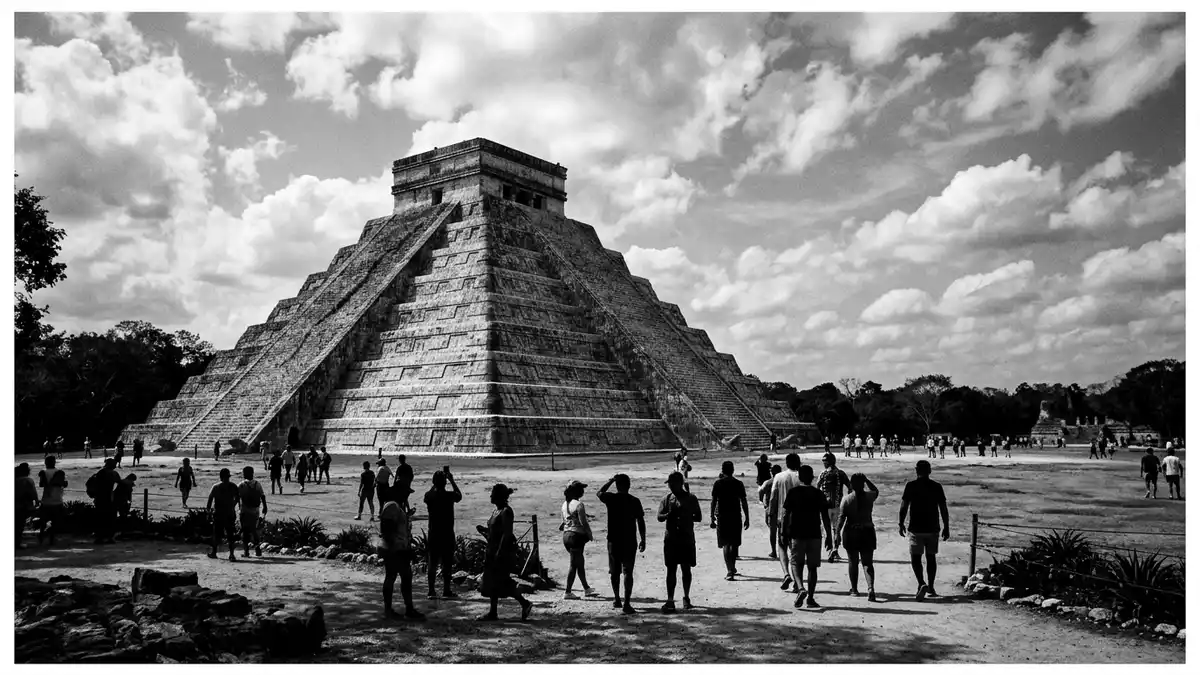
Chichen Itza in Mexico’s Yucatán Peninsula is an ancient Maya city where stone architecture, astronomical alignment and ritual space come together on a broad plateau of karst limestone. The pre-Hispanic city stands in Tinúm Municipality and was inscribed as a UNESCO World Heritage site in 1988, linking its plazas and pyramids to an international register of protected heritage.UNESCO World Heritage site
Pyramids, plazas and a planned stone city
Chichen Itza was a major Maya city in the late Classic and early Postclassic periods, with occupation spanning several centuries between about 750 and 1200 AD.regional capital from 750 to 1200 AD The ruins occupy several square kilometres of gently rising ground, with structures organised around wide plazas and processional ways that still feel legible in plan.ancient Maya city occupying 4 square miles The dominant material is locally quarried limestone, cut into blocks and fitted into stepped platforms, colonnades and terraces.
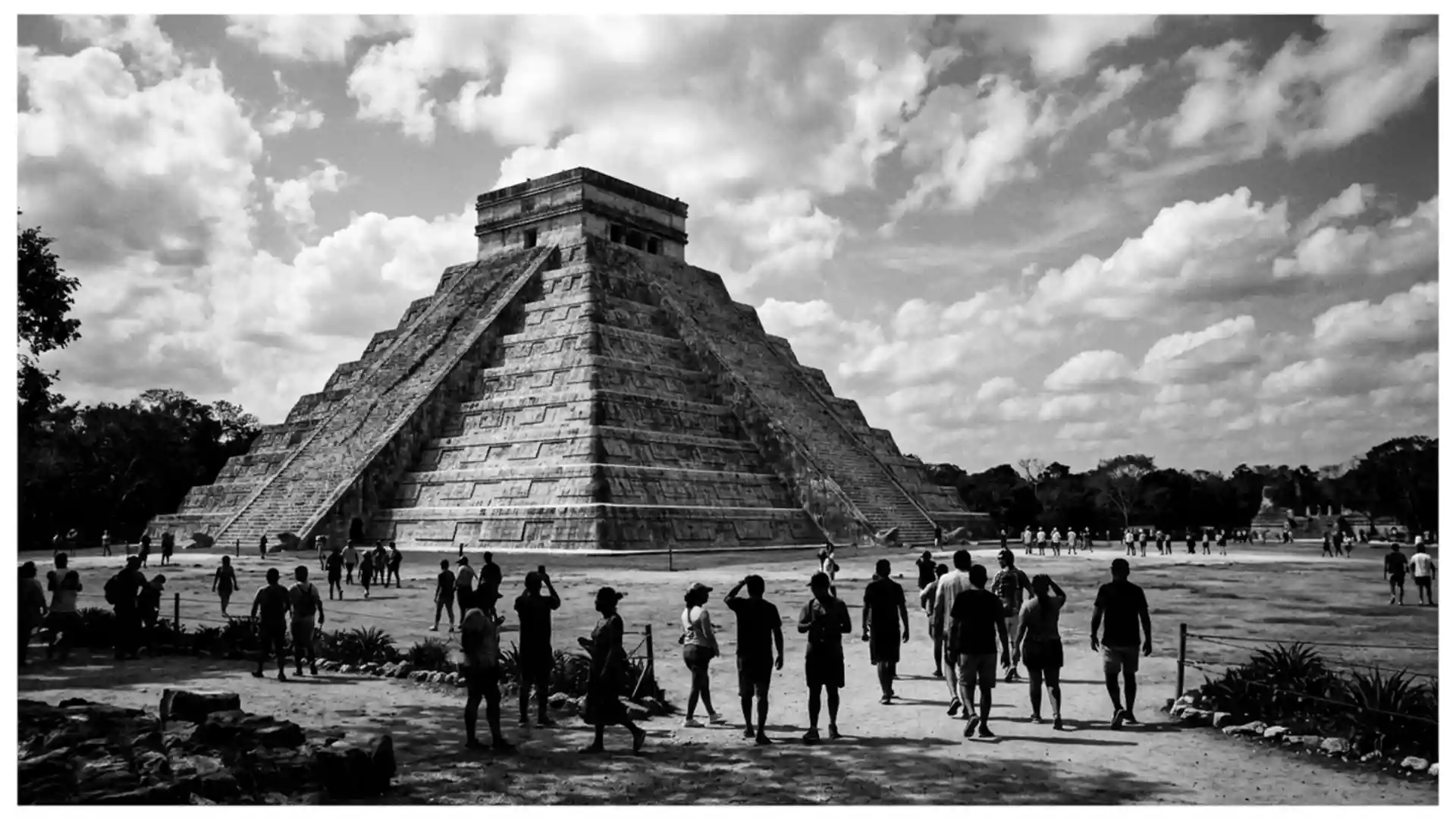
At the centre of the main ceremonial zone stands El Castillo, also known as the Temple of Kukulcan, a stepped pyramid rising from a square platform with stairways climbing each side.Temple of Kukulcan Around it stretch the Great Plaza and adjoining courts, including the Great Ball Court with its long playing alley and viewing terraces. Further north lie the Temple of the Warriors and its forest of columns, while residential and administrative groups extend into the surrounding woodland. Many buildings show a blend of Puuc-style ornament and Toltec-influenced reliefs, mirroring the city’s role as a political and cultural centre linking regions.Maya-Toltec city with Puuc-style monuments
Stone aligned with stars, sun and sacred water
The name Chichen Itza derives from a Maya phrase meaning “at the mouth of the well of the Itza”, referring to the natural sinkholes, or cenotes, that pierce the limestone plateau and supplied water to the ancient city.name linked to cenotes One of the most significant is the Cenote Sagrado, a broad water-filled shaft at the edge of the site, framed by vertical stone walls and low platforms. Its presence gives a physical anchor to the city’s ritual focus on water, underworld realms and offerings.
Astronomy is carved directly into several monuments. El Castillo incorporates a stepped geometry and stair arrangement closely tied to solar cycles, making it one of the clearest examples of architectural alignment at the site.pyramid dominating the centre of the site Nearby, the circular tower known as El Caracol stands on a rectangular platform with narrow viewing openings and internal stairways, interpreted as an observatory where the positions of stars and planets could be tracked against the horizon.Caracol observatory Together, these structures turn the movement of celestial bodies into visible form, combining stepped masses, terraces and axial alignments.
Chichen Itza and Valladolid on the Yucatán plateau
Chichen Itza lies in north-central Yucatán state, roughly halfway between Mérida and Cancún and west of Valladolid, on a low plateau of tropical woodland and scrub.Tinúm Municipality location The ruins sit near the village of Pisté and are reached on Federal Highway 180, the main route between Valladolid and Mérida.access by Federal Highway 180 Within the archaeological zone, paths connect the entrance area to the main ceremonial core and outlying groups, with most routes on level ground broken only by low platforms and stone steps.
For travellers based in Valladolid, Chichen Itza is a major excursion through savannah-like forest to an ancient city laid out in stone. The approach by road reveals the flat character of the peninsula before the first view of the pyramid masses rising above trees. Valladolid itself offers a compact colonial grid and is a convenient base for combining the ruins with nearby cenotes and smaller sites scattered across eastern Yucatán.map with nearby towns including Valladolid
Visiting Chichen Itza: what travellers from Western Europe should know
- Chichen Itza stands in Tinúm Municipality in Yucatán, eastern Mexico, and is accessed by road along Highway 180 from Valladolid, Mérida or Cancún.
- Within the archaeological zone, movement between major monuments involves walking on level paths with occasional stone steps and uneven limestone surfaces.
- The surrounding landscape is low and humid, with limited shade in open plazas, so exposed stone surfaces can become hot under direct sun.
- The official language is Spanish and the currency is the Mexican peso.
- Entry requirements depend on your nationality; UK travellers can check the FCDO travel advice at gov.uk/foreign-travel-advice, Irish travellers the Department of Foreign Affairs at ireland.ie.
Searching for Chichen Itza on social platforms
These links open searches for Chichen Itza on each platform.
Frequently asked questions about Chichen Itza
Where is Chichen Itza in relation to Valladolid?
Chichen Itza is in Tinúm Municipality in Yucatán state, west of Valladolid along Federal Highway 180, near the village of Pisté on the Yucatán plateau.
What should visitors expect during a visit to Chichen Itza?
Visitors encounter large stone pyramids, plazas, ball courts and an observatory on generally level terrain, with walking on paths, platforms and steps between the main monuments.
What makes Chichen Itza distinctive among Maya archaeological sites?
Chichen Itza stands out for its combination of monumental pyramids, cenotes and observatory structures, all laid out as a planned city in limestone and aligned with celestial cycles.