
Chengdu Xiongmao Jidi, where giant pandas share a bamboo hillside
Published on 09/18/2026 at 21:24 | Editorial responsibility: Rafael Müller, Editor-in-Chief AD HOC NEWS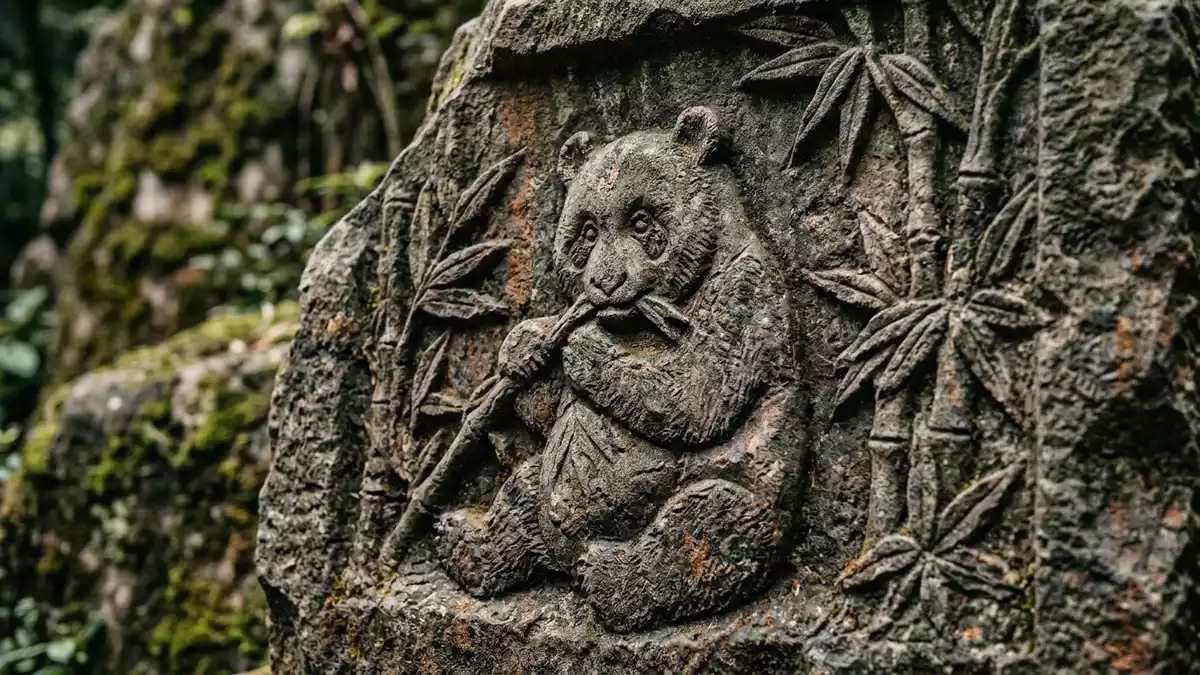
Chengdu Xiongmao Jidi in Chengdu, China is the Chengdu Research Base of Giant Panda Breeding, a hillside campus of bamboo groves, ponds and enclosures devoted to giant pandas and their close relatives.Chengdu Research Base of Giant Panda Breeding was established in 1987 as a conservation and research institute in the northern suburbs of Chengdu, and its grounds have grown into a landscaped environment where the animals live among dense planting and water.
Bamboo hillsides and panda enclosures
The core impression of Chengdu Xiongmao Jidi is that of giant pandas moving within a deliberately green landscape, with enclosures set on slopes detailed with rocks, trees and thick bamboo rather than flat concrete yards.The Panda Base, covering an area of 3.07 square kilometres, is described as an ecological demonstration project for giant panda ex-situ conservation, and the campus layout reflects that status through extensive vegetation and water features surrounding the fenced living areas.
Visitors encounter outdoor enclosures linked with paths and viewing platforms, as well as indoor houses where the bears can be seen resting or feeding behind glass during periods of stronger sun or heat.Travel descriptions of the base consistently refer to nursery rooms for panda cubs, separate areas for different age groups and red panda enclosures, all woven into the same park-like setting with planted banks, small lakes and clusters of pavilions.
A research base turned visitor destination
Chengdu Xiongmao Jidi began as a breeding and research centre focused on saving the giant panda from extinction, and remains a government-funded non-profit institute with laboratories, veterinary facilities and staff housing alongside its visitor routes.The base is a government-funded non-profit whose full name highlights both breeding and research, and the official brief introduction emphasises scientific research, ex-situ conservation and nature education as central functions.
At the same time, the base has been laid out so that visitors can see pandas at relatively close quarters from paths and viewing platforms without entering the working areas, and nature education signs and exhibition spaces explain panda biology, habitat and conservation in simple terms.The official site frames Chengdu Xiongmao Jidi as combining scientific research, breeding and popular science education with cultural tourism, and that combination of activities shapes both the built structures and the planting: laboratories and food preparation buildings sit back from the main paths, while visitor circulation passes through landscaped zones with themed sculpture, small bridges and water.
Location on Chengdu’s northern edge
Chengdu Xiongmao Jidi lies in the northern suburbs of Chengdu, in Chenghua District, on Panda Avenue, which has become an axis for panda-related development on the city’s edge.The brief introduction places the base at No. 1375 Panda Avenue in Chenghua District, roughly 10 km from Tianfu Square in the city centre, with the grounds spreading over several square kilometres of low hills and man-made lakes.
The base sits in a band of green between the built-up city and the more mountainous country to the north-west, and travel guides describe approaches by city road from central Chengdu and by public transport connections from metro stations on Line 3 towards the Panda Avenue area.Trip-based guides consistently state that the base is in the northern suburb about 10 km from downtown and give the same Panda Avenue address, underlining its identity as a dedicated panda district on the urban fringe.
Visiting Chengdu Xiongmao Jidi: what travellers from Western Europe should know
- Chengdu Xiongmao Jidi is located on Panda Avenue in Chenghua District on the northern edge of Chengdu, reached by city roads and public transport connections from central Chengdu.
- The grounds are spread over low hills with planted slopes, ponds and long walking paths; visiting involves substantial walking on paved routes with occasional staircases and gentle gradients.
- The campus lies outside the compact historic core of Chengdu, and many organised excursions combine a visit to Chengdu Xiongmao Jidi with time in city districts such as Tianfu Square and riverfront neighbourhoods.
- The official language is Chinese and the currency is the renminbi (yuan).
- Entry requirements depend on your nationality; UK travellers can check the FCDO travel advice at gov.uk/foreign-travel-advice, Irish travellers the Department of Foreign Affairs at ireland.ie.
Searching for Chengdu Xiongmao Jidi on social platforms
These links open searches for Chengdu Xiongmao Jidi on each platform.Frequently asked questions about Chengdu Xiongmao Jidi
Where is Chengdu Xiongmao Jidi located?
Chengdu Xiongmao Jidi is in Chenghua District on the northern edge of Chengdu, on Panda Avenue, around 10 km north of Tianfu Square in the city centre.
What can visitors expect during a visit?
Visitors walk through landscaped grounds with outdoor panda enclosures, indoor viewing halls, red panda areas, nursery rooms and nature education displays set among bamboo, trees and ponds.
What makes Chengdu Xiongmao Jidi distinctive among panda sites?
Chengdu Xiongmao Jidi combines a government-funded research base for giant panda breeding with an extensive, bamboo-covered visitor campus, bringing conservation work and public viewing together on one hillside site.


