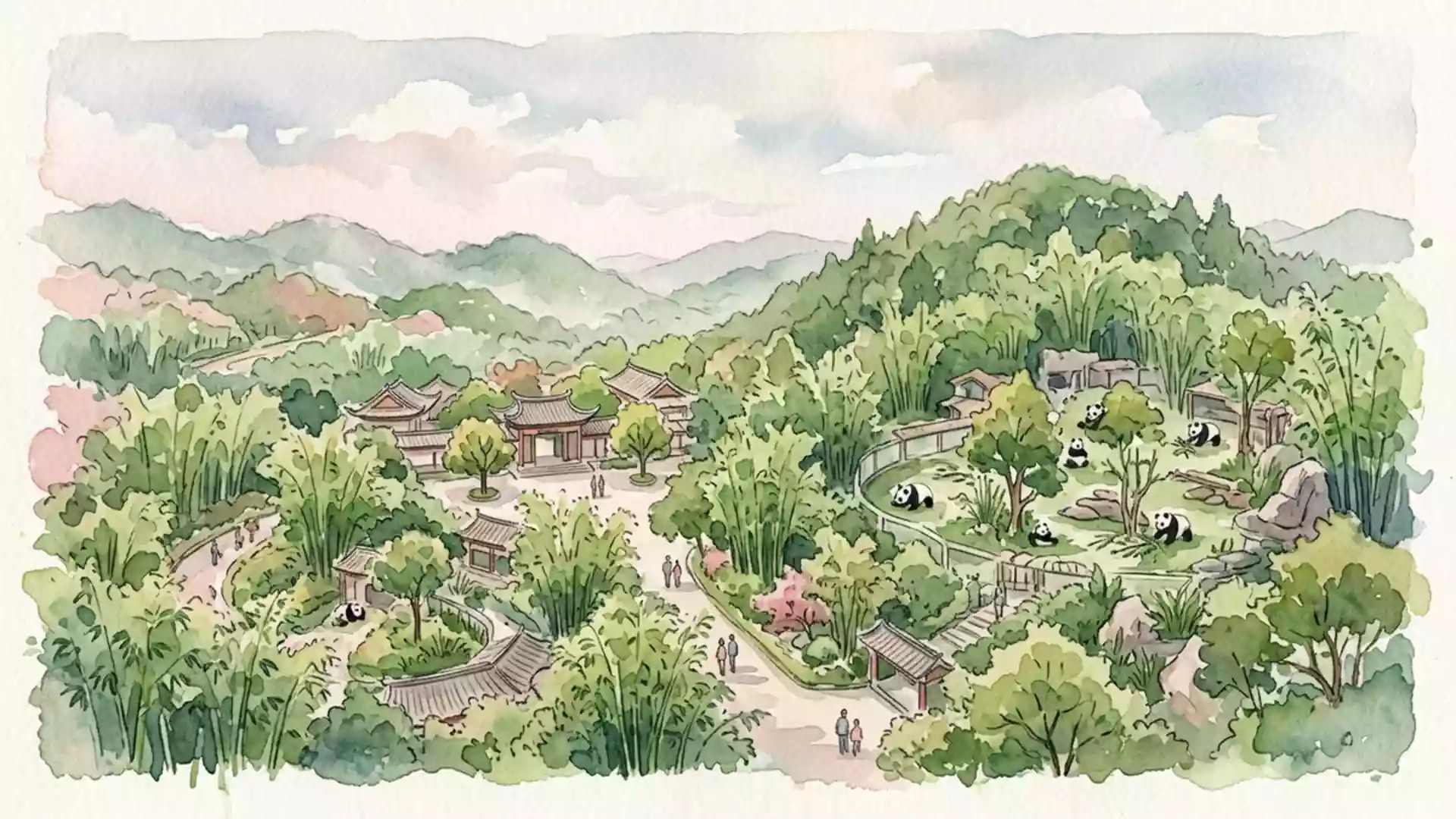
Chengdu Xiongmao Jidi and its living landscape of giant pandas
Published on 09/09/2026 at 07:08 | Editorial responsibility: Rafael Müller, Editor-in-Chief AD HOC NEWS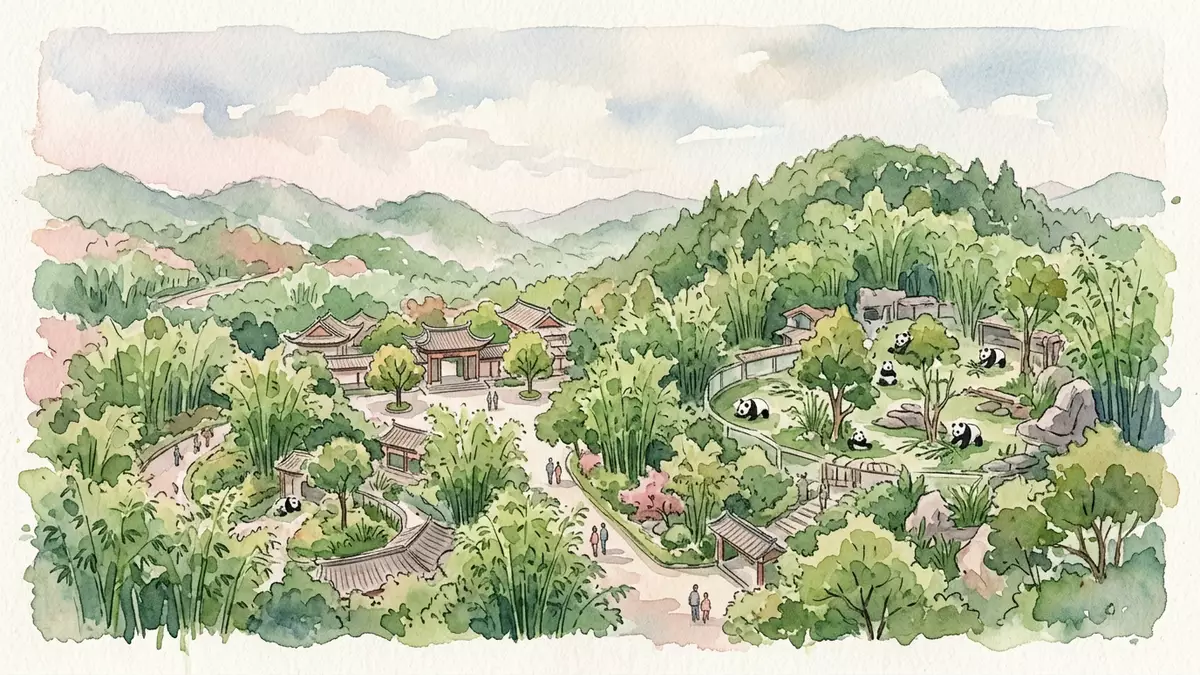
Chengdu Xiongmao Jidi, known internationally as the Chengdu Research Base of Giant Panda Breeding, is a sprawling conservation park on the outskirts of Chengdu in south-west China. Open-air enclosures, bamboo thickets and specialised research buildings share the same green hillside, making the base both a working scientific centre and a place where visitors see giant pandas at close range.
A conservation base grown into a bamboo park
The Chengdu Research Base of Giant Panda Breeding was established in 1987 as a dedicated institution for the protection and breeding of giant pandas and other rare animals endemic to China.Chengdu Research Base of Giant Panda Breeding The base developed in the northern suburbs of Chengdu, expanding over the years into a park-like landscape of bamboo groves, ponds and walking paths laid out around the enclosures.ecological demonstration project for giant panda ex-situ conservation
The site covers an area of several square kilometres, giving the animals room to move in open-air habitats planted with dense bamboo and other vegetation.covering an area of 3.07 square kilometers Pools of water, shaded resting platforms and indoor houses sit inside each enclosure, while paved paths and low fences organise visitor movement between them. Away from the viewing areas, laboratory buildings and animal hospitals continue the base’s original work as a breeding and research centre.
Giant pandas at different stages of life
Chengdu Xiongmao Jidi is home to a large population of giant pandas, with animals at different ages spread across several themed enclosures.home to over 240 giant pandas Adult pandas occupy broader areas of hillside and woodland, where they move among trees and wooden climbing frames. Younger pandas live in smaller, carefully supervised enclosures, and cubs stay in nursery houses where keepers monitor them more closely.
Alongside the giant pandas, Chengdu Xiongmao Jidi also keeps red pandas and other rare species, reflecting its wider conservation remit.breeding and research institute for giant pandas, red pandas, and other rare animals The red pandas occupy their own leafy enclosures, with wooden walkways and shelters tucked into the planting. Information boards around the paths outline the biology and conservation status of the species, reinforcing the base’s role as a public science education centre.
Architecture, layout and the wider panda landscape
The buildings at Chengdu Xiongmao Jidi follow functional lines rather than monumental gestures, with simple rendered walls, broad windows and gently sloping roofs that sit low against the surrounding trees. Visitor facilities such as exhibition halls, screening rooms and service blocks are spread through the park, often paired with courtyards or planted terraces to soften their edges. Together, they form a loose campus rather than a single dominant structure, with the animals’ habitats remaining the focal points.
Beyond the main base, Chengdu’s wider panda landscape includes the Chengdu Field Research Center for Giant Pandas, widely referred to as Panda Valley, which focuses on wild training and reintroduction work.Chengdu Field Research Center for Giant Pandas This separate site complements the breeding and public education roles of Chengdu Xiongmao Jidi by working on the transition between captive environments and protected wild areas. Together, the two centres anchor Chengdu’s reputation as a major hub for panda conservation and research.
Visiting Chengdu Xiongmao Jidi: what travellers from Western Europe should know
- Chengdu Xiongmao Jidi lies in the northern suburbs of Chengdu, in Sichuan Province, with its main entrance on Panda Avenue in Chenghua District. It is reachable by city metro on Line 3 to Panda Avenue station, followed by shuttle bus or local transport to the base.
- The terrain inside the base consists of gently graded paved paths winding through bamboo groves and around enclosures. Walking between the main areas involves covering a considerable distance on foot, with occasional staircases and slopes but no prolonged steep climbs.
- The base sits at lowland altitude near Chengdu, and the climate reflects the humid subtropical conditions of Sichuan. Summer visits involve warm temperatures and high humidity, while winter days are cooler and can be overcast.
- Nearby, Chengdu Zoo and other urban parks lie within the same general area of the city, and the base’s location makes it straightforward to combine a visit with time in central Chengdu’s districts.
- The official language is Chinese and the currency is the renminbi (yuan). Entry requirements depend on your nationality; UK travellers can check the FCDO travel advice at gov.uk/foreign-travel-advice, Irish travellers the Department of Foreign Affairs at ireland.ie.
Searching for Chengdu Xiongmao Jidi on social platforms
These links open searches for Chengdu Xiongmao Jidi on each platform.
Frequently asked questions about Chengdu Xiongmao Jidi
Where is Chengdu Xiongmao Jidi located?
Chengdu Xiongmao Jidi stands in the northern part of Chengdu, in Chenghua District, with its main entrance on Panda Avenue in Sichuan Province.
What should visitors expect on a visit?
A visit involves walking along paved paths between giant panda and red panda enclosures, with views into nursery houses, adult habitats and supporting exhibition spaces.
What makes Chengdu Xiongmao Jidi distinctive?
The combination of large-scale giant panda breeding, structured scientific research facilities and an extensive bamboo park open to visitors gives Chengdu Xiongmao Jidi a character that is strongly shaped by conservation.