
Chengdu Xiongmao Jidi and its bamboo landscape of giant pandas
Published on 09/04/2026 at 14:48 | Editorial responsibility: Rafael Müller, Editor-in-Chief AD HOC NEWS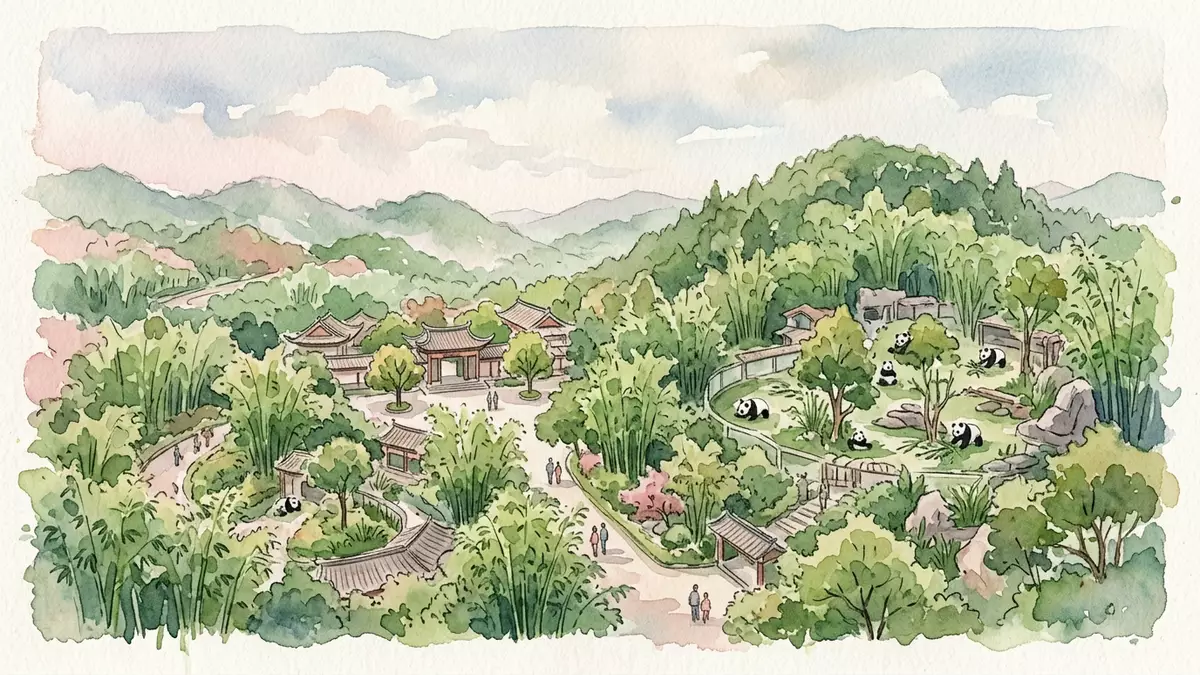
On the outskirts of Chengdu in south-west China, Chengdu Xiongmao Jidi is a sprawling research base where giant pandas live in landscaped bamboo valleys and forested enclosures. Established in 1987 as the Chengdu Research Base of Giant Panda Breeding, it has grown into a major centre for conservation, science and carefully managed tourism focused on China’s most recognisable native bear.
A breeding base built into wooded hillsides
Chengdu Xiongmao Jidi occupies low hills and former countryside north-east of central Chengdu, laid out as a park-like campus with ponds, tree cover and winding paths. The base was founded in 1987 by the Chengdu municipal authorities as a specialised institute for breeding and research on giant pandas after several sick animals were rescued from the wild and brought to the city for care.founded in 1987 Over time it has expanded to cover several square kilometres of terrain planted with dense vegetation, turning what was once a small rescue facility into an extensive base designed to imitate panda habitat.covering an area of 3.07 square kilometres
The landscape at Chengdu Xiongmao Jidi is arranged as a sequence of zones, including dedicated enclosures for adult giant pandas, areas for younger animals and nurseries for cubs, all interspersed with stands of bamboo and mixed woodland. Water features and small lakes break up the greenery, and paved walkways lead through the different sections, connecting panda viewing platforms with research buildings and educational exhibits. The campus also houses spaces for other endangered wildlife such as red pandas and wetland birds, reflecting its role as a broader ex-situ conservation site beyond the famous black-and-white bears.government-funded non-profit breeding and research institute
Giant pandas, red pandas and conservation science
Chengdu Xiongmao Jidi is primarily known for its work with giant pandas, one of China’s nationally protected species, and maintains a substantial captive population as part of a wider breeding programme. The base forms part of the national network coordinated through the China Conservation and Research Centre for the Giant Panda, contributing animals and data to efforts that aim to maintain genetic diversity in captivity.world-leading ex situ conservation institution Over the decades since its establishment, dozens of panda cubs have been born here, and the population at the base has grown far beyond the initial small group that arrived in the 1980s.from six rescued pandas to a large population
Alongside giant pandas, Chengdu Xiongmao Jidi is home to captive red pandas, cranes, storks, swans and other species which occupy aviaries, ponds and wooded runs across the site.endangered animals including red pandas and birds The base combines research labs and veterinary facilities with interpretation centres, using exhibitions and observation windows to present details of panda biology, reproductive science and habitat protection. Training areas linked to its field research centre support programmes preparing some animals for life in more natural settings, and the wider campus operates as both a working scientific site and a showcase of conservation practice.
A visit through bamboo walks and viewing terraces
For visitors, Chengdu Xiongmao Jidi unfolds as a network of paved paths, sloping lanes and staircases that pass enclosures, lakes and clusters of buildings. The main entrance area leads into broad tree-lined avenues, from which smaller routes branch off towards different panda sections and lakefront viewpoints. Raised platforms, railings and glass-fronted indoor rooms offer varied ways to see the animals, with outdoor enclosures surrounded by vegetation and indoor areas used for nurseries and specialised care.national tourist attraction with educational tourism
Education and public outreach form a visible part of the layout. Signs and display boards explain panda behaviour and conservation, while designated routes guide visitors past themed zones linked to breeding, cub care and ecological interpretation. The combination of shaded paths, open plazas and viewing terraces means that much of the experience takes place outdoors among bamboo and other planting, with indoor spaces providing sheltered vantage points and exhibition halls. Despite the scientific focus, the overall impression is of a landscaped park arranged around panda conservation, with facilities adapted to handle substantial numbers of visitors while still presenting the animals in relatively natural-looking surroundings.
Visiting Chengdu Xiongmao Jidi: what travellers from Western Europe should know
- Chengdu Xiongmao Jidi lies north-east of central Chengdu in Sichuan Province and is reached by road from the urban area, with city transport and taxis serving the base.
- The terrain consists of gently rising hills, lakes and wooded areas linked by paved paths, with staircases and slopes that require periods of walking between different panda enclosures.
- The official language is Chinese and the currency is the renminbi (yuan), used for local transport and on-site purchases.
- Entry requirements depend on your nationality; UK travellers can check the FCDO travel advice at gov.uk/foreign-travel-advice, Irish travellers the Department of Foreign Affairs at ireland.ie.
Searching for Chengdu Xiongmao Jidi on social platforms
These links open searches for Chengdu Xiongmao Jidi on each platform.
Frequently asked questions about Chengdu Xiongmao Jidi
Where is Chengdu Xiongmao Jidi located?
Chengdu Xiongmao Jidi is situated north-east of central Chengdu in Sichuan Province in south-west China, on wooded hillsides outside the dense urban core.
What can visitors expect during a visit?
Visitors walk through a large landscaped campus of bamboo, lakes and forest, passing outdoor enclosures and indoor viewing rooms where giant pandas, red pandas and other wildlife are kept.
What makes Chengdu Xiongmao Jidi distinctive among panda sites?
It combines a substantial breeding and research base founded in 1987 with a park-like layout of ponds and bamboo valleys that presents panda conservation within a carefully designed landscape.


