Chateau de Versailles and the age of Louis XIV
Published on 09/12/2026 at 07:28 | Editorial responsibility: Rafael Müller, Editor-in-Chief AD HOC NEWS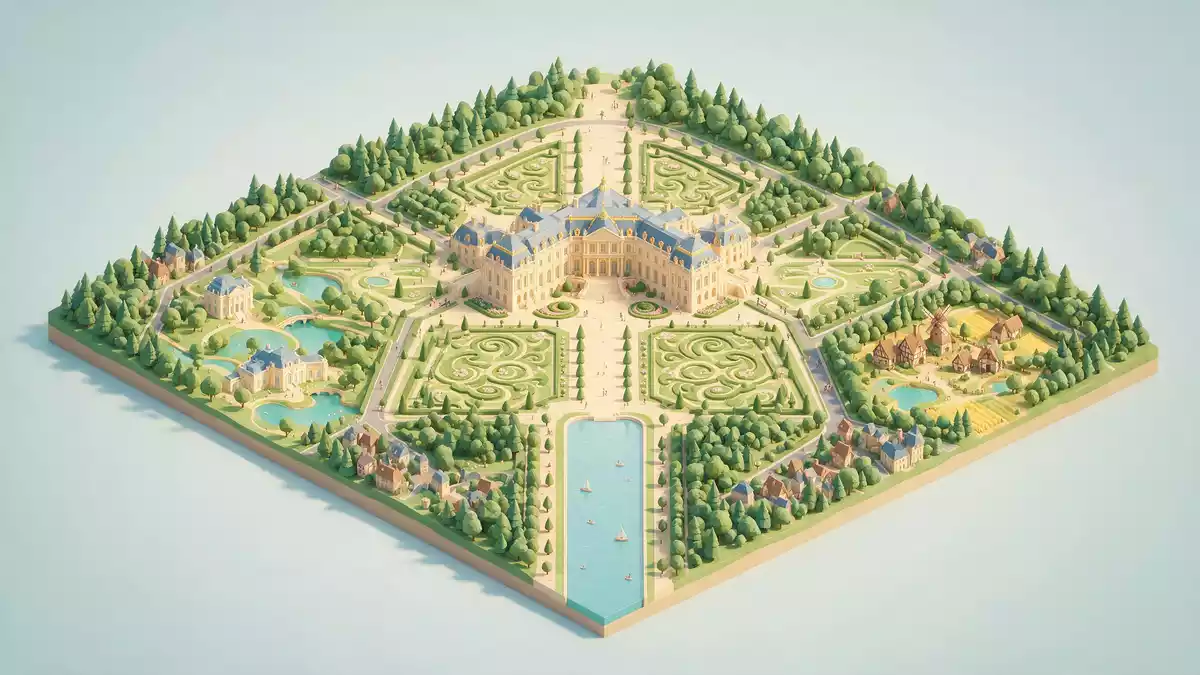
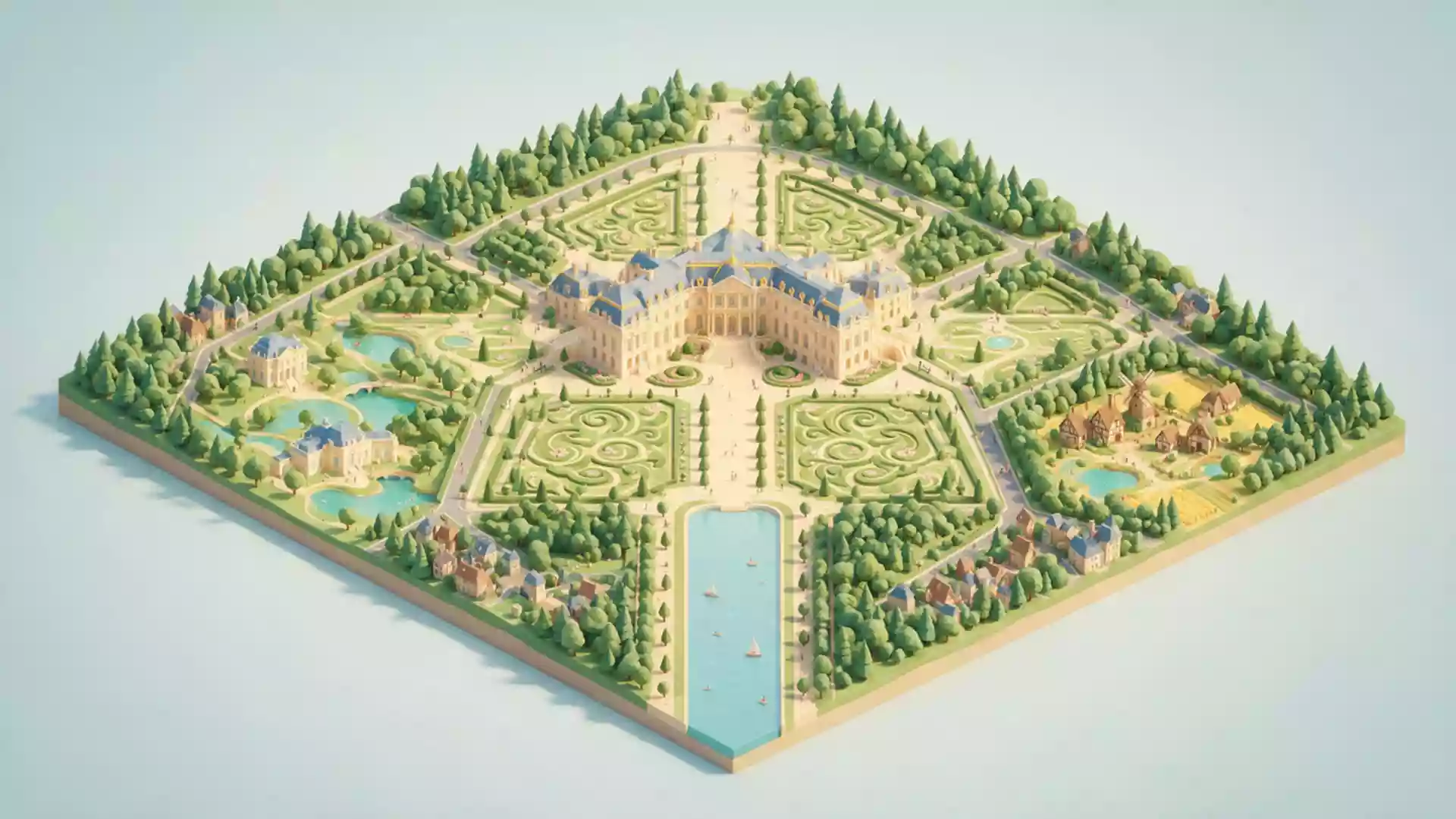
Chateau de Versailles in Versailles is a vast royal palace shaped under Louis XIV, with the main court, long façades and formal gardens still reading as a single composition. From 1682 it became the main residence of the French Court and government, and the name remains tied to that shift in power.main residence
Louis XIV and the court at Versailles
The palace grew from the reign of Louis XIII into a much larger residence under Louis XIV, who linked the château to the court, the government and the gardens. The result is a building complex that carries the marks of Louis Le Vau, Jules Hardouin-Mansart, Charles Le Brun and André Le Nôtre.Louis Le Vau
The official court establishment at Versailles is dated to 6 May 1682, when the centre of government moved there. That date belongs to the core identity of the place as much as the palace itself.6 May 1682
Stone, wings and formal gardens
The palace presents a long classical front, with wings extending from the central block and a sequence of state rooms inside. White stone, marble and gilded interiors give the building a dense, layered appearance that contrasts with the more regular lines outside.white ashlar
The Hall of Mirrors remains the best-known interior, but the wider plan is just as important: the state apartments, the garden front and the long axis of the park all belong to the same royal setting. UNESCO lists the Palace and Park of Versailles as a World Heritage Site, confirming the site’s international status.World Heritage Site
Versailles as a royal landscape
The gardens are part of the palace’s identity, not an add-on. André Le Nôtre’s work gives the grounds a strong geometry, with long lines, trimmed surfaces and a broad formal setting that matches the architecture.
Versailles is therefore best read as a royal ensemble rather than as a single building. Its scale, its named creators and its seventeenth-century court setting all remain visible in the way the place is organised.
Visiting Chateau de Versailles: what travellers from Western Europe should know
- The palace stands in Versailles, south-west of central Paris. Rail services from Paris reach the town, and the estate is connected to the surrounding streets and the park.
- The site covers extensive gardens and long walks through formal ground. The palace interiors and park together create a large, layered setting.
- The Hall of Mirrors and the state apartments belong to the central visitor route. Their rooms form the most recognisable sequence inside the palace.
- The estate includes the palace, gardens and park as one historical ensemble. That makes the outdoor and indoor parts read as a single royal setting.
Searching for Chateau de Versailles on social platforms
These links open searches for Chateau de Versailles on each platform.
Frequently asked questions about Chateau de Versailles
Where is Chateau de Versailles?
It stands in Versailles, west of Paris in the Île-de-France region. The palace and park form a single historic site.
What does a visit involve?
A visit brings together state rooms, long garden views and a large formal estate. The palace and park are closely linked in the layout.
What makes Chateau de Versailles distinctive?
Its distinction lies in the combination of royal palace, court history, formal gardens and named seventeenth-century creators. The ensemble still reflects the reign of Louis XIV.