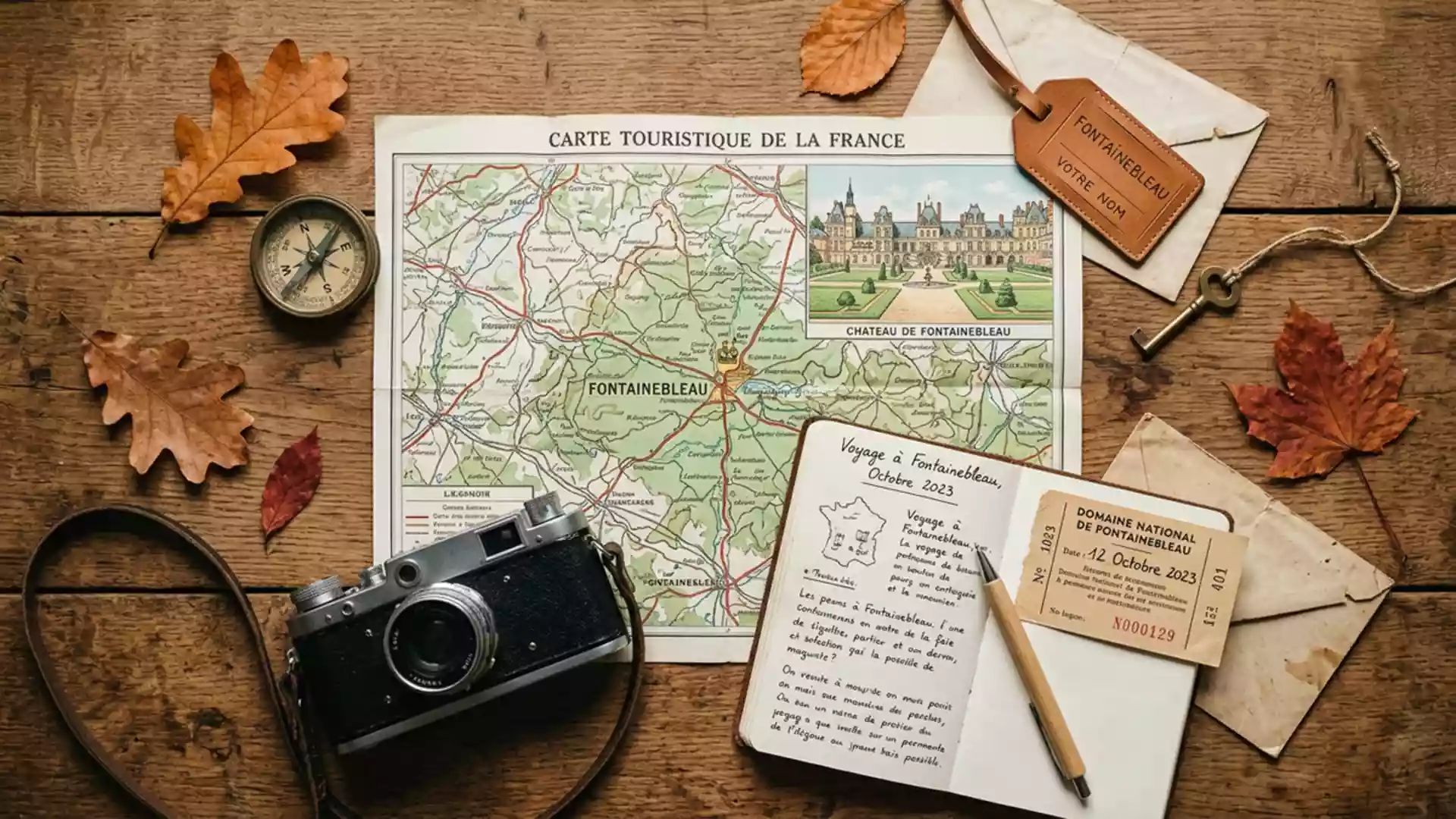
Chateau de Fontainebleau, a royal palace layered in stone
Published on 09/02/2026 at 12:41 | Editorial responsibility: Rafael Müller, Editor-in-Chief AD HOC NEWS
Chateau de Fontainebleau in Fontainebleau is a sprawling former royal residence where medieval foundations, Renaissance galleries and classical façades sit within a broad park and forest. For English-speaking visitors from Western Europe, it offers a rare chance to walk through a French palace continuously occupied by monarchs from the twelfth to the nineteenth century and reshaped by figures from François I to Napoleon I.
A palace shaped by eight centuries of French rule
Chateau de Fontainebleau stands in the Île-de-France region, south-east of Paris, and developed from a royal hunting lodge mentioned in records under Louis VII in 1137. Over the following centuries it grew into one of the largest French royal palaces, with wings and courtyards added as successive rulers expanded their residence in the forest of Fontainebleau.one of the largest French royal châteaux
The decisive transformation came in the sixteenth century, when King François I ordered major rebuilding and decoration to create a palace inspired by Italian models, bringing in artists and craftsmen associated with what became known as the School of Fontainebleau.transformed, enlarged and embellished in the 16th century by François I The result is a residence where Renaissance ornament, long galleries and frescoed interiors sit alongside later classical additions and nineteenth-century refurbishments.
Courtyards, galleries and richly furnished interiors
The palace spreads around several named courtyards, with wings enclosing paved spaces that link the main entrances, ceremonial halls and service ranges.four main courtyards, three gardens and a park From these open spaces, staircases and arcades lead into interiors that preserve period decoration from different reigns, including painted panelling, carved ceilings and suites of rooms furnished with tapestries, chandeliers and royal portraits.
Inside, visitors move through apartments associated with monarchs such as Henry II and later rulers, then into the nineteenth-century rooms where Napoleon I refurnished the palace as one of his official residences before his abdication in 1814.Napoleon was the great restorer of the château of Fontainebleau A museum dedicated to Napoleon I now occupies part of the complex, displaying objects linked to his time at Fontainebleau and underlining the palace’s role in his political life.a museum dedicated to Napoleon I is housed at Fontainebleau
Gardens, water and the surrounding forest
Beyond the stone façades, the estate combines formal gardens, water features and an extensive park that open onto the wider forest of Fontainebleau.gardens, pieces of water and a vast park surrounded by forest The layout includes a parterre laid out in the seventeenth century and a long canal begun in the early 1600s, features that align the château with the French tradition of axial vistas and formal water basins shaped under royal direction.the first Grand Canal in France and the largest Parterre in Europe
The surrounding forest, long used as a royal hunting ground, frames the palace and its park with woodland that remains a defining element of Fontainebleau as a place. Walks from the formal avenues lead towards tree-lined paths and open clearings, so a visit combines architectural exploration with time outdoors in a landscape that has been associated with the French court for centuries.
Visiting Chateau de Fontainebleau: what travellers from Western Europe should know
- Chateau de Fontainebleau stands in the town of Fontainebleau in the Île-de-France region, south-east of Paris, and is reached by road and regional rail links from the capital.
- The palace complex includes extensive courtyards, staircases and long galleries, so a visit involves walking on stone paving and moving between interior levels via stairs.
- The estate includes formal gardens, a canal and a broader parkland setting that borders the forest of Fontainebleau, so outdoor paths range from gravel avenues to grass and woodland tracks.
- French is the official language and the currency is the euro.
Searching for Chateau de Fontainebleau on social platforms
These links open searches for Chateau de Fontainebleau on each platform.
Frequently asked questions about Chateau de Fontainebleau
Where is Chateau de Fontainebleau located?
Chateau de Fontainebleau is in the town of Fontainebleau in the Île-de-France region of France, south-east of Paris, surrounded by the forest of Fontainebleau.
What can visitors expect inside the palace?
Visitors encounter a sequence of furnished state apartments, galleries and chapels that reflect periods from the Renaissance to the nineteenth century, including rooms associated with Napoleon I.
What makes Chateau de Fontainebleau distinctive among French palaces?
Chateau de Fontainebleau is distinctive for its continuous royal occupation across eight centuries and for combining Renaissance, classical and nineteenth-century architecture within a single UNESCO-listed palace and park.