
Chateau de Chenonceau and its long gallery over the River Cher
Published on 08/20/2026 at 19:41 | Editorial responsibility: Rafael Müller, Editor-in-Chief AD HOC NEWS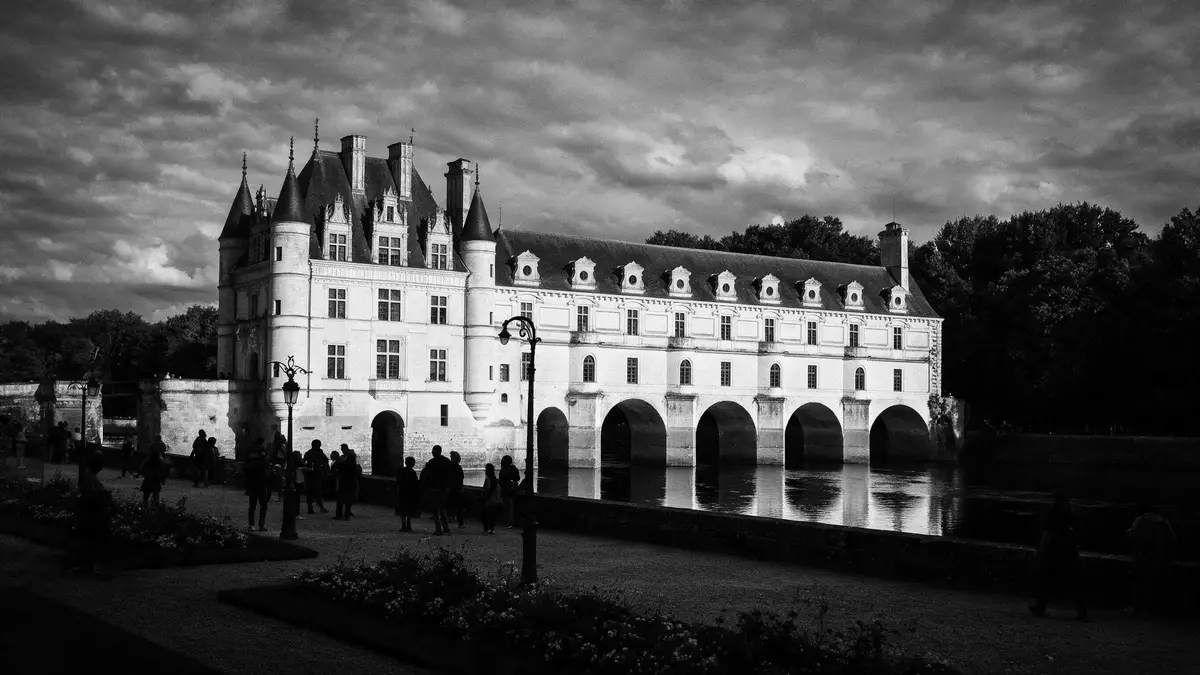
Chateau de Chenonceau stretches across the River Cher at Chenonceaux, its long gallery forming both a country residence and a bridge. Built in the sixteenth century for Thomas Bohier and Catherine Briçonnet and later reshaped by Diane de Poitiers and Catherine de’ Medici, it brings together Renaissance architecture, riverside gardens and a remarkable riverspan in one compact domain.
A Renaissance château built on the water
Chateau de Chenonceau stands in the Loire Valley in central France, on the River Cher just outside the village of Chenonceaux. The site began as a fortified mill and medieval residence, traces of which survive in the tower known as the Tour des Marques beside the later buildings.The first château was a medieval stronghold dating from the twelfth and thirteenth centuries before the present structures took shape.
The current château was commissioned in the early sixteenth century by Thomas Bohier, a royal official, and his wife Catherine Briçonnet, who replaced most of the earlier fortifications with an elegant residence planted directly in the riverbed.Construction of the present château took place in the 1510s and 1520s, giving it a clear Renaissance character with stone facades, tall roofs and regular window lines. The main house rises above the water on sturdy piers, so that from the riverbank the walls appear to grow straight out of the current.
The gallery-bridge and the women who shaped it
Chenonceau’s most striking feature is the long gallery that carries the château over the River Cher from one bank to the other. The first stage of this river crossing was a stone bridge built in the sixteenth century to designs by the architect Philibert de l’Orme, creating a series of arches that link the original riverside residence to the far bank.A reception gallery was added on top of this bridge in the 1570s, so that the château became a habitable structure spanning the river rather than simply standing beside it.
Several women left strong marks on this architecture and its setting, which is why Chenonceau is often described as a ladies’ château.King Henry II granted the estate to Diane de Poitiers in the sixteenth century, and she oversaw the creation of formal riverside gardens aligned with the main wing. After Henry II’s death, Catherine de’ Medici took Chenonceau, extended the dwelling with the long gallery above the bridge and used the rooms for courtly festivities. Later, in the eighteenth century, Louise Dupin hosted Enlightenment writers and thinkers in the house, turning the interior salons into a literary meeting place.
Gardens, interiors and layers of history
The gardens at Chateau de Chenonceau frame the building and its bridge in carefully ordered terraces. On one side, a parterre associated with Diane de Poitiers stretches between low stone walls and the river, edged by paths and shaped flowerbeds.A separate garden laid out for Catherine de’ Medici occupies the opposite side, giving the château a symmetrical setting of lawns, clipped shrubs and ornamental planting. Beyond the formal areas, tree-lined approaches and clearings open glimpses back towards the arches and gallery above the water.
Inside, Chenonceau presents a sequence of historical rooms arranged along the river and within the bridge. The long gallery itself forms a broad hall with windows on both sides, so visitors walk above the surface of the Cher with views up and down the valley. Elsewhere, bedchambers recall former residents such as Diane de Poitiers and Catherine de’ Medici, with painted ceilings, tapestries and carved fireplaces. The château also carries traces of later uses: during the First World War it served as a military hospital, and in the Second World War the gallery linked territories on different sides of the river’s political boundary, giving the building a quiet role in twentieth-century history.The property has belonged to the Menier family since 1913, and careful restoration has kept the Renaissance fabric, the gardens and the gallery-bridge in working order.
Visiting Chateau de Chenonceau: what travellers from Western Europe should know
- Chateau de Chenonceau stands on the River Cher just outside the village of Chenonceaux in central France; regional trains serve the area from larger Loire Valley towns.
- The estate combines gently sloping paths, formal garden terraces and interior staircases, so a visit involves walking on gravel, grass and stone floors as well as climbing steps inside the château.
- The official language is French and the currency is the euro.
- Nearby sights in the Loire Valley include other historic châteaux and river landscapes, which can be combined with Chenonceau in a wider touring route.
Searching for Chateau de Chenonceau on social platforms
These links open searches for Chateau de Chenonceau on each platform.Frequently asked questions about Chateau de Chenonceau
Where is Chateau de Chenonceau located?
Chateau de Chenonceau stands on the River Cher near the village of Chenonceaux in the Loire Valley region of central France.
What can visitors expect to see inside Chateau de Chenonceau?
Visitors walk through furnished Renaissance rooms, the long gallery above the river, the surviving medieval tower and a sequence of formal gardens around the château.
What makes Chateau de Chenonceau distinctive among Loire châteaux?
Chenonceau is distinguished by its gallery-bridge spanning the River Cher and by the imprint of influential women such as Diane de Poitiers and Catherine de’ Medici on its architecture and gardens.


