
Chateau de Chenonceau and its arches over the River Cher
Published on 09/07/2026 at 11:02 | Editorial responsibility: Rafael Müller, Editor-in-Chief AD HOC NEWS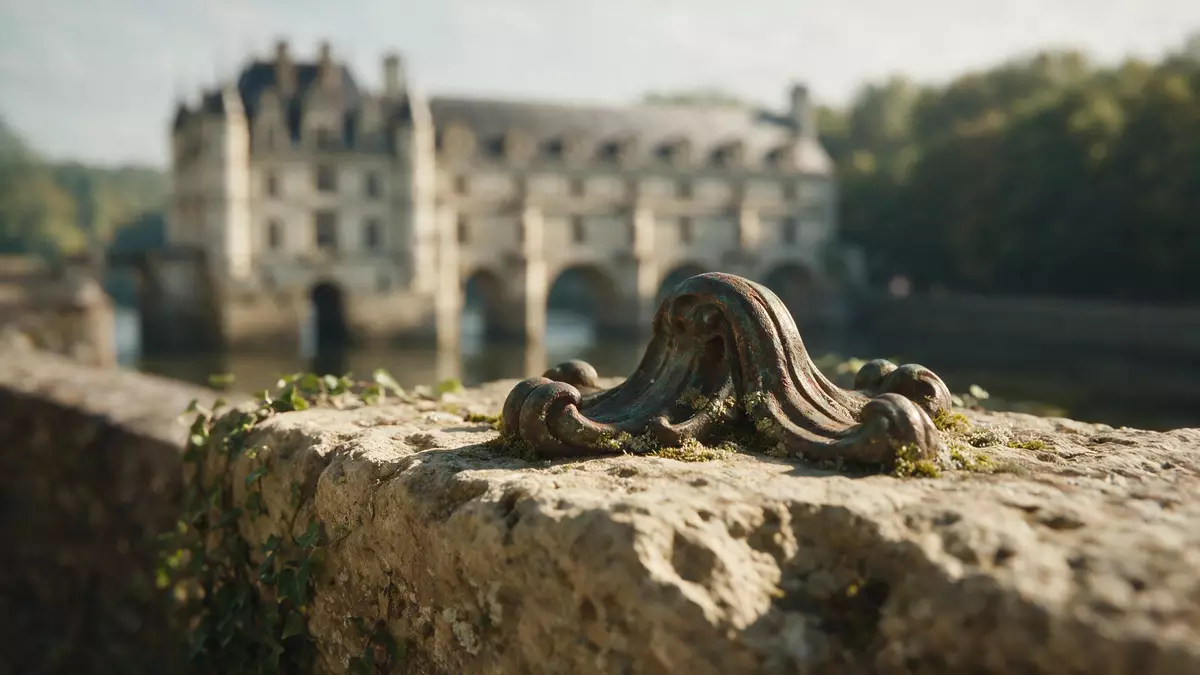
Chateau de Chenonceau in Chenonceaux is one of the few Loire Valley residences whose main wing strides directly across a river, its pale stone arches carrying a long gallery over the Cher and turning the water itself into part of the architecture. Built in the sixteenth century in a blend of late Gothic and early French Renaissance styles, it became closely associated with figures such as Thomas Bohier, Catherine Briçonnet, Diane de Poitiers and Catherine de Medici, whose decisions gave the estate its distinctive combination of riverside manor, bridge and enclosed hall.
A Renaissance château reaching across the Cher
The core of Chateau de Chenonceau is a rectangular manor house rising beside the River Cher, created as a Renaissance residence in the early sixteenth century rather than a defensive fortress, with regular windows, sculpted dormers and steep slate roofs set over pale masonry walls.the château in its current form was built between 1513 and 1517 Under Thomas Bohier, a royal tax official, and his wife Catherine Briçonnet, a medieval complex was replaced by this more open house, while the earlier cylindrical keep known as the Tour des Marques was retained on one side as a reminder of the twelfth- and thirteenth-century stronghold that had stood here.only the dungeon remains: the Tour des Marques
From the riverbank, the most striking element is the series of arches that carry a wing of the château out over the Cher, joining the house to the opposite bank in masonry rather than timber and turning a bridge into part of the residential complex.unique architecture, built over the Cher river This river-spanning portion began as a bridge designed by Philibert de l’Orme in the sixteenth century and later gained a two-storey gallery above it to plans by Jean Bullant, so that what was once simply a crossing became an enclosed suite of rooms with floors and ceilings aligned along the flow of the river.
Women who shaped Chenonceau
Chateau de Chenonceau is often described through the succession of women who owned, managed or transformed it, beginning with Catherine Briçonnet, whose role in overseeing construction in the 1510s helped set its Renaissance character at a time when earlier French noble residences still followed fortress traditions.built between 1513 and 1517, by Thomas Bohier and above all his wife, Catherine Briçonnet In the mid sixteenth century King Henry II granted the estate to his favourite Diane de Poitiers, who commissioned formal riverside gardens and ordered the construction of the masonry bridge that projected the château across the Cher, ensuring that access and outlook extended over the water rather than stopping at its edge.Henri II gifted Chenonceau to his mistress Diane de Poitiers, who transformed the estate
After Henry II’s death in 1559, Catherine de Medici took control of Chenonceau and added the long enclosed gallery above Diane de Poitiers’s bridge, creating a high corridor and ballroom that followed the line of the river and linked the original house to the far bank within a single architectural composition.between 1570 and 1576, she engaged Jean Bullant to design the two-story addition of two galleries over the earlier bridge Later, figures such as Louise de Lorraine and Louise Dupin gave the château further layers of history, from royal mourning in the late sixteenth century to Enlightenment literary circles and protection during the French Revolution, reinforcing its reputation as an estate whose fate was repeatedly guided by women rather than passing solely through male lines.for five centuries, the estate was owned, designed, saved, and restored by women
Gardens, interiors and the Loire Valley setting
Beyond the river-crossing architecture, Chenonceau is surrounded by formal gardens laid out beside the Cher, including parterres created for Diane de Poitiers on one bank and for Catherine de Medici on another, each composed of geometric beds bordered by low stone walls and paths that frame views back towards the house and its arches.she commissioned the bridge over the Cher, created the formal gardens on the river's right bank The estate also includes woodland walks, kitchen gardens and flower-growing areas which supply arrangements inside the château, bringing seasonal planting into stairwells, galleries and chambers.
Inside, visitors encounter rooms furnished to evoke several stages of Chenonceau’s history, from Renaissance bedchambers and guardrooms to salons associated with Diane de Poitiers and Catherine de Medici, alongside collections of paintings and tapestries from the sixteenth century.a collection of masters paintings and a remarkable series of 16th-century Flemish tapestries The château stands in the commune of Chenonceaux in the Touraine region, one of the central stretches of the Loire Valley where several historic residences line the river corridors of the Loire and Cher, but few place such a substantial structure directly over moving water in the way Chenonceau does.located in the Touraine region on the Cher river, in the commune of Chenonceaux
Visiting Chateau de Chenonceau: what travellers from Western Europe should know
- Chateau de Chenonceau stands on the River Cher in the commune of Chenonceaux in central France, in the Touraine section of the Loire Valley; regional trains from larger French cities serve Chenonceaux railway station near the estate.
- The visit involves walking through multi-level interiors and across the long gallery above the river, with staircases inside the château and paths through formal gardens and woodland around the house.
- The site lies in a temperate part of France where garden planting and riverside views form an important part of the experience in most seasons.
- The official language is French and the currency is the euro.
Searching for Chateau de Chenonceau on social platforms
These links open searches for Chateau de Chenonceau on each platform.
Frequently asked questions about Chateau de Chenonceau
Where is Chateau de Chenonceau located?
Chateau de Chenonceau stands on the River Cher in the commune of Chenonceaux in the Touraine region of central France, within the wider Loire Valley.
What can visitors expect during a visit?
A visit typically includes the manor house, the long gallery above the river, historic furnished rooms, formal gardens beside the Cher and woodland walks within the estate.
What makes Chateau de Chenonceau distinctive among Loire châteaux?
The château combines a Renaissance riverside residence with a substantial wing carried on arches over the Cher, shaped by figures such as Catherine Briçonnet, Diane de Poitiers and Catherine de Medici.


