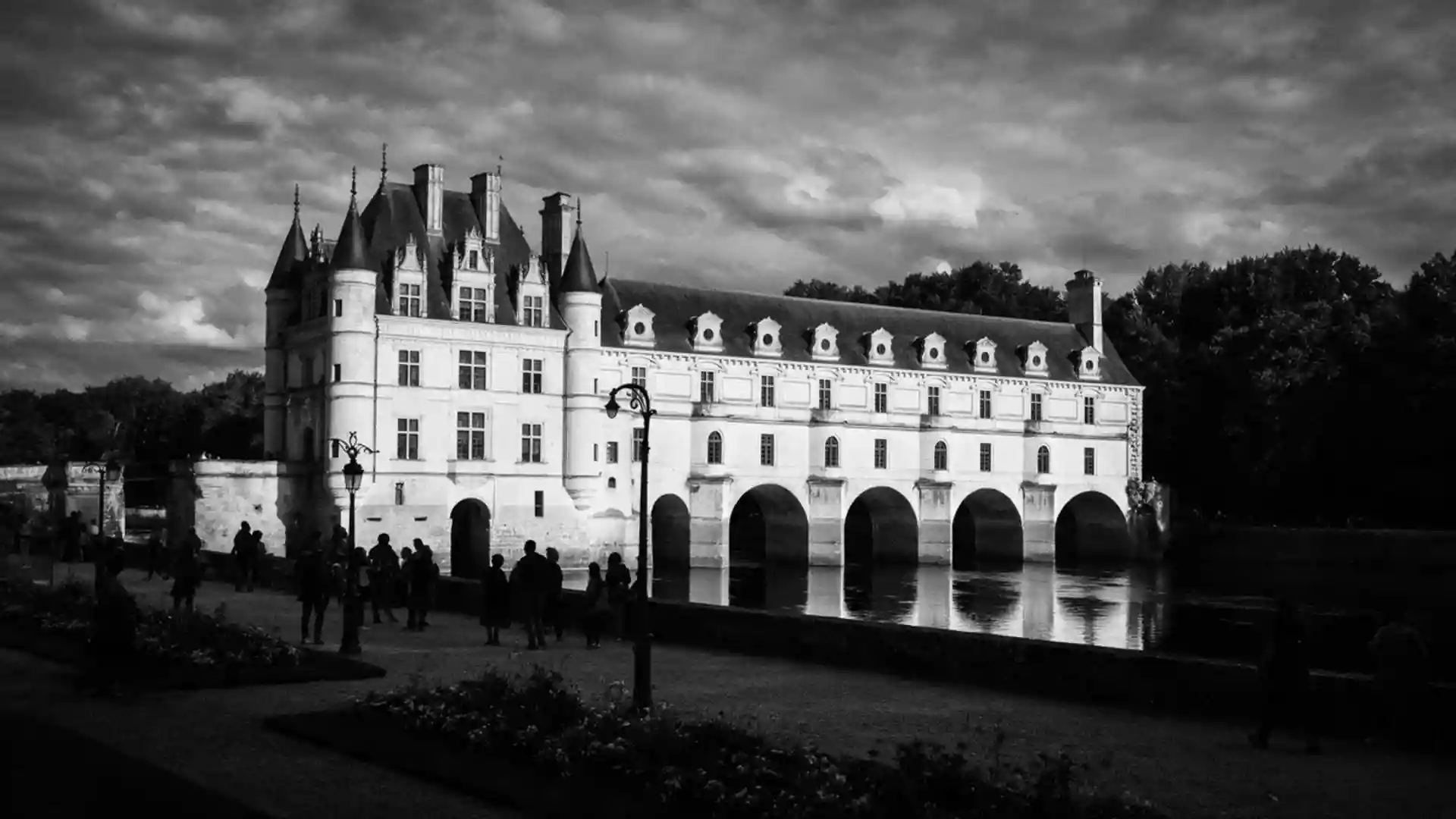
Chateau de Chenonceau and its arches over the Cher
Published on 08/31/2026 at 16:48 | Editorial responsibility: Rafael Müller, Editor-in-Chief AD HOC NEWS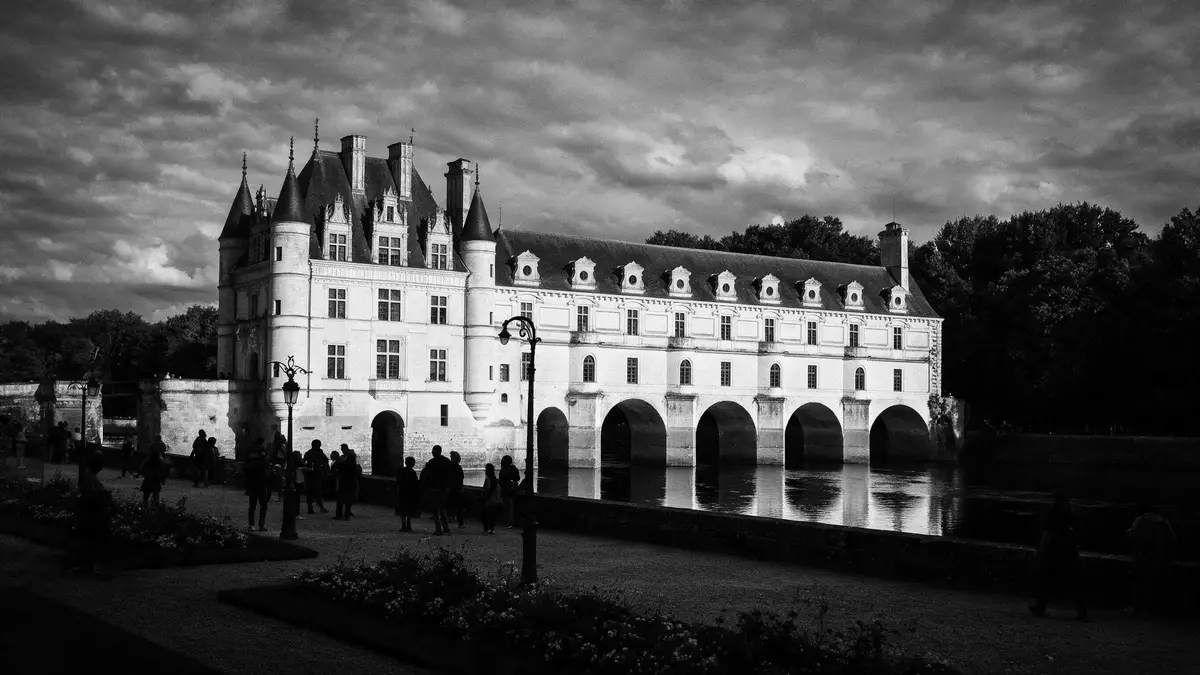
Chateau de Chenonceau in Chenonceaux is a Loire Valley château whose most striking feature is the way its long gallery carries a Renaissance residence out over the River Cher on stone arches. Built in the early sixteenth century and extended later in that century, it combines late Gothic elements with emerging French Renaissance style to form a residence that reads as both palace and bridge.
A manor turned into a bridge over water
The estate of Chenonceau appears in written records from the eleventh century, but the château visitors encounter dates to the sixteenth century, when Thomas Bohier, a royal financial officer, and his wife Catherine Briçonnet replaced earlier buildings with a new residence beside the Cher.The current château was built in the second decade of the sixteenth century and presents an architectural mixture of late Gothic and early Renaissance forms.It was completed in the early 1520s on foundations of an old mill so the manor stands directly beside the river’s flow.
What marks Chateau de Chenonceau out among Loire châteaux is the way later owners extended the building across the Cher. In the 1550s Diane de Poitiers, favourite of King Henry II, commissioned the French Renaissance architect Philibert de l’Orme to design a bridge linking the house to the opposite bank.The bridge was built between 1556 and 1559, giving Chenonceau a horizontal reach over moving water that few residences attempt.The structure earned the château its reputation as a “Ladies’ Castle” because successive women shaped and enlarged it, but the bridge itself is a visible engineering gesture: masonry pushing out over a full river channel.
The gallery above the arches
The bridge alone would give Chateau de Chenonceau a memorable profile, yet the sixteenth century brought a second major intervention. After Henry II’s death, his widow Catherine de Medici took back Chenonceau and added a full gallery above the bridge, transforming it into a two-level composition over the Cher.The gallery on the bridge was built between 1570 and 1576 to designs by architect Jean Bullant, turning the span into a long interior aligned with the river’s course.
From the exterior, the gallery reads as a sequence of regular bays with tall windows set into pale stone walls and capped by dark slate roofs. Viewed from the banks, the arches rise directly from the Cher, while the upper level forms an elongated hall above them. The combination means that water, masonry and interior space occupy the same vertical line: river at the base, structural arches in the middle and a procession of rooms above. Inside, the gallery functions as a long passage, historically used for court gatherings and celebrations, yet its basic form remains a simple rectangle traced along the bridge. This clarity of shape makes the experience of walking its length easy to imagine even from outside.
Gardens, tower and the Ladies’ Castle
Set around the river and bridge are formal gardens that give Chenonceau a deliberate landscape frame. On one bank, a geometric garden associated with Diane de Poitiers lays out patterned beds and paths beside the water, while another garden linked to Catherine de Medici sits closer to the main house.The site presents Chenonceau as a Renaissance masterpiece in which the château strides over the Cher, and these gardens reinforce that reading by placing ordered planting alongside the engineered span.
On land, one remnant of the medieval estate survives as a separate vertical marker: the Tour des Marques, a stone tower from the twelfth and thirteenth centuries that stands apart from the later manor.It is all that remains of the original medieval château of the Marques family, and it sets a robust cylindrical presence against the more regular façades of the Renaissance residence. Across five centuries, women including Katherine Briçonnet, Diane de Poitiers, Catherine de Medici and Louise Dupin have acted as patrons, protectors and restorers of Chenonceau, and this continuous female influence has led to the château being widely known as the “Château des Dames”. The result is a complex in which bridge, gallery, gardens and tower together express a long, layered history focused on the relationship between architecture and water.
Visiting Chateau de Chenonceau: what travellers from Western Europe should know
- Chateau de Chenonceau stands on the River Cher near the village of Chenonceaux in the Loire Valley region of central France, in the Indre-et-Loire department.
- The estate includes the main riverside residence, the bridge-gallery across the Cher, formal gardens on the riverbank and a separate medieval tower, so visiting involves walking on level paths and across stone surfaces.
- The château can be reached by regional rail services to Chenonceaux station and by road routes through Touraine, with the site signposted from nearby towns.
- The official language is French and the currency is the euro.
Searching for Chateau de Chenonceau on social platforms
These links open searches for Chateau de Chenonceau on each platform.
Frequently asked questions about Chateau de Chenonceau
Where is Chateau de Chenonceau located?
Chateau de Chenonceau stands on the River Cher near the village of Chenonceaux in the Loire Valley, in the Indre-et-Loire department of central France.
What can visitors expect when they arrive at Chenonceau?
Visitors encounter a Renaissance manor beside the Cher, a bridge carrying a long gallery over the river, formal gardens on the banks and a separate medieval tower.
What makes Chateau de Chenonceau distinctive among Loire châteaux?
Its defining feature is the combination of residence, bridge and gallery directly over a full river channel, a layout shaped in the sixteenth century under patrons including Diane de Poitiers and Catherine de Medici.