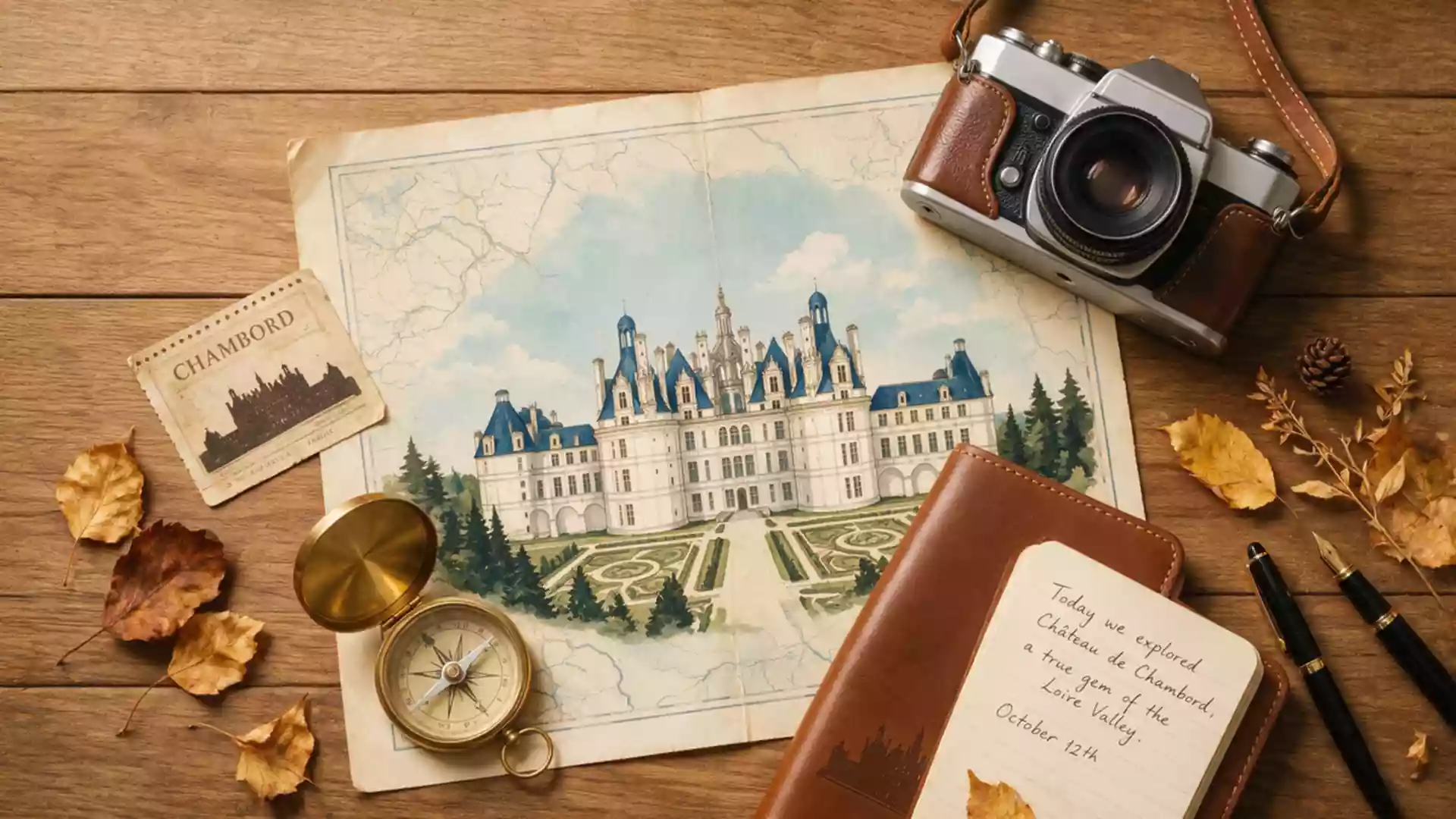
Chateau de Chambord and its forest of stone towers
Published on 08/27/2026 at 17:38 | Editorial responsibility: Rafael Müller, Editor-in-Chief AD HOC NEWS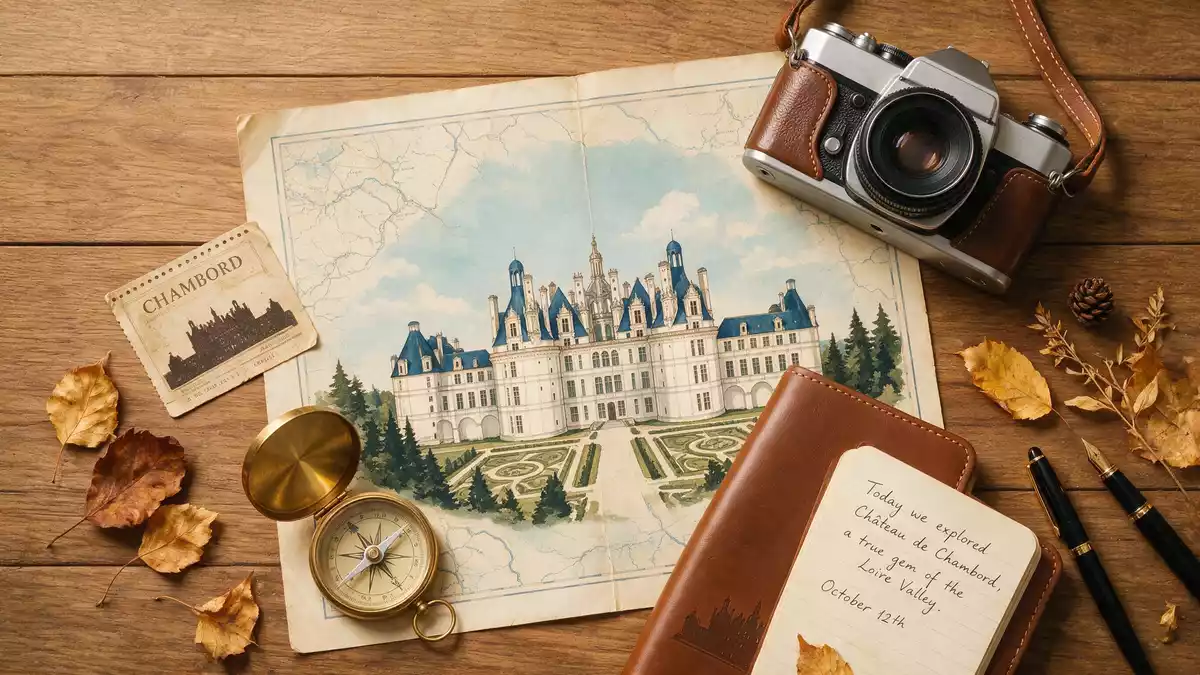
Chateau de Chambord in Chambord, in the Centre-Val de Loire region of France, is a vast Renaissance palace surrounded by forest and water. Built for King Francis I in the sixteenth century, it combines the massing of a medieval fortress with the ornament and geometry of the French Renaissance.
A Renaissance palace with a fortress outline
Chateau de Chambord stands on the eastern side of the Loire Valley, within the Loir-et-Cher department, and its plan still recalls a fortified stronghold.Located in Chambord, France At its centre is a large square keep with towers set at the corners, moats around the base and enclosing walls that organise the courtyards and outbuildings.The keep and corner towers
Construction of the main structure began in 1519 for Francis I and continued through the middle of the sixteenth century, with further work under later kings including Louis XIV.Built between 1519 and 1547 The style blends late Gothic verticality with Renaissance proportion and detail, so that string courses, pilasters and large window openings sit above deep walls and a water-filled moat.
The celebrated double-helix staircase and interior layout
Inside the central keep, the most striking feature is a double-helix staircase rising through the middle of the building.A double-helix stair at the core Two intertwined flights coil around a hollow central shaft, so that people can ascend and descend on separate ramps while remaining visible to each other through openings in the core.
The keep follows a Greek-cross plan, with corridors running in both directions through the centre and apartments filling the arms and the round corner towers.Greek-cross layout of the keep Several habitable levels repeat this arrangement, each with suites opening off the crossing and stair, so that movement through the building continually returns to the central space dominated by the staircase.
A roofscape like a stone forest above the Loire plain
Seen from a distance across the flat Sologne landscape, Chateau de Chambord is defined by its extraordinary roofline. Above the broad rectangular mass of the main block rises a dense cluster of chimneys, lanterns, stair turrets and dormer gables, so numerous that the upper silhouette has been compared to a miniature city in stone.An intricate roofscape of towers and chimneys
The surrounding estate extends over a large enclosed forested area, originally established as a royal hunting reserve and still encircled by long boundary walls.A vast walled forest domain Watercourses such as the River Cosson and ornamental canals trace straight lines beside the chateau, reflecting the towers and roof structures on calm days and emphasising the regular geometry of the terraces.
Visiting Chateau de Chambord: what travellers from Western Europe should know
- Chateau de Chambord lies in Chambord in the Centre-Val de Loire region of France, east of Blois, and is reached by road links across the Loire Valley.
- The main approach from the car parks and drop-off areas leads along broad paths and across level terraces before reaching the stone bridge and entrance.
- Exploring the interior requires walking through long corridors and climbing multiple staircases, including the central double-helix stair connecting several floors.
- The surrounding estate consists of woodland and open parkland enclosed by long walls, so walks outside the palace itself can involve extended routes on unshaded paths.
- The official language is French and the currency is the euro.
Searching for Chateau de Chambord on social platforms
These links open searches for Chateau de Chambord on each platform.
Frequently asked questions about Chateau de Chambord
Where is Chateau de Chambord?
Chateau de Chambord stands in Chambord in the Centre-Val de Loire region of France, in the eastern part of the Loire Valley.
What can visitors expect inside the chateau?
Visitors encounter a central double-helix staircase, repeated Renaissance-era apartment layouts around the Greek-cross plan and long corridors leading to terraces above the courtyard.
What makes Chateau de Chambord distinctive among Loire Valley palaces?
Its combination of a fortress-like square keep, the ingenious double-helix stair and an exceptionally elaborate roofline of chimneys and towers gives Chambord a characteristic profile.