
Changdeokgung and the shape of a royal garden
Published on 09/15/2026 at 11:16 | Editorial responsibility: Rafael Müller, Editor-in-Chief AD HOC NEWS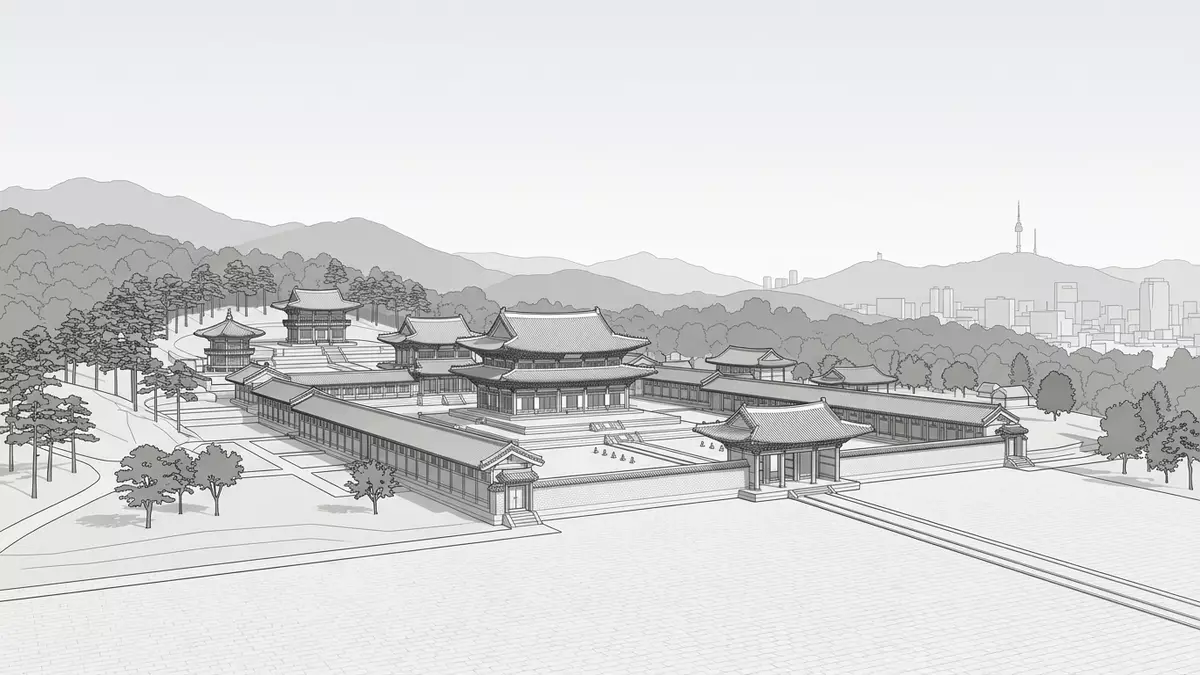
Changdeokgung in Seoul is a royal palace complex shaped by halls, gates and a rear garden that follows the land behind it. Built in 1405 under King Taejong, it belongs to the Joseon Dynasty and forms part of a UNESCO World Heritage property.
Changdeokgung’s palace layout and garden setting
The palace complex sits in Jongno-gu, in northern Seoul, at the foot of Mount Baegaksan. Its 15th-century fabric combines official and residential buildings with planted ground, and the whole ensemble is tied to its natural setting through the way it occupies the slope and the garden behind the court buildings.UNESCO listing
The designation covers Changdeokgung Palace Complex as a cultural World Heritage site from 1997, and the palace is also recorded as a State-designated Cultural Heritage. That status sits well with the surviving arrangement of gates, courts, wooden halls and planted areas, which gives the place a measured, ordered character rather than a monumental one.official palace history
King Taejong, Joseon and the 1405 palace
Changdeokgung was established in 1405 as a secondary palace to Gyeongbokgung Palace under King Taejong. That date and patron place it firmly within the early Joseon period, when the royal court was defining its capital landscape and palace system.King Taejong
The palace later became the main royal residence for long stretches of Joseon rule, and its history includes repeated rebuilding after fire and war. The present ensemble carries the imprint of those changes while retaining the palace’s long relationship with the surrounding terrain and the garden spaces behind the main courts.15th-century palace complex
Wood, stone platforms and the Secret Garden
The complex is built in timber, raised on stone platforms, and topped by tiled roofs. UNESCO describes the result as an exceptional example of East Asian palace architecture and design, integrated with the natural setting rather than separated from it.East Asian palace architecture
The rear garden, known as the Secret Garden, contains terraces, ponds, pavilions and plantings within the wider palace grounds. The mix of court architecture and garden landscape gives Changdeokgung a quieter spatial rhythm than a palace made only of ceremonial halls and straight processional axes.Secret Garden
Visiting Changdeokgung: what travellers from Western Europe should know
- The palace stands in Jongno-gu, northern Seoul, and is reached through the city’s central transport network. Changdeokgung Palace is the place name used in English, while the wider complex is recognised as a World Heritage site.
- The grounds combine level courts with sloping terrain and garden paths. The rear garden includes ponds, pavilions and planted terraces within the palace boundary.
- Changdeokgung belongs to the Joseon Dynasty and is closely tied to King Taejong. Its recorded history begins with the 1405 palace, not with the later reconstructions alone.
- The palace has been part of Seoul’s royal group of sites for centuries. Its fabric includes timber halls, stone bases and tiled roofs, which gives it a distinct profile among the city’s palaces.
Searching for Changdeokgung on social platforms
These links open searches for Changdeokgung on each platform.
Frequently asked questions about Changdeokgung
Where is Changdeokgung?
Changdeokgung is in Jongno-gu, in northern Seoul, South Korea. The palace complex lies at the foot of Mount Baegaksan.
What does a visit involve?
The site combines palace courts, wooden halls and a planted rear garden. The ground changes from formal spaces to sloping landscape and pond-filled garden areas.
What makes Changdeokgung distinctive?
Its 1405 origin under King Taejong, its Joseon setting and its integration with the landscape give it a clear identity. The World Heritage listing recognises that relationship between architecture and terrain.


