
Cerro Rico, the silver mountain above Potosi
Published on 09/16/2026 at 10:59 | Editorial responsibility: Rafael Müller, Editor-in-Chief AD HOC NEWS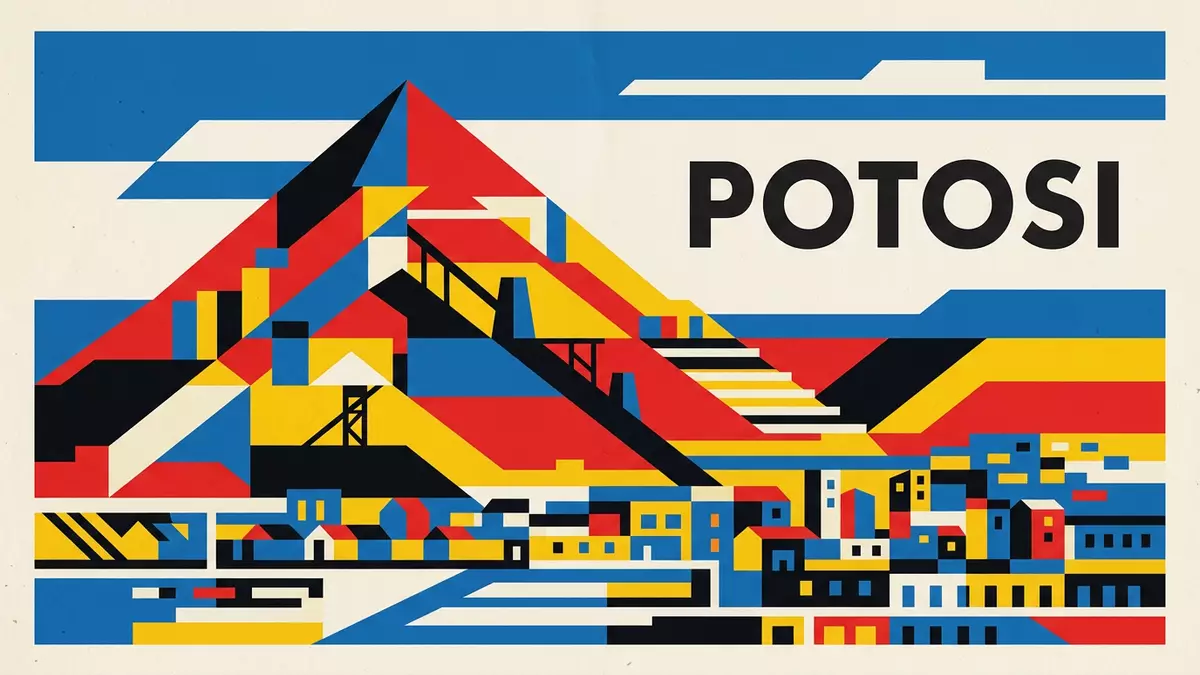
Cerro Rico above Potosi in Bolivia is a mountain shaped as much by human excavation as by geology, its flanks carved by centuries of silver mining under Spanish colonial rule beginning in 1545.
A mountain of silver above an Andean city
Cerro Rico stands immediately above the historic city of Potosi in the Bolivian Andes, dominating the skyline with its steep slopes and scarred surfaces cut by mine openings and spoil heaps.above the historic city The mountain’s Spanish name means “Rich Mountain”, a reference to the extraordinary silver ore that drew imperial attention in the sixteenth century.Spanish name means Rich Mountain From the foot of the slopes, Potosi’s dense colonial streets climb towards the base of the mining zone, where industrial structures meet the natural rock.
Mining on Cerro Rico began in 1545 under Spanish rule, when rich silver veins were identified and rapidly exploited.began in 1545 The discovery is linked in historical accounts to Diego Huallpa, an indigenous prospector whose find triggered the founding and rapid growth of Potosi at the mountain’s foot.linked to Diego Huallpa In the late sixteenth century, new refining techniques using mercury amalgamation and hydraulic mills increased output, turning Cerro Rico into one of the most productive silver sources on record.
Cerro Rico and the Spanish imperial economy
For the Spanish Empire, Cerro Rico became a central pillar of its global finances, providing an exceptional proportion of the silver extracted in the central Andes and shipped to Europe.silver extracted in the central Andes In the sixteenth and seventeenth centuries a large share of the world’s silver supply came from this single mountain, with the refined metal transported through colonial routes to Seville and beyond.transported to Seville This flow of silver fuelled monetary expansion and economic change far from the Andes, linking Potosi’s high-altitude slopes to markets across Europe and Asia.
The labour systems that underpinned this extraction were harsh, relying on indigenous communities and, over time, other coerced workers drawn into the mines and refining installations.harsh labour systems The combination of toxic refining processes, difficult working conditions inside the mountain and the demands of colonial production contributed to heavy mortality over the colonial period.heavy mortality As a result, Cerro Rico is not only an emblem of wealth but also a symbol of suffering, a dual character that remains central to historical interpretations of Potosi.
Industrial heritage on a fragile mountain
Cerro Rico forms part of the wider heritage landscape recognised in the UNESCO inscription of the City of Potosi in 1987, which highlights the combination of mining installations, hydraulic infrastructure and colonial urban fabric.UNESCO inscription of the City of Potosi On the slopes above the city, aqueducts and artificial lakes once supplied water to mills that processed ore, while below, institutions such as the Casa de la Moneda formed part of the system for minting coins from Cerro Rico silver.aqueducts and artificial lakes The mountain itself contains a dense network of tunnels created by centuries of mining, giving its interior a honeycomb structure.
Geological studies describe Cerro Rico as the world’s largest silver deposit, exploited initially for silver and later for other metals including tin and zinc.world’s largest silver deposit Continued extraction has altered the mountain’s stability, with concerns raised about subsidence and the risk of partial collapse due to the density of underground workings.risk of partial collapse This fragility adds another layer to Cerro Rico’s significance: it is both a historic resource and a landscape where the physical effects of centuries of mining are visible in the form and condition of the rock.
Visiting Cerro Rico: what travellers from Western Europe should know
- Cerro Rico rises immediately south of the historic centre of Potosi in southern Bolivia, and access routes begin from streets and tracks on the edge of the city.
- The terrain on the mountain includes steep, high-altitude slopes and rough ground around mining areas, with unpaved tracks and working zones cut into the rock.
- The official language is Spanish and the currency is the Bolivian boliviano.
- Entry requirements depend on your nationality; UK travellers can check the FCDO travel advice at gov.uk/foreign-travel-advice, Irish travellers the Department of Foreign Affairs at ireland.ie.
Searching for Cerro Rico on social platforms
These links open searches for Cerro Rico on each platform.
Frequently asked questions about Cerro Rico
Where is Cerro Rico located?
Cerro Rico rises above the city of Potosi in southern Bolivia, forming a prominent mountain within the Bolivian Andes and directly overlooking the historic urban area.
What should visitors expect on a visit to Cerro Rico?
Visitors encounter a high-altitude mountain with extensive signs of mining activity, including tracks, workings and industrial remains, set above a dense colonial city.
What makes Cerro Rico distinctive compared with other mining sites?
Cerro Rico is distinctive for its long history of silver extraction since 1545, its role in the Spanish imperial economy and its integration into the UNESCO-listed heritage landscape of Potosi.


