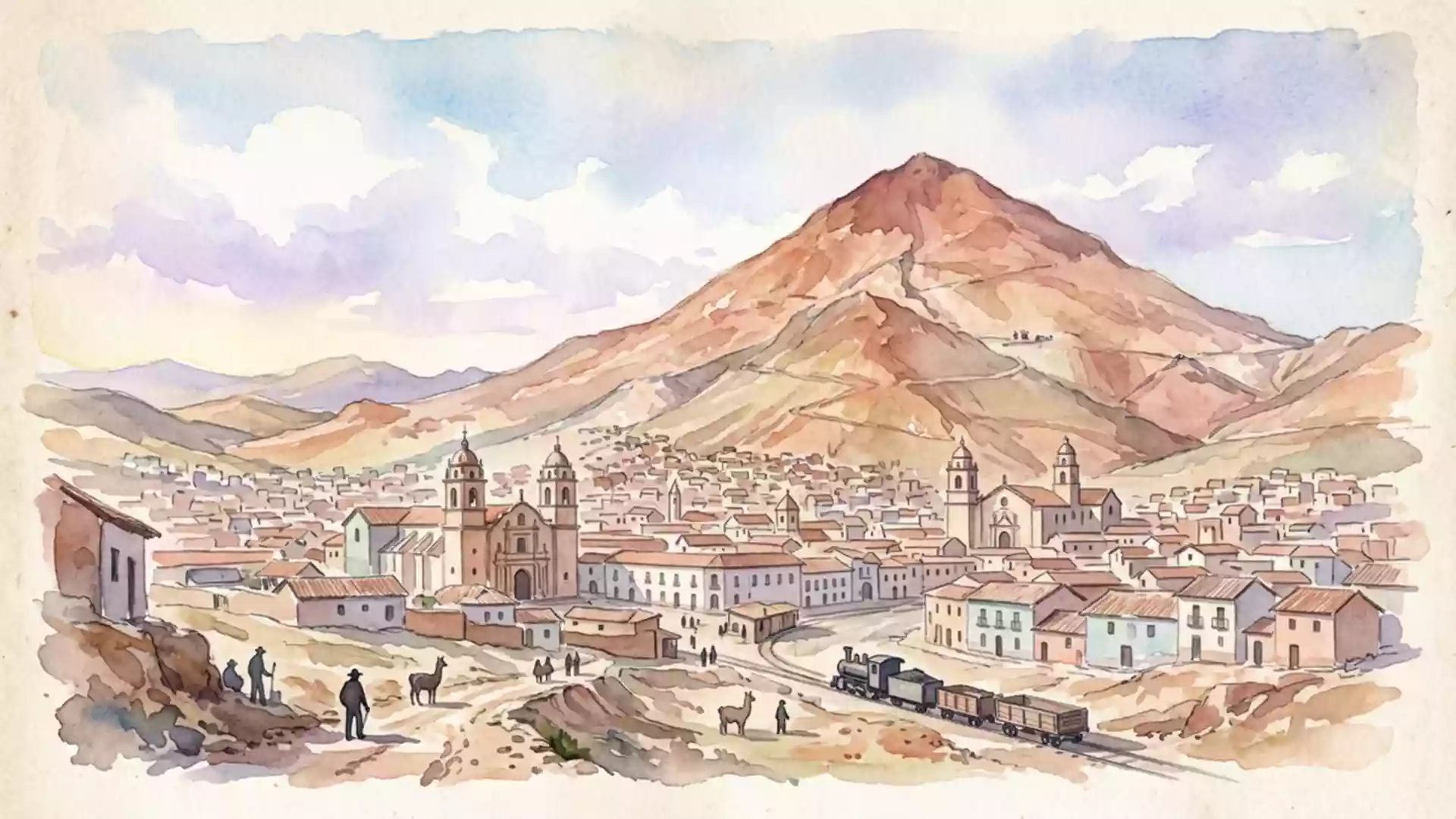
Cerro Rico, the rich silver mountain above Potosi
Published on 09/02/2026 at 18:18 | Editorial responsibility: Rafael Müller, Editor-in-Chief AD HOC NEWS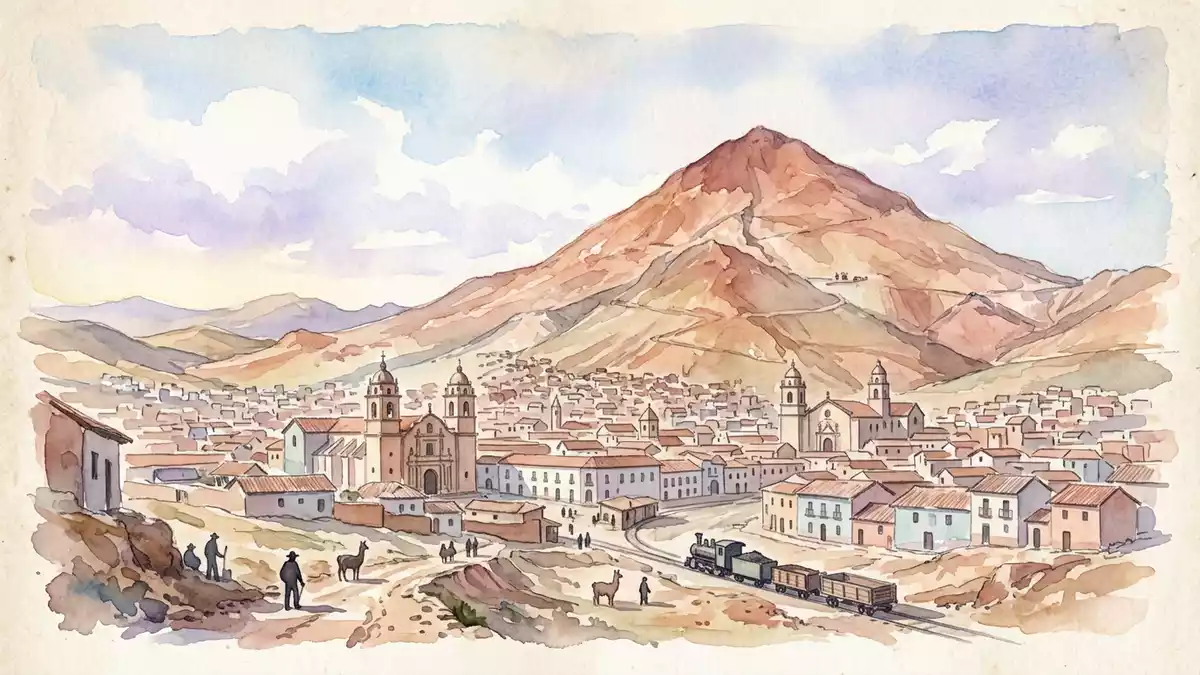
Cerro Rico rises above the Bolivian city of Potosi as a steep, silver-bearing mountain that links Andean geology with the history of the Spanish Empire in South America. From the sixteenth century, its mines supplied vast quantities of silver that helped finance imperial expansion and left a lasting mark on the landscape and on Potosi’s streets below.its mines supplied vast quantities of silver
A conical mountain of metal-rich volcanic rock
Cerro Rico stands just above Potosi in the Bolivian Andes, forming a prominent cone that dominates views across the high-altitude plateau.a prominent cone that dominates views The city lies at over 4,000 m (13,123 ft), and the summit of Cerro Rico reaches around 4,700 m (15,420 ft), giving visitors a sense of how thin the air becomes at these altitudes.the summit of Cerro Rico reaches around 4,700 m
Geologically, Cerro Rico is an extinct volcanic dome that formed in the Miocene period as part of a belt of tin and silver deposits running through southern Bolivia.an extinct volcanic dome that formed in the Miocene period The volcanic rocks are shot through with veins of silver, tin and other metals, which miners followed with tunnels that reach deep below the peak and down towards the city.veins of silver, tin and other metals
From Diego Huallpa’s discovery to imperial silver mountain
According to colonial accounts, the story of Cerro Rico as a silver mountain begins in 1545, when a man named Diego Huallpa located rich silver ore in its slopes.in 1545, a man named Diego Huallpa located rich silver ore In 1546 the Spanish authorities founded the city of Potosi at the base of the mountain, turning it into a colonial centre for extracting and refining the new-found wealth.founded the city of Potosi at the base of the mountain
From the mid sixteenth century to the eighteenth century, Cerro Rico became one of the richest sources of silver ever exploited, sending countless bars of refined metal across the Atlantic.one of the richest sources of silver ever exploited The mountain’s ore fed mint houses in Potosi and supported a vast mining complex, with shafts, workshops and reservoirs scattered between the slopes and the city.a vast mining complex, with shafts, workshops and reservoirs
UNESCO heritage, living mines and a scarred landscape
The historic centre of Potosi and Cerro Rico together form a cultural landscape recognised on the UNESCO World Heritage List under the name City of Potosi.recognised on the UNESCO World Heritage List under the name City of Potosi UNESCO highlights both the preserved colonial architecture of Potosi and the mining installations on Cerro Rico as part of this inscription, linking urban fabric and mountain into a single site.
Cerro Rico’s interior is honeycombed with mine workings that extend from near the summit down towards the base, creating a complex maze of galleries and chambers.honeycombed with mine workings Mining activity has continued in various forms into the twenty-first century, leaving piles of waste rock on the slopes and giving the mountain a patchwork of scarred surfaces and working entrances that visitors can see from viewpoints around Potosi.mining activity has continued in various forms
Visiting Cerro Rico: what travellers from Western Europe should know
- Cerro Rico stands immediately above the city of Potosi in southern Bolivia, in the high Andes, and is reached from the city by steep paved and unpaved roads that climb towards the mines.
- The mountain rises to around 4,700 m (15,420 ft), so any walk on its slopes or viewpoints involves high-altitude conditions and short but steep paths on loose, dusty ground.
- The terrain around the mine entrances includes rough tracks, rock fragments and industrial structures, and many routes pass close to open workings and spoil heaps.
- The official language is Spanish and the currency is the Bolivian boliviano.
- Entry requirements depend on your nationality; UK travellers can check the FCDO travel advice at gov.uk/foreign-travel-advice, Irish travellers the Department of Foreign Affairs at ireland.ie.
Searching for Cerro Rico on social platforms
These links open searches for Cerro Rico on each platform.
Frequently asked questions about Cerro Rico
Where is Cerro Rico?
Cerro Rico stands immediately above the city of Potosi in southern Bolivia, on the Andean plateau at over 4,000 m (13,123 ft) above sea level.
What can visitors expect when approaching Cerro Rico?
Visitors see a steep, cone-shaped mountain with mine entrances, tracks and spoil heaps on its slopes, with Potosi’s dense historic streets spreading out below.
What makes Cerro Rico distinctive among Andean mountains?
Cerro Rico combines an Andean volcanic cone with one of the richest historical silver deposits on record and a UNESCO-listed mining city at its base.