
Cerro Rico in Potosi, the mountain that financed an empire
Published on 09/14/2026 at 08:28 | Editorial responsibility: Rafael Müller, Editor-in-Chief AD HOC NEWS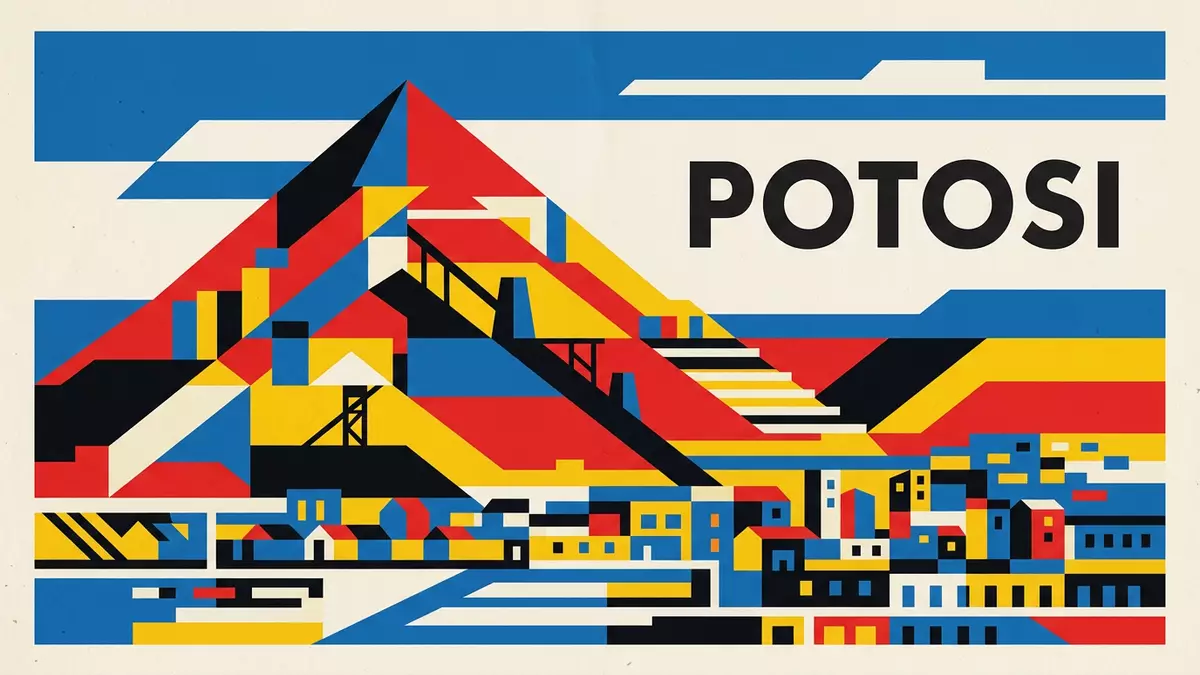
Cerro Rico rises just south of Potosi in Bolivia, a conical Andean mountain whose silver ore once underpinned Spanish imperial wealth and still feeds contemporary mining cooperatives.Cerro Rico in the Andes near Potosi is a name tied to almost five centuries of extraction and the difficult lives built around it.
The Andean “Rich Mountain” above a colonial city
Cerro Rico, Spanish for “Rich Mountain”, stands in the Bolivian Andes close to the historic city of Potosi, with its slopes beginning roughly 1 km south of the urban grid.Located approximately 1 km south of Potosi the mountain forms a constant backdrop to streets, plazas and the surviving colonial architecture below.
The peak reaches around 4,800 m (15,748 ft) above sea level, placing Potosi among the highest substantial mining centres in the world.Cerro Rico stands 4,800 metres above Potosi The flanks consist of highly altered volcanic rock rich in silver and other metals, cut through by adits, dumps and processing structures that mark centuries of human intervention.A mountain of altered volcanic rock mined for silver
Colonial silver, the mita and global consequences
The story that ties Cerro Rico to world history begins in 1545, when rich silver outcrops on the mountain were identified and Spanish colonial exploitation accelerated.Discovered in 1545 and rapidly developed Within a decade Potosi grew into a major colonial city built beside the mountain, linked to an imperial mint and integrated into Atlantic trade routes that carried silver to Europe and Asia.Potosi developed around the largest silver lode discovered in the Americas
Indigenous communities from the Andean highlands were drafted through the mita labour system, a colonial adaptation of an Inca institution that compelled thousands of workers to spend periods in the mines.Silver extraction depended on the colonial mita Conditions in narrow shafts at high altitude and in mercury-laden processing plants produced heavy mortality, giving Cerro Rico the enduring description “the mountain that eats men” in many accounts of Potosi’s past.Cerro Rico as a keystone of colonial precious metal extraction
Cerro Rico as an industrial landscape and tourist destination
The years of peak colonial output passed centuries ago, yet mining on Cerro Rico has continued with changing materials and structures, leaving the mountain hollowed by shafts and chambers on several levels.Hundreds of mines and many kilometres of shafts In the twentieth century and beyond, tin, zinc, lead and silver became the main ores, worked by cooperative miners who organise extraction in sectors scattered around the cone.Tin, zinc, lead and silver ore mined at Cerro Rico
Cerro Rico and the historic centre of Potosi are included in a UNESCO World Heritage listing that recognises the combined mining landscape, industrial heritage and urban fabric shaped by silver.Potosi with Cerro Rico inscribed as a World Heritage Site in 1987 Guided visits enter some mine galleries, where visitors equipped with helmets and lamps walk through dusty tunnels, passing ventilation equipment, wagon tracks and working faces where ore is still extracted by hand.
Visiting Cerro Rico: what travellers from Western Europe should know
- Cerro Rico rises immediately south of Potosi in southern Bolivia, reached from the city by road that climbs towards mine entrances and viewing points on the lower slopes.
- The terrain around the mountain combines altitude of around 4,000 m (13,123 ft) and unpaved tracks, with approaches to mine portals involving walking on uneven ground and navigating low tunnel roofs underground.
- The official language is Spanish and the currency is the Bolivian boliviano.
- Entry requirements depend on your nationality; UK travellers can check the FCDO travel advice at gov.uk/foreign-travel-advice, Irish travellers the Department of Foreign Affairs at ireland.ie.
Searching for Cerro Rico on social platforms
These links open searches for Cerro Rico on each platform.
Frequently asked questions about Cerro Rico
Where is Cerro Rico?
Cerro Rico is a mountain in the Bolivian Andes, rising just south of the city of Potosi in southern Bolivia.
What should visitors expect on a visit to Cerro Rico?
Visitors encounter an active mining landscape with high altitude, rough tracks and, on guided tours, access to underground tunnels where cooperative miners work.
What makes Cerro Rico distinctive compared with other mining sites?
Cerro Rico combines an extensive colonial silver mining history, a still-active network of mine workings and its role in shaping the World Heritage-listed city of Potosi.


