
Centrul Istoric Sibiu and the medieval squares at the city’s core
Published on 09/01/2026 at 23:01 | Editorial responsibility: Rafael Müller, Editor-in-Chief AD HOC NEWS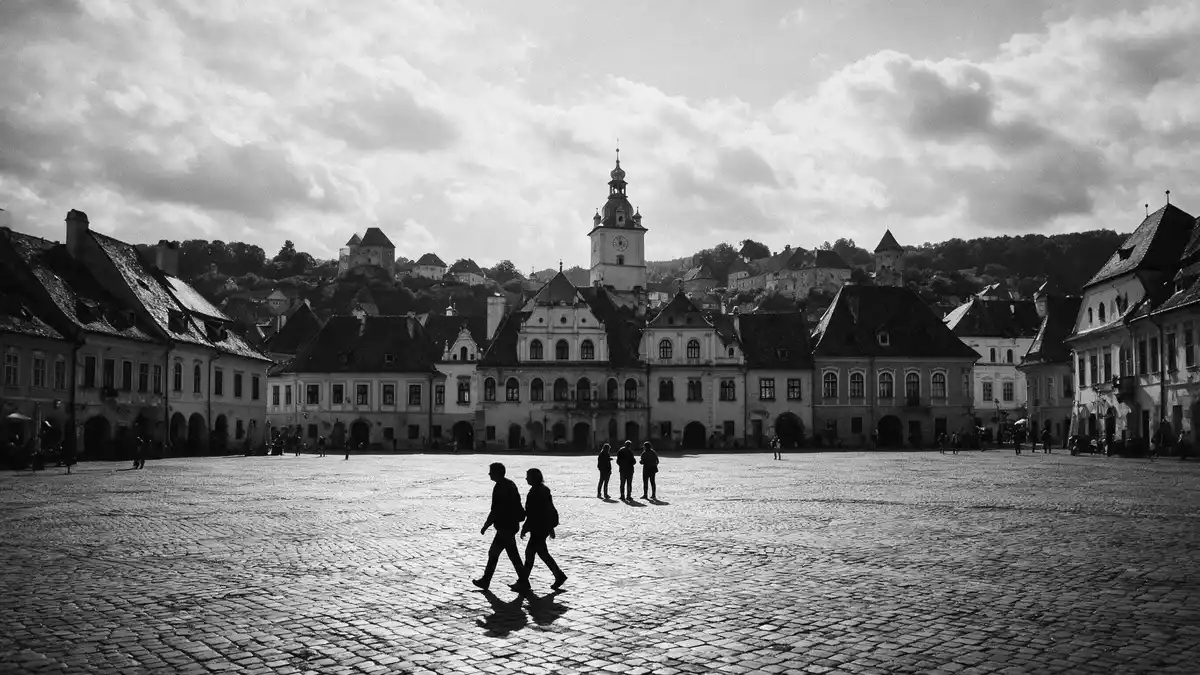
Centrul Istoric Sibiu is the historic centre of Sibiu in central Romania, a compact medieval urban core structured around a cluster of market squares and narrow streets in the Upper Town. The area took shape from the thirteenth and fourteenth centuries onwards, as Sibiu grew into one of Transylvania’s main fortified towns within the medieval Kingdom of Hungary, and its present layout still reflects those early trading rights and fortification belts.
The medieval squares that organise Centrul Istoric Sibiu
The lead spaces of Centrul Istoric Sibiu are the interconnected squares of Pia?a Mare, Pia?a Mic? and Huet Square, which together form the urban heart of the Upper Town. Pia?a Mare, also known in German as Großer Ring, is documented as a square from 1366, the year associated with the completion of Sibiu’s third belt of fortifications around the old cityexists since 1366. By 1411 it appears in written records as a cereal market, indicating its role as the main commercial space of the townGetreidemarkt 1411.
Pia?a Mic? lies immediately to one side, on a slightly lower level, linked to Pia?a Mare by streets and passages that still follow medieval linesPia?a Mic? in the historic centre. Huet Square, with its ecclesiastical buildings, completes this ensemble on another flank of the Upper Town. The three squares mark distinct but connected roles within Centrul Istoric Sibiu: civic and mercantile life concentrated in Pia?a Mare, more intimate trading and craft activity around Pia?a Mic?, and religious and educational institutions framing Huet Squareensemble of medieval squares.
Pia?a Mare: scale, architecture and public life
Within Centrul Istoric Sibiu, Pia?a Mare stands out for its generous rectangular proportions and its continuous front of historic buildings. The square reaches a maximum length of 142 m and a maximum width of 93 m, giving it a broad open surface that has long served as Sibiu’s principal civic spacemaximum length and width. Houses along the north side include a former tailors’ guild building first erected in 1466, together with other medieval dwellings whose fronts line the square and define its architectural edgeGuild of Tailors house 1466.
The square’s names over the centuries trace changing political and cultural contexts. Historic German designations such as Grosser Platz and Grosser Ring reflect Sibiu’s role within a German-speaking urban network, while twentieth-century names included King Ferdinand Square between the two world wars and Republic Square during the communist period, before the Romanian title Pia?a Mare was reinstated after 1990sequence of square names. For centuries, important episodes of public life unfolded on this surface, from markets and citizen gatherings to judicial events, including documented executions such as that of Johann Zabanius Sachs von Harteneck in 1703execution in 1703. In the eighteenth century a “lunatics’ cage”, known locally as Narrenhäusel, stood here between 1724 and 1757, used as a place of public exposure for those punished for disturbing the peacelunatics’ cage 1724–1757.
The historic fabric and fortifications of Centrul Istoric Sibiu
Centrul Istoric Sibiu occupies the central zone of the city, structured around the Upper Town but extending towards surrounding streets and fragments of fortifications. Its boundaries include routes such as Bulevardul Corneliu Coposu and ?oseaua Alba Iulia, with landmarks like Pia?a Unirii and Aleea Filosofilor marking outer edgeslisted boundary streets. Within this area, narrow streets connect the main squares to smaller spaces and surviving sections of defensive walls.
The third fortification belt completed in 1366 enclosed the medieval city and framed the emerging squares at its centre, a pattern still perceptible in the way Pia?a Mare and its neighbouring streets are alignedthird fortification belt. The historic centre is formally classified as a protected monument zone, recognising both its layered urban fabric and the continuity of its street network from the Middle Ages into the modern eramonument designation. Walking through Centrul Istoric Sibiu reveals townhouses with arcaded ground floors, guild houses, churches and public buildings that together illustrate the development of an urban community over several centuries.
Visiting Centrul Istoric Sibiu: what travellers from Western Europe should know
- Centrul Istoric Sibiu lies in the central part of Sibiu in central Romania, concentrated around Pia?a Mare, Pia?a Mic? and Huet Square, and can be reached on foot from Sibiu railway station via streets leading into the old town.
- The historic centre includes paved squares and cobbled streets, and walking routes between the main spaces involve short gradients and stairways connecting different levels of the Upper Town.
- The official language is Romanian and the currency is the Romanian leu.
- Entry requirements depend on your nationality; UK travellers can check the FCDO travel advice at gov.uk/foreign-travel-advice, Irish travellers the Department of Foreign Affairs at ireland.ie.
Searching for Centrul Istoric Sibiu on social platforms
These links open searches for Centrul Istoric Sibiu on each platform.
Frequently asked questions about Centrul Istoric Sibiu
Where is Centrul Istoric Sibiu located?
Centrul Istoric Sibiu occupies the central area of Sibiu, a city in central Romania, and is concentrated around the Upper Town squares of Pia?a Mare, Pia?a Mic? and Huet Square.
What should visitors expect on a walk through the historic centre?
A walk through Centrul Istoric Sibiu leads across broad paved squares and narrower cobbled streets, past historic houses, churches and surviving fortification elements that illustrate the city’s medieval character.
What makes Centrul Istoric Sibiu distinctive among historic town centres?
The combination of large and small medieval squares, documented fortification belts and continuous fronts of historic buildings gives Centrul Istoric Sibiu a clearly defined urban core that reflects centuries of Transylvanian town life.


